%22%2F%3E%3C%2Fpattern%3E%3C%2Fdefs%3E%3Crect%20width%3D%22100%25%22%20height%3D%22100%25%22%20fill%3D%22url(%23ph1g74fg)%22%2F%3E%3Crect%20width%3D%22100%25%22%20height%3D%22100%25%22%20fill%3D%22url(%23ph1g74fp)%22%2F%3E%3Ctext%20x%3D%2250%25%22%20y%3D%2250%25%22%20text-anchor%3D%22middle%22%20dominant-baseline%3D%22central%22%20fill%3D%22rgba(255%2C255%2C255%2C0.95)%22%20font-family%3D%22Georgia%2C%20'Times%20New%20Roman'%2C%20serif%22%20font-weight%3D%22700%22%20font-size%3D%22320%22%20letter-spacing%3D%22-0.02em%22%3ELoke%3C%2Ftext%3E%3C%2Fsvg%3E)
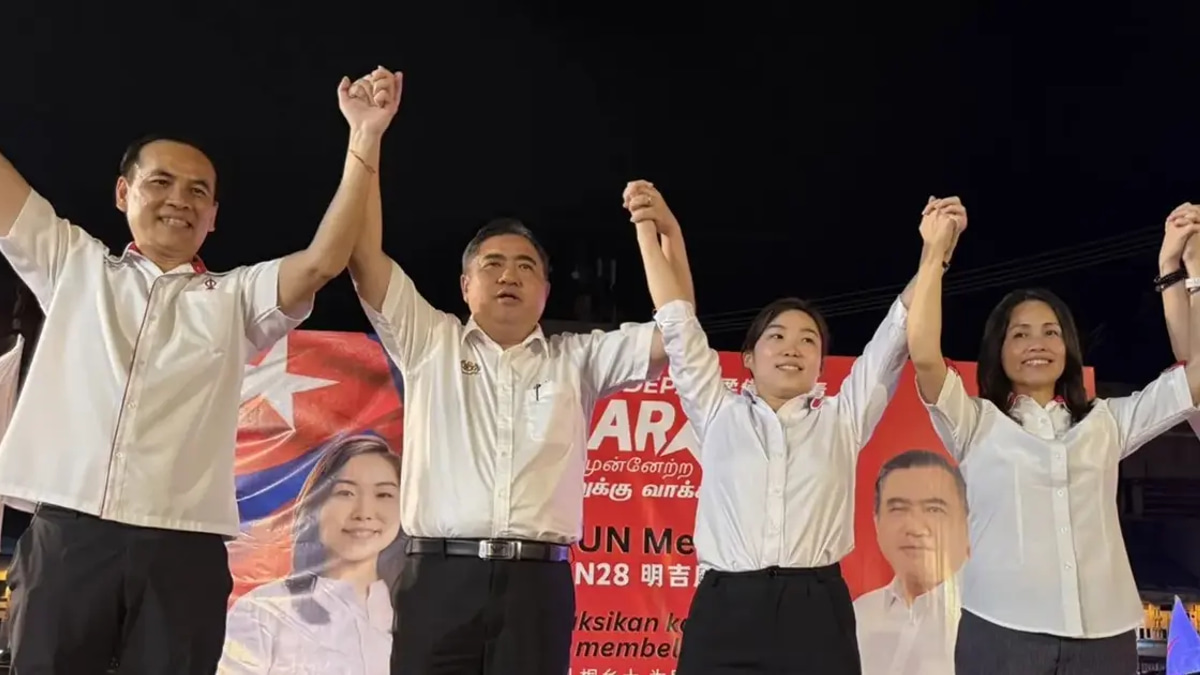
Transport Minister Anthony Loke Siew Fook and Johor caretaker Menteri Besar Datuk Onn Hafiz Seri Zahid have met privately in Kulai, marking a potential turning point in what has been an increasingly visible disagreement between the two officials over how the state's election campaign should unfold. The encounter comes shortly after both men exchanged pointed remarks through public statements, raising questions about the cohesion of ruling coalition partners at a critical moment in the Johor political calendar.
The timing of the meeting is particularly significant given the heightened scrutiny surrounding Johor's governance structure during the election period. As caretaker Menteri Besar, Onn Hafiz remains responsible for state administration while the campaign progresses, a role that can create friction with federal-level politicians seeking to shape electoral narratives. Loke, holding a senior ministerial position in the federal government, has maintained active involvement in campaign strategy and coalition messaging, setting the stage for potential overlaps in authority and approach.
Their recent public disagreement centred on matters of campaign conduct, political strategy, and the broader direction of state politics during the election process. These disputes, whether over resource allocation, candidate selection parameters, or messaging priorities, reflect the complex dynamics that emerge when federal and state party structures operate simultaneously during critical electoral moments. Such tensions, while not unusual in multiparty democratic systems, gain particular prominence when aired publicly, as they risk undermining the unified front that ruling coalitions typically attempt to project.
The private nature of the Kulai meeting underscores both officials' apparent desire to resolve differences away from public view. Rather than continuing to engage through statements or media commentary, they chose direct dialogue as the mechanism for addressing concerns. This shift in approach suggests recognition that sustained public disagreement carries reputational costs for both the individuals involved and the broader political coalition they represent. Malaysian political observers have long noted that coalition partners, while capable of robust internal debate, generally prefer to settle disputes privately to maintain credibility with voters.
Background to their friction reveals deeper structural questions about coalition management during electoral periods. When federal and state administrations are controlled by different power structures within the ruling coalition, coordination becomes essential but can prove challenging. Loke's role as Transport Minister gives him visibility and platform to influence national narratives, while Onn Hafiz's position as caretaker provides him with immediate, hands-on responsibility for state-level implementation. These different vantage points can generate divergent priorities, even when both parties theoretically support the same coalition agenda.
Johor politics carries particular weight within Malaysian governance given the state's size, economic importance, and historical influence within Umno, which forms the backbone of the ruling coalition. The state's electoral outcomes have ripple effects across federal politics, making internal management of coalition relationships there especially consequential. Any visible fractures between coalition partners in Johor thus become potential ammunition for opposition groups seeking to exploit disunity, making the repair of public perceptions through private reconciliation tactically important.
The Kulai location was not arbitrary; as the constituency Loke represents in parliament, holding talks there carries symbolic weight. It positions the discussion within Loke's political territory while simultaneously allowing both men to engage away from the glare of media presence that typically surrounds Kuala Lumpur meetings. The choice reflects political sophistication in message management, signalling that discussions can occur on neutral professional grounds rather than being dominated by either party's home territory advantages.
For the ruling coalition broadly, smooth functioning of relationships between federal and state representatives during election periods is crucial for operational effectiveness. Campaign financing decisions, resource deployment, policy announcements, and media strategy all benefit from clear coordination. When federal and state voices appear discordant, it creates uncertainty for lower-level party operatives who must determine which directives to prioritise and can muddy messaging to the electorate. The meeting between Loke and Onn Hafiz, by contrast, demonstrates commitment to presenting unified direction as campaigning progresses.
The implications of their reconciliation extend beyond immediate campaign mechanics to question how Malaysian political coalitions navigate power-sharing arrangements during active elections. The Pakatan Harapan-Barisan Nasional coalition that governs both federally and in Johor comprises organisations with distinct interests and constituencies. Managing these differences while maintaining electoral momentum requires constant communication and occasional recalibration of positions. The Loke-Onn Hafiz meeting exemplifies this ongoing negotiation process that rarely features in public reporting but drives much of coalition functionality.
Moving forward, observers will watch whether the meeting generates visible shifts in how the two officials coordinate publicly and whether their campaign contributions become more closely aligned. Media scrutiny of subsequent statements and actions will likely focus on detecting lingering tensions or conversely, evidence of renewed coordination. For coalition members and swing voters in Johor, such developments carry real weight in assessing whether the ruling partnership remains stable and coherent enough to deliver on its governance promises in the state.

%22%2F%3E%3C%2Fpattern%3E%3C%2Fdefs%3E%3Crect%20width%3D%22100%25%22%20height%3D%22100%25%22%20fill%3D%22url(%23ph21o2sg)%22%2F%3E%3Crect%20width%3D%22100%25%22%20height%3D%22100%25%22%20fill%3D%22url(%23ph21o2sp)%22%2F%3E%3Ctext%20x%3D%2250%25%22%20y%3D%2250%25%22%20text-anchor%3D%22middle%22%20dominant-baseline%3D%22central%22%20fill%3D%22rgba(255%2C255%2C255%2C0.95)%22%20font-family%3D%22Georgia%2C%20'Times%20New%20Roman'%2C%20serif%22%20font-weight%3D%22700%22%20font-size%3D%22170%22%20letter-spacing%3D%22-0.02em%22%3EGabungan%3C%2Ftext%3E%3C%2Fsvg%3E)