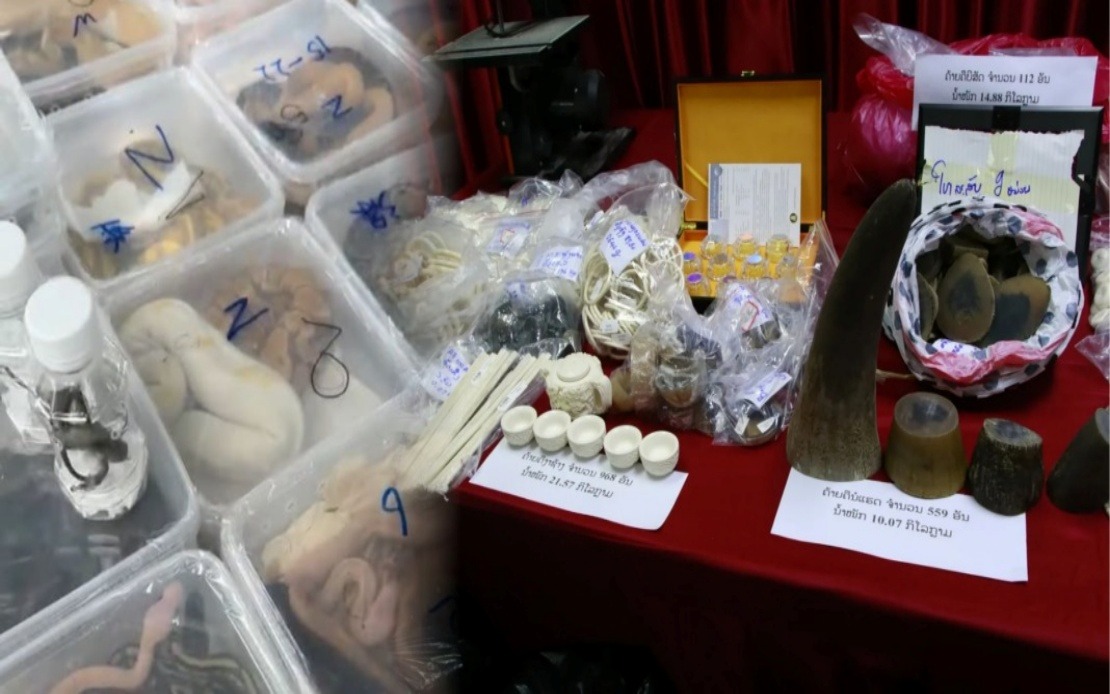
A sweeping crackdown on animal smuggling across Laos has exposed the scale of wildlife trafficking plaguing Southeast Asia's borderlands, with authorities rescuing nearly 300 live creatures and confiscating tonnes of illegal wildlife products in parallel operations last week. The coordinated enforcement actions, conducted in Luang Prabang and Champasak provinces, underline how criminal networks continue to exploit the region's porous borders and weak regulatory frameworks to move endangered species toward lucrative markets in Thailand, Vietnam, and beyond. The discoveries offer a rare glimpse into an underground economy that operates with near-impunity across one of the world's most biodiverse regions, even as governments pledge stronger measures to combat the trade.
The Lao Wildlife Enforcement Network uncovered 60 kilograms of suspected illegal wildlife materials during operations in Luang Prabang, a UNESCO World Heritage site and major tourism hub. Officers seized a disturbing array of contraband including items purporting to be ivory, animal gallbladders intended for traditional medicine, pangolin scales—a commodity derived from the world's most trafficked mammal—and what authorities believe to be rhinoceros horn. Additional seizures encompassed elephant skin powder, bear gallbladder used in traditional remedies, hornbill heads, and vials of herbal medicine believed to contain wildlife derivatives. The sheer variety of products indicates a sophisticated supply chain linking poachers in the hinterlands to middlemen, refiners, and retailers operating across multiple countries. Such operations depend on networks of corrupt officials and complicit merchants willing to overlook regulations for profit.
Just days after the Luang Prabang discovery, wildlife rangers achieved an even more dramatic intervention at the Vang Tao International Checkpoint in Champasak Province, which straddles the border with Thailand's Ubon Ratchathani Province. Officers intercepted 294 live animals being transported across international lines, confiscating turtles, pythons, green snakes, gold-ringed cat snakes, and various lizard species. The animals, crammed into conditions suitable for international passenger buses, had almost certainly been captured from the wild rather than bred in captivity. Their rescue prevents their likely sale into the pet trade, traditional medicine production, or consumption markets in Thailand and beyond. The rapid succession of major seizures suggests either intensified enforcement efforts by Laotian authorities or a temporary disruption of existing smuggling routes, though experts caution that traffickers typically adapt swiftly to enforcement actions.
These operations represent only the visible portion of a much larger underground enterprise. The World Wildlife Crime Report 2024, published by the United Nations Office on Drugs and Crime, documents that illegal wildlife trade persists at alarming levels globally despite two decades of international cooperation and national policy interventions. The UNODC estimates the worldwide black market in wildlife products to be worth nearly US$10 billion annually, placing it in the same economic category as human trafficking, illegal narcotics, and the global arms trade. For developing nations in Southeast Asia, where poverty rates remain high and enforcement resources limited, the financial incentives driving wildlife crimes often overwhelm regulatory capacity. Corruption acts as the critical enabling factor, with payments to officials at checkpoints, ports, and border crossings facilitating the movement of contraband with minimal detection.
Laos occupies a uniquely vulnerable position within this criminal ecosystem due to its geography and governance challenges. The country shares land borders with Cambodia, China, Myanmar, Thailand, and Vietnam—five nations with vastly different levels of regulatory enforcement and consumer demand for wildlife products. This geographic centrality has transformed Laos into a crucial transit zone for poachers and traffickers operating across mainland Southeast Asia. Wildlife originating in Cambodia's forests, Myanmar's mountains, or Laos's own protected areas flows through Laotian territory toward markets in Thailand and Vietnam. The country's limited resources for wildlife enforcement, combined with porous borders difficult to patrol across thousands of kilometres of jungle terrain, create ideal conditions for criminal enterprises. International wildlife experts have long identified Laos as one of Asia's most critical trafficking chokepoints.
The broader pattern of enforcement actions suggests regional authorities are intensifying their response to wildlife crime. In northeastern Thailand, police arrested a woman operating a traditional medicine and souvenir shop in Nakhon Phanom in late May, seizing over 100 protected wildlife remains believed smuggled from Laos. Separately, enforcement officials disrupted an attempted smuggling operation along the Thai-Lao border on May 16, confiscating 130 kilograms of cut elephant ivory and animal carcasses destined for Asian markets. These coordinated actions across provincial and national boundaries indicate improved intelligence-sharing and operational coordination among Southeast Asian enforcement agencies, though experts suggest such coordination remains inconsistent and underfunded compared to the resources deployed by trafficking networks.
The species targeted in these seizures reveal the profound scope of trafficking's impact on global biodiversity. Pangolins, whose scales are highly valued in traditional medicine, have become the world's most trafficked mammals, with populations declining precipitously across Asia and Africa. Rhinoceros populations face existential threats partly due to demand for horn in Vietnam and China, where it commands prices exceeding gold by weight. Elephant ivory continues driving poaching across Africa and Asia despite international trade bans. Reptile trafficking, though receiving less public attention than mega-fauna smuggling, affects hundreds of species and drives ecological disruption in their native habitats. Each confiscation represents thousands of animals removed from wild populations or prevented from reaching exploitative markets, yet enforcement remains a drop in an ocean of trafficking.
For Malaysia and other Southeast Asian nations, these enforcement breakthroughs carry significant implications. Malaysian ports and airports serve as transshipment points for wildlife products moving toward China and other major consumer markets. Improved intelligence from Laotian, Thai, and Vietnamese enforcement agencies can assist Malaysian authorities in identifying and intercepting contraband at borders and commercial hubs. Additionally, Malaysian wildlife officials increasingly recognize that protecting the country's own endangered species requires regional cooperation against traffickers who operate across multiple jurisdictions. The Association of Southeast Asian Nations and bilateral partnerships provide frameworks for such coordination, though implementation remains inconsistent. Malaysia's experience with seizures at Kuala Lumpur International Airport and port facilities demonstrates that vigilance at transit hubs can yield significant results.
The economic value of wildlife trafficking extends beyond the criminal networks profiting directly from the trade. Ecosystem services provided by wild animals—from pollination and seed dispersal to pest control and nutrient cycling—generate economic benefits valued in the billions annually across Southeast Asia. Loss of wildlife populations undermines these services, ultimately damaging agricultural productivity, water quality, and climate regulation. Tourism, another major revenue source for the region, depends on intact wildlife populations and pristine environments. Thailand, Laos, and Vietnam collectively earn billions annually from wildlife-based tourism, an income stream threatened by trafficking-driven depletion of animal populations. The calculus of enforcement spending becomes economically rational when calculated against these broader economic externalities.
Sustaining momentum in enforcement requires addressing root causes driving wildlife trafficking. Poverty in rural areas makes poaching an attractive livelihood for those lacking agricultural opportunities. Demand in consumer markets, particularly in China and Vietnam, creates the fundamental market incentive driving trafficking. Corruption among officials provides the critical enabling infrastructure. Addressing trafficking therefore demands simultaneous interventions across supply chains, from reducing consumer demand through awareness campaigns to improving rural livelihoods through alternative income generation to strengthening governance and reducing corruption. International funding mechanisms, including grants from developed nations and wildlife conservation organisations, provide essential resources for enforcement agencies in developing countries. However, funding remains inconsistent and often subject to political priorities rather than evidence-based assessments of need.
The Laotian enforcement actions also highlight the role that well-resourced intelligence agencies can play in disrupting trafficking networks. The Lao Wildlife Enforcement Network's capacity to conduct coordinated operations across provinces suggests institutional development that many regional agencies still lack. Intelligence-driven enforcement, focused on identifying and dismantling trafficking organisations rather than simply conducting routine patrols and checkpoint inspections, yields greater impact per dollar spent. Capacity-building assistance to regional law enforcement—through training programmes, equipment provision, and technical support—represents a cost-effective investment in global wildlife conservation. Malaysia, as a middle-income country with more developed institutional capacity than some neighbours, has opportunities to provide such technical assistance through ASEAN mechanisms and bilateral partnerships.
Looking forward, the seizures in Laos will likely prove temporary victories unless accompanied by sustained enforcement and structural reforms. Trafficking networks respond to disruption by modifying routes, methods, and target species, adapting faster than enforcement agencies can pursue them. The animals rescued in Champasak and the products seized in Luang Prabang represent a meaningful intervention in individual cases, but the underlying drivers of trafficking remain largely unaddressed. Regional cooperation will intensify, and some trafficking operations will be successfully dismantled, yet the multibillion-dollar black market will persist as long as poverty creates supply-side incentives and consumer demand sustains market prices. Meaningful progress requires not merely enforcement victories but systematic change in governance, economic opportunity, and consumer behaviour across the region.

%22%2F%3E%3C%2Fpattern%3E%3C%2Fdefs%3E%3Crect%20width%3D%22100%25%22%20height%3D%22100%25%22%20fill%3D%22url(%23ph29y08g)%22%2F%3E%3Crect%20width%3D%22100%25%22%20height%3D%22100%25%22%20fill%3D%22url(%23ph29y08p)%22%2F%3E%3Ctext%20x%3D%2250%25%22%20y%3D%2250%25%22%20text-anchor%3D%22middle%22%20dominant-baseline%3D%22central%22%20fill%3D%22rgba(255%2C255%2C255%2C0.95)%22%20font-family%3D%22Georgia%2C%20'Times%20New%20Roman'%2C%20serif%22%20font-weight%3D%22700%22%20font-size%3D%22151%22%20letter-spacing%3D%22-0.02em%22%3EMalaysian%3C%2Ftext%3E%3C%2Fsvg%3E)
%22%2F%3E%3C%2Fpattern%3E%3C%2Fdefs%3E%3Crect%20width%3D%22100%25%22%20height%3D%22100%25%22%20fill%3D%22url(%23ph4nq77g)%22%2F%3E%3Crect%20width%3D%22100%25%22%20height%3D%22100%25%22%20fill%3D%22url(%23ph4nq77p)%22%2F%3E%3Ctext%20x%3D%2250%25%22%20y%3D%2250%25%22%20text-anchor%3D%22middle%22%20dominant-baseline%3D%22central%22%20fill%3D%22rgba(255%2C255%2C255%2C0.95)%22%20font-family%3D%22Georgia%2C%20'Times%20New%20Roman'%2C%20serif%22%20font-weight%3D%22700%22%20font-size%3D%22320%22%20letter-spacing%3D%22-0.02em%22%3EKPKT%3C%2Ftext%3E%3C%2Fsvg%3E)