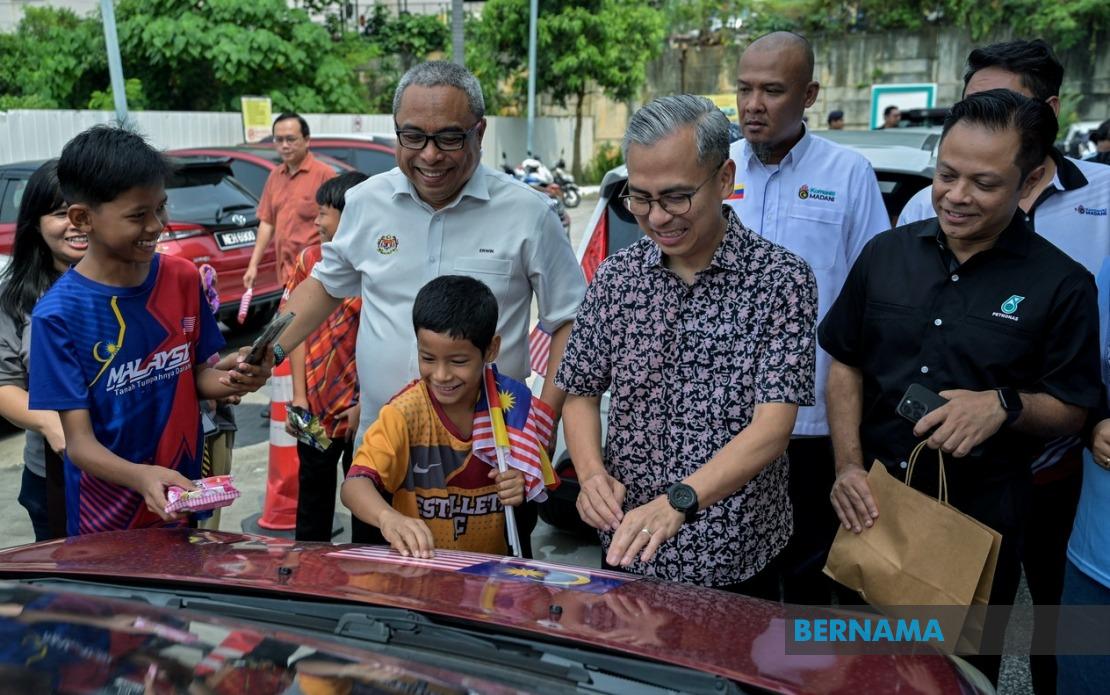
Malaysia Day 2026 will be celebrated in Kuching at the Borneo Convention Centre, Communications Minister Datuk Seri Fahmi Fadzil revealed this week, marking a significant occasion for Sarawak and the broader East Malaysian region. The venue selection followed an initial planning session that brought together federal and state officials tasked with orchestrating what promises to be a landmark national observance. This decision underscores the government's commitment to rotating major national celebrations across Malaysia's diverse regions, ensuring equitable representation and fostering unity among communities across the federation.
The choice of Kuching reflects a deliberate strategy to strengthen the cultural and ceremonial connections between Peninsular Malaysia and the East Malaysian states. By hosting Malaysia Day—which commemorates the formation of the Federation of Malaysia on 16 September 1963—in Sarawak's capital, the government acknowledges the constitutional significance of the day and the historical role that Sarawak and Sabah played in Malaysia's founding. This decision carries symbolic weight, particularly given that Malaysia Day itself celebrates the union of Malaya, Singapore, Sabah, and Sarawak, with Singapore's departure in 1965 reshaping the federation.
Fahmi noted that venue evaluations had confirmed the Borneo Convention Centre Kuching possesses adequate facilities and capacity to accommodate the planned festivities. In terms of infrastructure and layout, he indicated the centre compares favourably to the PICCA Convention Centre in Butterworth, Penang, which hosted the previous year's Malaysia Day celebrations. This benchmarking exercise demonstrates the logistical rigour applied to site selection, ensuring that whichever venue is chosen can reliably deliver the technical and organisational requirements of a major national event broadcast and attended by thousands of Malaysians.
The planning process has involved close coordination between federal authorities and Sarawak's state government, with Sarawak Minister for Tourism, Creative Industry and Performing Arts Datuk Seri Abdul Karim Rahman Hamzah serving as co-chairman of the 2026 celebrations committee. This collaborative framework reflects the constitutional framework governing Malaysia's federal system, where major national occasions typically require joint federal-state oversight. The inaugural preparatory meeting, held the previous Monday, set the tone for what officials describe as smooth and orderly progress toward the event.
Fahmi revealed that the organising committee has scheduled a follow-up meeting for 24 August to delve into further logistical details and refine arrangements. These incremental planning sessions, spread across several months in advance, allow officials to address potential bottlenecks, coordinate with relevant agencies, and ensure that all components—from security and transport to cultural programming and media coverage—function seamlessly on the day itself. The structured approach suggests confidence that preparations are tracking toward completion targets.
Beyond Malaysia Day planning, Fahmi also addressed arrangements for the National Day celebration scheduled for 31 August in Putrajaya. He announced that Prasarana Malaysia Bhd, the federal public transport operator, has committed to delivering round-the-clock services throughout that day, representing an enhancement compared to previous years' operations. This 24-hour availability aims to facilitate mass public movement both to and from the capital, reducing congestion and enabling attendees to return home without the strain of typical transportation constraints.
The pledge by Prasarana signals recognition of logistical challenges that have historically affected major national gatherings in Putrajaya. Hundreds of thousands of Malaysians typically converge on the federal administrative centre for National Day festivities, creating sustained pressure on transport networks. By extending service availability to a full 24-hour window, the operator seeks to distribute arrival and departure flows more evenly, preventing bottlenecks that would otherwise compromise the celebratory experience and public safety.
Fahmi further indicated that additional infrastructure improvements across Putrajaya are planned in tandem with transport enhancements. These initiatives reflect a broader governmental effort to upgrade the capital's capacity to host large-scale public assemblies comfortably and safely. When combined with enhanced public transport, such improvements aim to make attendance at National Day celebrations more accessible and rewarding for Malaysians across all geographic and demographic segments, particularly those travelling from distant states.
The dual focus on Malaysia Day 2026 in Kuching and National Day 2025 in Putrajaya demonstrates the government's intention to distribute major commemorative events strategically. By rotating such occasions between regions, authorities reinforce the principle of national unity while showcasing different areas of Malaysia to residents and international observers. For Sarawak, hosting Malaysia Day 2026 represents recognition of its historic and ongoing role within the Malaysian federation, potentially elevating the state's profile in national discourse.
For Malaysian planners and officials, the approach of holding major celebrations in different venues annually reflects lessons learned from past events and a commitment to continuous improvement in public administration and crowd management. The emphasis on infrastructure, transport coordination, and adequate venue assessment suggests an institutional maturation in how the government approaches large-scale national occasions, with each event benefiting from technological advances and operational refinements implemented since previous celebrations.
The selection of Kuching also carries implications for East Malaysian tourism and economic activity, as the concentration of national media attention and the influx of visitors associated with major celebrations can provide tangible benefits to local hospitality, retail, and service sectors. Regional stakeholders will likely welcome the opportunity to showcase Kuching's capabilities as a modern convention destination and cultural hub capable of hosting world-class national events.

