The Ministry of Human Resources has announced a comprehensive response to job displacement caused by the ongoing global supply chain crisis, deploying Technical and Vocational Education and Training programmes alongside employment support mechanisms to help affected Malaysian workers transition into new roles. Minister Datuk Seri R. Ramanan outlined the initiative during an event in Johor Bahru, signalling the government's commitment to mitigating economic shocks that have rippled through critical sectors across the nation.
Workers from the services, manufacturing, and construction industries stand to benefit most directly from the upskilling offerings, reflecting these sectors' particular vulnerability to supply chain disruptions that have persisted since the COVID-19 pandemic. Rather than leaving displaced workers to navigate job searches independently, the ministry is coordinating with the Social Security Organisation through its MYFutureJobs platform, a digital intermediary designed to connect workers with suitable employment opportunities. This layered approach—combining skills development with active job matching—addresses both the immediate need for employment and the longer-term challenge of workforce capability gaps.
The job matching process represents a deliberate shift toward placing workers in positions aligned with their qualifications and experience, rather than accepting whatever vacancies emerge. Ramanan stressed that placements would be carefully evaluated for suitability, acknowledging that hastily matched positions often lead to high turnover and worker dissatisfaction. For Malaysia's economy, this focus on quality placement matters significantly, as it maximises the return on investment in reskilling programmes while reducing the social friction that accompanies rapid sectoral transitions.
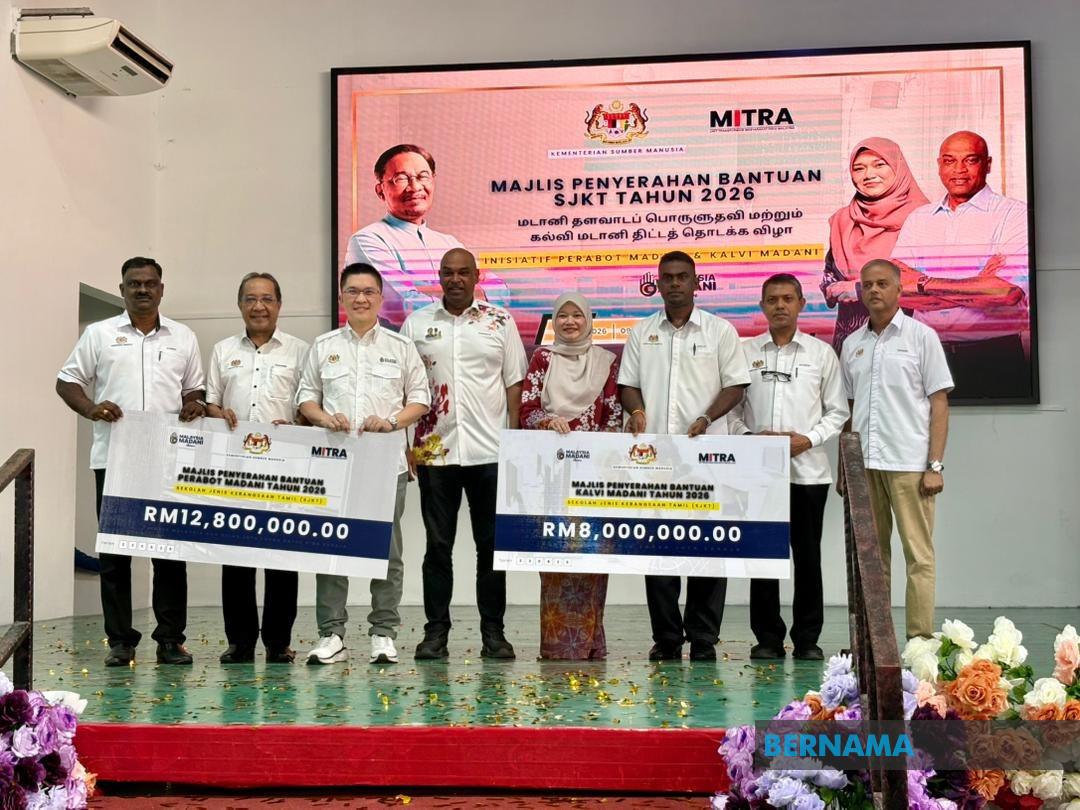
Simultaneously, the ministry announced investments in Tamil vernacular schools that underscore a broader commitment to educational equity across Malaysia's diverse communities. The RM12.8 million MADANI Furniture Initiative targets 361 government-aided Tamil schools, benefiting nearly 40,000 pupils and over 5,000 teachers who would receive high-quality furniture and equipment throughout the June-to-August period. This phased rollout—encompassing tables, chairs, cabinets, and fans—addresses infrastructure gaps in schools that have historically received fewer resources than national-type institutions.
The complementary RM8 million KALVI MADANI Programme extends support beyond physical infrastructure into educational outcomes and welfare. Designed for approximately 10,410 Indian pupils across 315 selected Tamil schools, the programme bundles free tuition classes, nutritional support, learning materials, digital devices, and teacher welfare measures into a comprehensive intervention. For Malaysian policymakers, this holistic approach signals recognition that educational achievement depends on multiple reinforcing factors—academic instruction alone cannot overcome deficits in nutrition, technology access, or educator morale.
The timber and furniture sector, ironically one of those affected by supply chain disruptions, benefits indirectly from this procurement initiative. While the source material focuses on workforce development and school support, the timing of such purchases during a period of supply chain instability raises questions about sourcing strategies and the potential stimulus effect on domestic suppliers. Malaysian furniture manufacturers and construction material providers may find windows of opportunity as government purchasing accelerates to meet project timelines.
From a regional perspective, Malaysia's dual-track approach—simultaneously addressing worker displacement while investing in foundational education for minority communities—reflects broader Southeast Asian challenges in managing structural economic transitions. Other nations in the region grappling with similar supply chain pressures might examine how Malaysia's integration of labour retraining with educational infrastructure investment creates complementary benefits. The MYFutureJobs platform, in particular, could serve as a model for other ASEAN economies seeking digital labour market solutions.
The involvement of Education Minister Fadhlina Sidek and Deputy Minister Wong Kah Woh in the school initiative underscores interministerial coordination on workforce development. Educational systems must adapt curricula toward sectors offering genuine employment prospects, requiring dialogue between human resources authorities and education planners. The presence of these officials signals that upskilling programmes and foundational education improvements are being conceived as parts of a unified human capital strategy rather than isolated interventions.
For Tamil-medium education specifically, which serves significant Indian and other minority communities, this investment carries symbolic and practical weight. School infrastructure deficiencies have long created disparities in learning environments, and addressing these gaps directly improves educational quality and equity. The programme's design—prioritising nutritional and device support alongside academics—acknowledges that learning outcomes in under-resourced communities face multiple constraints requiring multidimensional solutions.
The supply chain crisis that prompted this initiative remains unresolved globally, with shipping costs, container availability, and port congestion continuing to disrupt commerce through 2024. Malaysian manufacturers depending on imports or serving export markets face ongoing pressure, suggesting that demand for TVET programmes may remain robust. Workers whose industries face long-term structural decline—rather than temporary disruption—may particularly benefit from reskilling into growth sectors, though identifying those sectors amidst economic uncertainty requires careful labour market analysis.
Implementation challenges loom, particularly ensuring that TVET programmes align with genuine job vacancies and that employers participate actively in the job-matching process. Previous workforce development initiatives in Southeast Asia have sometimes struggled with employer engagement or curriculum misalignment, limiting placement success rates. The scale of the MADANI Furniture Initiative and KALVI MADANI Programme similarly depends on effective project management across hundreds of schools with varying administrative capacity.
Longer term, these initiatives reflect Malaysia's recognition that supply chain resilience requires not only logistics optimisation but human capital development. Workers capable of adapting across sectors, and young people educated through modern facilities with current technology, constitute a more flexible labour force better positioned to respond to future disruptions. By investing simultaneously in displaced workers and foundational education, the Ministry of Human Resources signals that workforce development must operate across multiple time horizons—addressing immediate displacement while building capability for future transitions.