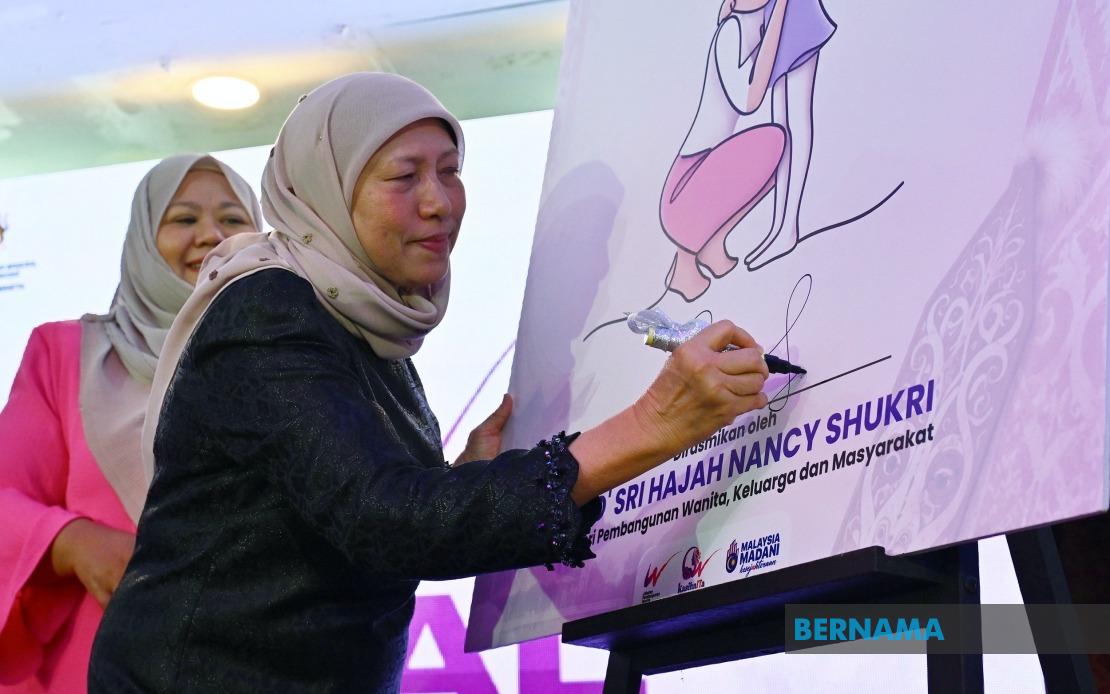
The Ministry of Women, Family and Community Development (KPWKM) has expanded its Single Mothers Support programme, known as KasihnITa, into Sarawak as the second state after Selangor, marking a significant milestone in providing holistic assistance to one of Malaysia's most vulnerable demographic groups. Minister Datuk Seri Nancy Shukri officially launched the state-level KasihnITa 2026 programme in Kuching on July 19, with approximately 130 participants attending the three-day event, underscoring growing government commitment to addressing the unique challenges faced by single-parent households.
The programme represents a coordinated, multi-agency approach designed to move beyond fragmented service delivery. Rather than requiring single mothers to navigate various government departments separately, KasihnITa consolidates expertise and resources from institutions including the Credit Counselling and Debt Management Agency (AKPK), Bank Negara Malaysia, the Legal Aid Department, and the Syariah Judiciary Department under one platform. This integration enables single mothers to access comprehensive information about available services and entitlements without the burden of pursuing multiple bureaucratic channels.
Financial literacy forms a cornerstone of the initiative. Participants receive structured training in household budget planning, debt management strategies, and long-term financial planning specifically tailored to the circumstances of single-income family units. This educational component addresses a critical gap, as many single mothers lack formal exposure to financial management principles that could significantly improve their family's economic resilience and reduce vulnerability to debt traps or predatory lending practices.
Beyond financial matters, the programme acknowledges the complex legal dimensions of single parenthood in Malaysia's context. Many single mothers navigate ongoing challenges related to child maintenance, custody arrangements, and spousal support obligations. The inclusion of the Legal Aid Department and Syariah Judiciary Department creates a structured pathway for mothers to understand their rights and pursue formal remedies when ex-partners fail to honour court-ordered maintenance payments. This legal support dimension recognises that single mothers often face not only economic hardship but institutional barriers in enforcing their children's financial rights.
Minister Nancy Shukri emphasised that the policy framework prioritises inclusive nation-building, framed explicitly within Malaysia's broader development agenda. Her statement that "we don't want any woman to be left behind" reflects an understanding that single mothers represent a structurally disadvantaged group whose exclusion from mainstream economic participation constrains both individual family welfare and aggregate national productivity. By positioning single mothers as stakeholders in prosperity and social resilience, the government frames support not as charity but as strategic investment in human capital.
The phased rollout approach, beginning with Selangor and now extending to Sarawak, suggests a deliberate strategy of testing and refining the programme at state level before broader national expansion. This measured deployment allows for feedback loops and contextual adaptation, particularly important given regional variations in economic conditions, demographic profiles, and existing support infrastructure across Malaysia's diverse states. Sarawak's inclusion reflects recognition that single mothers in East Malaysia face distinct geographical and economic circumstances requiring tailored responses.
A particularly notable aspect of the initiative is its explicit commitment to gathering participant feedback for policy development. Rather than designing assistance programmes based solely on bureaucratic assumptions about beneficiary needs, KPWKM is positioning single mothers as active contributors to programme evolution. This participatory approach acknowledges that lived experience provides invaluable insight that conventional policy analysis often misses, creating potential for more effective future interventions.
The psychological and social dimensions of the programme extend beyond material assistance. By creating spaces where single mothers convene, share experiences, and access support collectively, KasihnITa addresses isolation and stigma that often accompany single parenthood in Malaysia's traditional social context. The minister's observation that such programmes "give them the confidence that they are not alone" recognises that emotional resilience and community connection significantly influence long-term wellbeing and economic recovery capacity.
For Malaysian and Southeast Asian observers, the KasihnITa model offers insights into comprehensive social policy design for vulnerable populations. Single motherhood, driven by factors including marital dissolution, widowhood, and partner non-commitment, affects millions across the region. Malaysia's approach of consolidating services, emphasising financial and legal empowerment, and building community support networks provides a replicable framework that other nations might adapt to their own contexts.
The programme's inclusion of debt management services through AKPK addresses a critical vulnerability point. Single mothers frequently experience financial instability when household composition changes, potentially leading to missed payments, accumulated arrears, and debt spiral. Early intervention through counselling and structured financial planning can prevent such deterioration, reducing both individual family hardship and broader economic instability.
As Malaysia continues developing its social safety net, initiatives like KasihnITa signal evolving recognition that effective poverty reduction and social cohesion require targeted support for structurally disadvantaged groups. The expansion to Sarawak suggests momentum behind the programme, though sustained success will depend on adequate funding, staffing continuity, and genuine implementation of feedback mechanisms that the government has prioritised.

