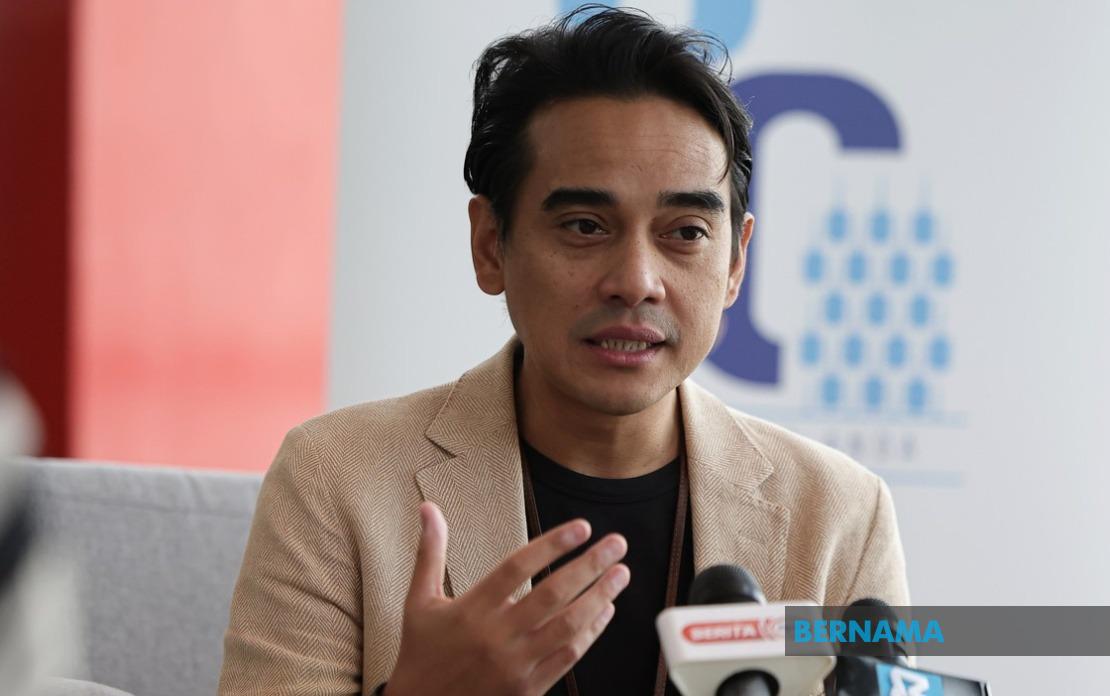
The race for relevance in modern journalism increasingly hinges on technological adaptability, according to Ashwad Ismail, Director-General of Broadcasting, who issued a pointed call for media practitioners across the region to urgently develop artificial intelligence skills. Speaking to Bernama TV's The Nation programme in Kuala Lumpur on June 17, Ismail reframed the AI conversation in newsrooms from existential threat to professional necessity, arguing that technological competence has become as fundamental to career longevity as traditional reporting skills once were.
Ismail's core argument strikes at a fundamental anxiety within journalism: displacement. Rather than dismissing concerns about automation, he articulated a more nuanced reality that resonates with media professionals across Southeast Asia who face increasing pressure to do more with fewer resources. The risk, he suggested, is not that artificial intelligence will eliminate journalism itself, but that individual journalists who fail to integrate these tools into their workflows will find themselves outcompeted by colleagues who do. This framing transforms AI adoption from an optional professional enhancement into a competitive imperative, much like digital skills became non-negotiable a decade ago.
The Broadcasting DG's statement arrives at a critical juncture for Malaysian and regional media organisations grappling with economic pressures, audience fragmentation, and the need to maintain editorial quality while operating under tighter budgets. Newsrooms from Kuala Lumpur to Bangkok and Jakarta increasingly experiment with AI-assisted research, content analysis, and even automated reporting of routine events. Yet most practitioners lack formal training or clear institutional guidelines for deployment. Ismail's implicit call for structured AI literacy addresses this gap, suggesting that professional development becomes essential for journalists seeking advancement or even employment retention.
Crucially, Ismail distinguished between AI as a replacement for human judgment and AI as an enhancement of journalistic capacity. This distinction matters enormously in a region where trust in media institutions remains fragile and public scepticism about technology-driven news production runs deep. Malaysian audiences, like those across Southeast Asia, have witnessed the consequences of automated content curation and algorithmic misinformation. Ismail's emphasis on using AI to strengthen rather than substitute human editorial judgment speaks directly to these concerns, positioning technology as a means to deepen reporting rather than shortcut it.
The necessity for clear institutional guidelines emerged as a secondary but equally important theme in his remarks. Without structured frameworks governing AI implementation, newsrooms risk replicating broader societal problems: algorithmic bias, reduced diversity of sources, and erosion of the human judgment that distinguishes journalism from mere information aggregation. Malaysian media organisations, already operating within a complex regulatory environment, face particular urgency in developing responsible AI protocols before external pressure forces compliance. Establishing internal standards now offers greater editorial autonomy than reactive adoption later.
Ismail's emphasis on hyperlocal reporting and community engagement as trust-building mechanisms reveals a sophisticated understanding of journalism's future trajectory. Rather than viewing AI as a replacement for on-the-ground reporting, he positioned technology as a tool that could free journalists from routine tasks—data entry, initial research, pattern identification in public documents—thereby creating capacity for the labour-intensive work that audiences increasingly value: deep investigation, contextualised analysis, and relationship-building with communities. This vision aligns with global trends where the most trusted news organisations combine technological sophistication with pronounced local presence.
For Malaysian journalists specifically, Ismail's message carries particular resonance given the country's position as a technology hub within Southeast Asia. Malaysia hosts significant digital infrastructure and tech talent, yet its news industry has not fully leveraged these advantages. Journalists trained in AI-assisted reporting could attract investment, establish regional competitiveness, and serve as a model for neighbouring countries wrestling with similar challenges. The opportunity exists to position Malaysian journalism as technologically sophisticated while remaining editorially rigorous and community-focused.
The broader context for these remarks encompasses HAWANA 2026, a significant industry gathering bringing together over 1,200 media professionals, ASEAN delegates, and government officials. The conference, to be officiated by Prime Minister Datuk Seri Anwar Ibrahim at PICCA Convention Centre @ Arena Butterworth, Penang on June 20, signals sustained high-level commitment to strengthening Southeast Asian journalism. Within this context, Ismail's advocacy for AI literacy represents not marginal technical advice but strategic direction-setting for the region's media ecosystem at a moment when transformation is accelerating.
The challenge for individual news organisations and professional bodies lies in translating Ismail's broad exhortation into concrete training programmes, ethical frameworks, and newsroom practices. Malaysian media associations could establish AI competency certifications, while editors must actively integrate technology into reporting workflows rather than confining it to experimental projects. Without this systematic implementation, warnings about competitive disadvantage risk becoming hollow rhetoric rather than catalysts for genuine professional evolution.
Ultimately, Ismail's intervention addresses a deeper question about journalism's purpose in an AI-augmented world. If machines can summarise documents, identify patterns in data, and even draft routine reports, what distinguishes journalism from algorithmic content production? His implicit answer—human judgment, community connection, and editorial integrity—remains sound. Yet achieving that distinction requires journalists who understand how to deploy AI strategically without allowing it to corrode the very human elements that make journalism valuable. For Malaysian newsrooms and their counterparts throughout Southeast Asia, that balance represents both the central challenge and the central opportunity of the coming years.

%22%2F%3E%3C%2Fpattern%3E%3C%2Fdefs%3E%3Crect%20width%3D%22100%25%22%20height%3D%22100%25%22%20fill%3D%22url(%23ph21o2sg)%22%2F%3E%3Crect%20width%3D%22100%25%22%20height%3D%22100%25%22%20fill%3D%22url(%23ph21o2sp)%22%2F%3E%3Ctext%20x%3D%2250%25%22%20y%3D%2250%25%22%20text-anchor%3D%22middle%22%20dominant-baseline%3D%22central%22%20fill%3D%22rgba(255%2C255%2C255%2C0.95)%22%20font-family%3D%22Georgia%2C%20'Times%20New%20Roman'%2C%20serif%22%20font-weight%3D%22700%22%20font-size%3D%22170%22%20letter-spacing%3D%22-0.02em%22%3EGabungan%3C%2Ftext%3E%3C%2Fsvg%3E)