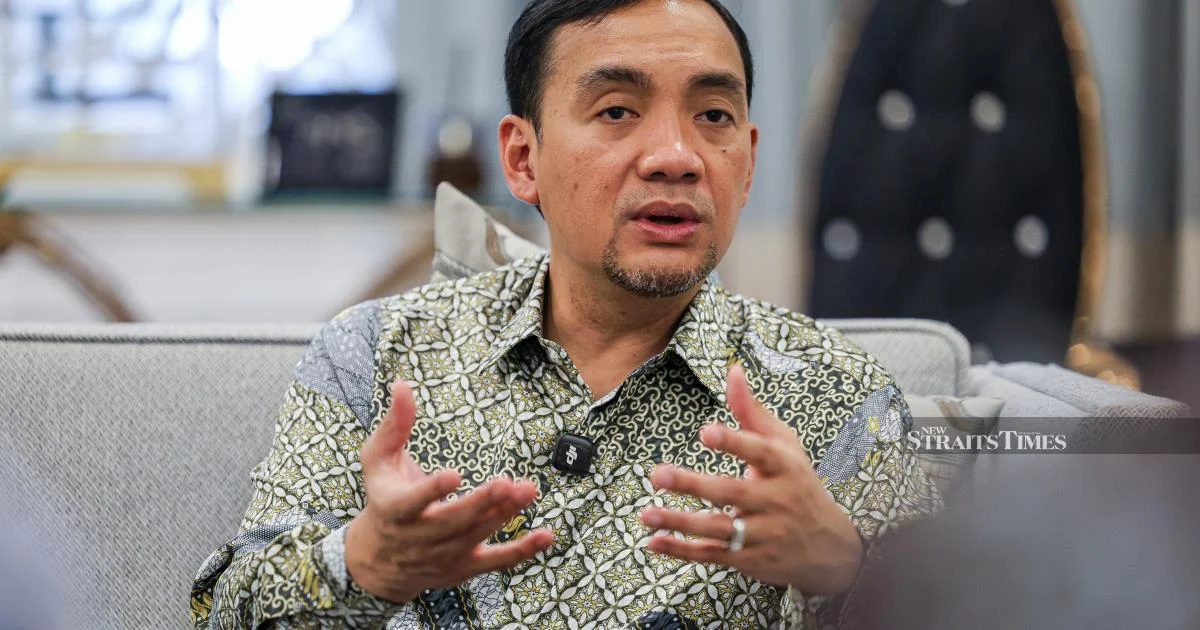
Johor caretaker Menteri Besar Datuk Onn Hafiz Ghazi has unequivocally rejected any scenario in which Barisan Nasional would govern the state alongside DAP, even if the coalition secured an electoral victory in upcoming polls. Speaking from Johor Baru, Onn Hafiz framed the refusal in ideological rather than pragmatic terms, suggesting the schism between the two political forces represents a fundamental clash of values rather than a mere tactical disagreement.
The statement carries particular weight given the shifting landscape of Malaysian coalition politics over recent years. Barisan Nasional's partnership options have narrowed considerably since 2018, when the coalition lost federal power. Meanwhile, DAP has emerged as a substantial electoral force across multiple states, prompting discussions about potential realignments. Onn Hafiz's emphatic rejection signals that Johor's BN leadership sees ideological separation as non-negotiable, regardless of electoral outcomes or arithmetic necessity.
The timing of these remarks reflects broader anxieties within Barisan Nasional about its political identity and direction. As the coalition contemplates its position ahead of state elections, tensions persist between those advocating for broader coalition flexibility and those insisting on maintaining traditional ideological boundaries. By emphasizing ideology, Onn Hafiz positions himself within the faction prioritizing principle over expediency, a stance that may resonate with BN's traditional support base while potentially limiting coalition flexibility.
DAP's trajectory in Johor politics has been modest compared to its dominance in other states. The party holds limited representation in the state legislature, and its electoral footprint remains concentrated in urban pockets. Nevertheless, the very possibility of coalition discussions involving DAP appears to trigger visceral reactions from Barisan Nasional figures, suggesting deeper insecurities about political positioning and ideological coherence within the coalition.
For Malaysian observers tracking coalition dynamics, Onn Hafiz's declaration illustrates how ideology—or at least rhetorical appeals to ideology—continues shaping political calculations in Malaysia's multi-ethnic, multi-religious context. Barisan Nasional has traditionally positioned itself as the guardian of particular constitutional and religious principles, a narrative DAP's secular-oriented politics appears to threaten in the minds of many BN strategists. Whether this positioning reflects genuine philosophical commitment or serves as convenient political cover remains a matter of interpretation.
The rejection also hints at internal Barisan Nasional anxieties about maintaining component party unity. UMNO, the dominant force within BN, faces consistent pressure to demonstrate its ideological credentials within Malay-Muslim constituencies. Entertaining coalitions with DAP might be perceived as ideological capitulation, potentially weakening UMNO's standing relative to competitors like Perikatan Nasional. From this perspective, Onn Hafiz's stance represents political insurance against accusations of ideological compromise.
Onn Hafiz's rhetorical framing deserves scrutiny nonetheless. Describing the BN-DAP divide as fundamentally ideological glosses over the fact that coalition calculations in Malaysian politics frequently involve pragmatism, seat mathematics, and patronage networks rather than pure principle. The emphasis on ideology may mask more prosaic concerns about electoral viability, voter sentiment, and coalition stability. Political actors often invoke ideology when appealing to core constituencies, while practical governance involves considerably more flexibility.
The statement's implications extend beyond Johor's borders. If Barisan Nasional faces electoral pressure in multiple states and confronts scenarios where only DAP partnership could enable state government formation, the principled rejection now articulated might face testing. Political parties frequently discover that yesterday's ideological red lines become negotiable when power calculations shift. Onn Hafiz may find his current position difficult to maintain if electoral outcomes force recalibration of coalition options.
For DAP, the firm rejection poses both challenges and potential opportunities. The party might leverage the snub to mobilize its urban voter base and present itself as a target of Barisan Nasional establishment hostility. Conversely, remaining outside government coalitions limits DAP's ability to shape policy and distribute patronage, potentially constraining its long-term growth in Johor. The party must balance aspirational messaging with realistic assessment of coalition pathways available within Malaysia's complex political arithmetic.
The broader Malaysian electorate observing these declarations should recognize that pre-election positioning statements often undergo significant revision when actual government formation becomes necessary. While Onn Hafiz's rejection appears absolute, Malaysian political history suggests few positions are genuinely non-negotiable when electoral results demand creative coalitional solutions. The ideological language deployed today may prove more flexible than rhetoric suggests once voters deliver their verdicts and actual governance begins.
Regional observers of Southeast Asian politics might also note how Malaysia's coalition dynamics reflect broader patterns across the region. In democracies with fragmented party systems, rhetoric frequently emphasizes unbridgeable ideological divides, yet governing coalitions often transcend such proclaimed boundaries. The gap between pre-election declarations and post-election realities frequently reflects pragmatism triumphing over principle when power distribution becomes concrete rather than theoretical.

%22%2F%3E%3C%2Fpattern%3E%3C%2Fdefs%3E%3Crect%20width%3D%22100%25%22%20height%3D%22100%25%22%20fill%3D%22url(%23ph21o2sg)%22%2F%3E%3Crect%20width%3D%22100%25%22%20height%3D%22100%25%22%20fill%3D%22url(%23ph21o2sp)%22%2F%3E%3Ctext%20x%3D%2250%25%22%20y%3D%2250%25%22%20text-anchor%3D%22middle%22%20dominant-baseline%3D%22central%22%20fill%3D%22rgba(255%2C255%2C255%2C0.95)%22%20font-family%3D%22Georgia%2C%20'Times%20New%20Roman'%2C%20serif%22%20font-weight%3D%22700%22%20font-size%3D%22170%22%20letter-spacing%3D%22-0.02em%22%3EGabungan%3C%2Ftext%3E%3C%2Fsvg%3E)