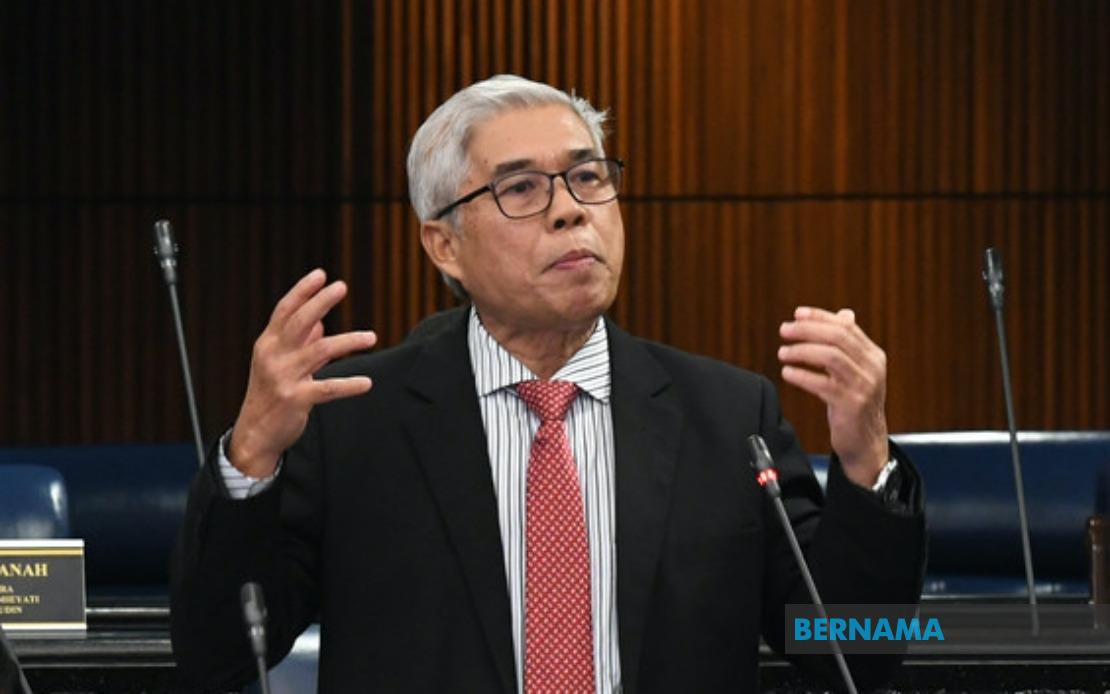
The MADANI Government operates within the strict parameters of written law and constitutional governance when determining financial allocations to states, according to Pasir Gudang Member of Parliament Hassan Abdul Karim. His statement, issued on June 21, underscores the legal foundations underpinning federal-state financial relationships at a moment when Johor is raising questions about the adequacy of its revenue share from the national coffers.
As a legal practitioner himself, Hassan drew specific attention to Article 109(1) of the Federal Constitution, which mandates that the Federal Government distribute annual capitation grants to each state in accordance with provisions outlined in Part I of the Tenth Schedule. This constitutional requirement serves as the formal mechanism through which the federation determines baseline funding for states, establishing a framework that applies uniformly across all states regardless of political affiliation or regional development needs. The existence of this written requirement demonstrates that financial allocations are not discretionary political decisions but rather derive from established constitutional arrangements negotiated during Malaysia's founding.
Further reinforcing this legalistic position, Hassan referenced Article 110(1), which guarantees states the right to revenue streams derived from taxation, licensing fees, and other income sources enumerated in Part III of the Tenth Schedule. This dual structure—combining federal capitation grants with state-derived revenues—creates a federalism model that seeks to balance central coordination with regional fiscal autonomy. The constitutional enumeration of these revenue sources prevents either level of government from unilaterally altering the financial relationship without formal constitutional amendment, a protection embedded in Malaysia's foundational governance architecture.
When disputes arise concerning the adequacy or distribution of federal allocations, Hassan outlined the constitutional remedy available to state governments. Article 108(4) establishes the National Finance Council as the designated forum where such matters should be resolved. This council, which brings together federal and state representatives, operates as the formal negotiating body for federal-state financial relationships and serves as the appropriate venue for grievances rather than public pressure campaigns. The existence of this institutional mechanism reflects the framers' intention to handle financial disagreements through structured dialogue rather than political brinkmanship.
The timing of Hassan's clarification is significant given that Johor faces state elections scheduled for July 11. Whatever government emerges from that electoral contest will inherit both the constitutional allocations already in place and the option to pursue additional claims through the National Finance Council. This institutional pathway offers newly elected state administrations a legitimate avenue to renegotiate their position without circumventing constitutional norms, Hassan suggested. The emphasis on legal processes appears designed to channel any incoming state government toward bureaucratic channels rather than confrontational political positioning.
The underlying tension stems from remarks made by the Regent of Johor, Tunku Mahkota Ismail, during a recent public session with Johor residents. His Royal Highness articulated a complaint that has simmered within Malaysia's wealthier states: Johor contributes more than RM40 billion annually to federal coffers through various taxation mechanisms yet receives only approximately RM2 billion to RM3 billion in return. For a state serving nearly five million residents, this apparent imbalance raises fundamental questions about fiscal equity and the adequacy of returned resources for development and social welfare initiatives.
This revenue disparity reflects a structural tension inherent in Malaysia's federation. Economically productive states like Johor, whose ports, industries, and commercial activities generate substantial tax revenues, effectively subsidise less developed states through the federal redistribution system. While this redistributive mechanism aligns with nation-building principles and aims to reduce regional inequality, it creates legitimate grievances among resource-rich states that perceive themselves as undercompensated for their fiscal contributions. The Regent's public intervention suggests mounting frustration within Johor's political establishment about this arrangement.
Hassan's invocation of constitutional process represents the federal government's preferred response to such complaints—framing them as governance matters properly resolved through established institutions rather than public disputes. By emphasizing that the National Finance Council exists precisely to address such concerns, Hassan subtly repositions the Regent's complaint as something to be channeled through bureaucratic forums rather than aired as a political grievance. This approach attempts to depoliticize what remains fundamentally a political question about how the nation's wealth should be distributed among its constituent states.
For Malaysian observers, Hassan's statement reveals the continuing evolution of federal-state relations in a period of shifting political dynamics. The invocation of constitutional provisions and legal frameworks reflects a government conscious of maintaining legitimacy through lawful process, even when facing substantive grievances from important state leaders. The emphasis on proper procedures suggests that the federal government views the Johor allocation question as manageable within existing institutional structures rather than a threat requiring exceptional measures or constitutional revision.
The broader implications extend beyond Johor's immediate concerns. Southeast Asia's federal systems face recurring tensions between economic productivity and equitable distribution. How Malaysia's government handles this particular dispute could influence how other states calculate their own fiscal positions and whether they pursue similar public campaigns for larger allocations. The establishment of clear constitutional procedures and institutional mechanisms for resolving such disputes serves to regularize what might otherwise become a source of destabilizing interstate conflict.
Looking forward, the July 11 Johor state election outcome will determine whether the incoming state government pursues Hassan's recommended constitutional pathway or adopts a more confrontational stance. A government with different political coloring from the federal administration might view the National Finance Council differently—either as a genuine forum for negotiation or as an insufficient venue lacking real authority. Hassan's statement has staked out the federal government's position that legal processes exist and should be utilized, setting expectations for how any successor state government should address its financial concerns moving forward.

%22%2F%3E%3C%2Fpattern%3E%3C%2Fdefs%3E%3Crect%20width%3D%22100%25%22%20height%3D%22100%25%22%20fill%3D%22url(%23phhvlbg)%22%2F%3E%3Crect%20width%3D%22100%25%22%20height%3D%22100%25%22%20fill%3D%22url(%23phhvlbp)%22%2F%3E%3Ctext%20x%3D%2250%25%22%20y%3D%2250%25%22%20text-anchor%3D%22middle%22%20dominant-baseline%3D%22central%22%20fill%3D%22rgba(255%2C255%2C255%2C0.95)%22%20font-family%3D%22Georgia%2C%20'Times%20New%20Roman'%2C%20serif%22%20font-weight%3D%22700%22%20font-size%3D%22320%22%20letter-spacing%3D%22-0.02em%22%3E24%3C%2Ftext%3E%3C%2Fsvg%3E)
%22%2F%3E%3C%2Fpattern%3E%3C%2Fdefs%3E%3Crect%20width%3D%22100%25%22%20height%3D%22100%25%22%20fill%3D%22url(%23ph4m8hug)%22%2F%3E%3Crect%20width%3D%22100%25%22%20height%3D%22100%25%22%20fill%3D%22url(%23ph4m8hup)%22%2F%3E%3Ctext%20x%3D%2250%25%22%20y%3D%2250%25%22%20text-anchor%3D%22middle%22%20dominant-baseline%3D%22central%22%20fill%3D%22rgba(255%2C255%2C255%2C0.95)%22%20font-family%3D%22Georgia%2C%20'Times%20New%20Roman'%2C%20serif%22%20font-weight%3D%22700%22%20font-size%3D%22320%22%20letter-spacing%3D%22-0.02em%22%3EData%3C%2Ftext%3E%3C%2Fsvg%3E)