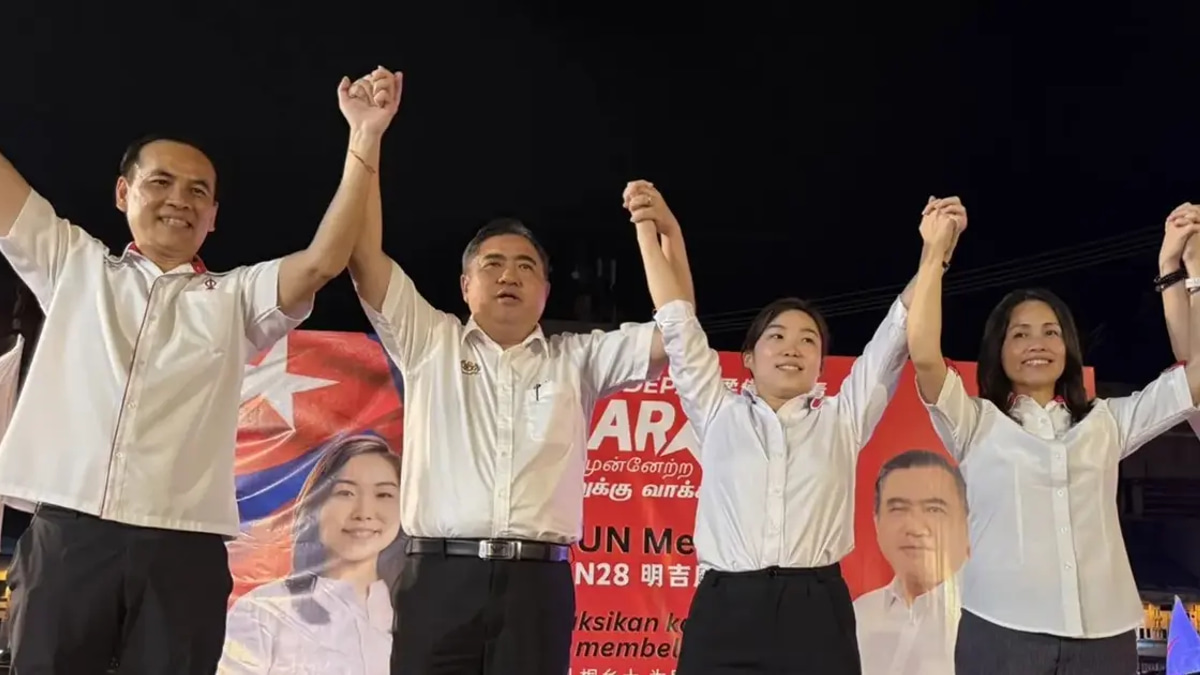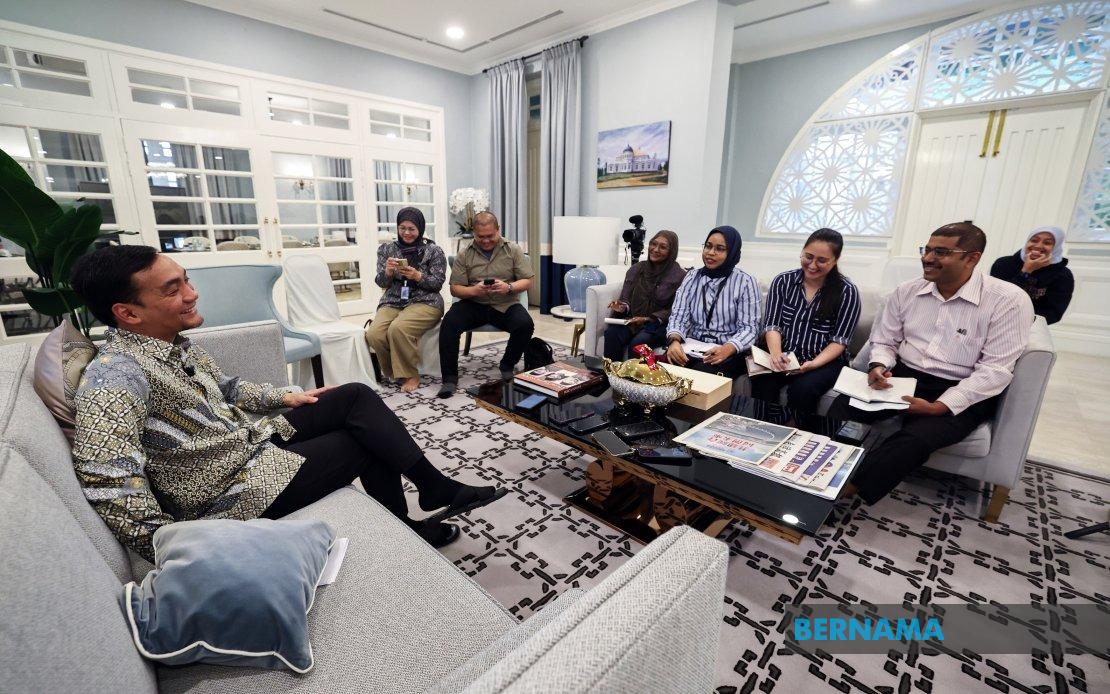
With Johor's state election set for July 11, Datuk Onn Hafiz Ghazi, the Menteri Besar and head of Barisan Nasional in the state, has delivered a rallying message to those who will not be contesting as candidates: their non-selection does not diminish their value to the party or their opportunity to serve. Speaking at his official residence in Saujana, Onn Hafiz acknowledged that candidate selection inevitably creates disappointment among hopeful members, yet framed this disappointment as a test of genuine commitment to BN's broader mission.
The party machinery, Onn Hafiz explained, extends far beyond the 56 state assembly seats available in Johor. Members who do not receive nomination can pursue roles at the federal level as Members of Parliament, contribute through grassroots party structures, or take on positions within the party's administrative apparatus. This structural approach reflects a common challenge facing Malaysian political coalitions: managing expectations when opportunities are mathematically limited yet aspirations are boundless. The Menteri Besar's message thus reframes rejection not as failure but as redirection, a reorientation of ambition toward different avenues of influence and service.
At the time of his remarks, Onn Hafiz indicated that candidate selection was approximately 80 per cent complete, yet final confirmation remained pending. This intermediate stage carries particular significance because, as he cautioned, circumstances can shift dramatically before the formal presentation of watikah, or letters of appointment. Historical precedent within Malaysian politics has occasionally seen nominations withdrawn or reassigned in the final stages, underscoring his warning that nothing is definitively settled until a candidate physically receives their official letter. This cautionary note likely reflects internal BN deliberations that continue even as public discourse advances.
The selection criteria employed by Johor BN reveal an attempt to balance multiple considerations. Candidates must demonstrate deep roots within their respective constituencies, enjoying recognition and acceptance among local communities rather than parachuting into unfamiliar territory. The coalition has emphasized that professional diversity is valued and that age alone does not determine suitability. This approach aligns with the concept of WALI candidates—winnable, acceptable, and likeable—previously articulated by BN's national leadership. For Onn Hafiz, capability and genuine commitment to constituent welfare transcend demographic categories; a young candidate lacking dedication serves no purpose, just as an older candidate with community disconnection would prove ineffective.
Approvals for candidate selection do not emerge from Onn Hafiz's office alone. The process requires endorsement from Ahmad Zahid Hamidi, both BN chairman and UMNO president, alongside consultation with senior party figures. This multi-layered approval structure reflects the complex internal dynamics of Barisan Nasional, where UMNO holds predominant influence yet MCA and MIC retain meaningful input. The centralized approval mechanism also serves to mitigate accusations of favoritism or regional power plays, though it simultaneously concentrates decision-making authority among national-level leadership.
Johor's electoral landscape extends beyond traditional considerations. The state hosts a substantial commuter population, including Malaysians employed in Singapore whose right to vote remains equally valid. Onn Hafiz specifically urged this working-age diaspora to exercise their franchise on July 11, recognizing that their participation could materially influence election outcomes. Young voters—those under 40 years old—comprise between 20 and 40 per cent of Johor's population, a demographic slice that no party can ignore. BN's engagement with this cohort has reportedly been substantial, though whether such outreach translates into electoral support remains uncertain and contested.
The timing of Johor's electoral schedule reflects procedural requirements established for state elections. Nomination day falls on June 27, allowing a two-week window before polling day on July 11. Early voting is scheduled for July 7, accommodating those with mobility constraints or scheduling conflicts. This calendar compresses the official campaign period, though informal campaigning in Johor has been underway for months. The condensed timeline presents both advantages and risks: less time for opposition counter-messaging but also reduced time for BN's machine to fully mobilize.
Onn Hafiz's emphasis on voter turnout reveals an underlying concern. Higher participation generally strengthens the legitimacy of electoral outcomes and, in some contexts, favors incumbent parties benefiting from superior organizational capacity. His assertion that turnout should be maximized reflects both democratic principle and practical political calculation. The state government's track record under his stewardship, he contended, justifies continued voter confidence. He positioned his administration's accomplishments as evidence of competence and called for democratic affirmation through the ballot box.
The phrase "Bangsa Johor"—Johor's people or Johor's nation—carries particular resonance in this context. It invokes a sense of collective identity transcending partisan boundaries, suggesting that voting for BN is voting for Johor itself. This rhetorical move seeks to frame electoral choice as alignment with state interest rather than narrow factional advantage. Whether such messaging resonates with voters, particularly younger and more critical constituencies, will become apparent after July 11.
Onn Hafiz's cultivation of internal party discipline through his remarks to non-selected members addresses a genuine vulnerability. Disappointed aspirants possess inside knowledge, community connections, and organizational skills that could be redirected toward opposition parties or simply withheld from campaign efforts. By emphasizing continued opportunity within BN's structure and redefining setback as redirection, the Menteri Besar attempts to prevent the potentially significant leakage of party resources and goodwill. How effectively this messaging penetrates grassroots sentiment, however, depends on whether alternative pathways genuinely materialize or whether non-selection proves genuinely final.

%22%2F%3E%3C%2Fpattern%3E%3C%2Fdefs%3E%3Crect%20width%3D%22100%25%22%20height%3D%22100%25%22%20fill%3D%22url(%23ph21o2sg)%22%2F%3E%3Crect%20width%3D%22100%25%22%20height%3D%22100%25%22%20fill%3D%22url(%23ph21o2sp)%22%2F%3E%3Ctext%20x%3D%2250%25%22%20y%3D%2250%25%22%20text-anchor%3D%22middle%22%20dominant-baseline%3D%22central%22%20fill%3D%22rgba(255%2C255%2C255%2C0.95)%22%20font-family%3D%22Georgia%2C%20'Times%20New%20Roman'%2C%20serif%22%20font-weight%3D%22700%22%20font-size%3D%22170%22%20letter-spacing%3D%22-0.02em%22%3EGabungan%3C%2Ftext%3E%3C%2Fsvg%3E)