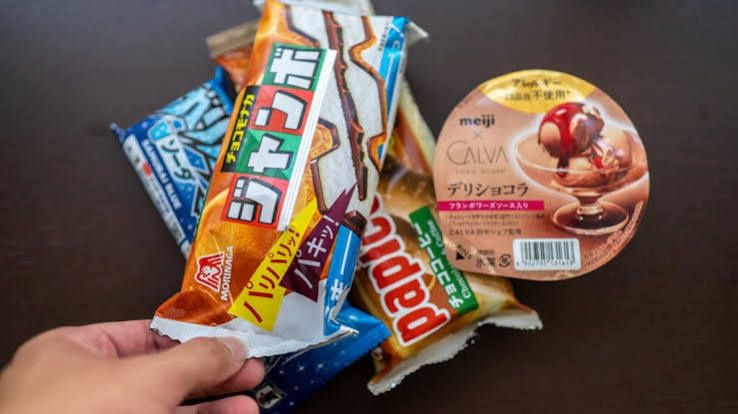
Japanese antitrust authorities have moved decisively against what appears to be a significant cartel in the country's ice cream industry, conducting raids on six major producers as the summer season approaches—historically the sector's most profitable period. The Japan Fair Trade Commission's enforcement action underscores mounting pressure on firms suspected of manipulating consumer prices through illegal collusion, a development with implications for how businesses across the region approach pricing strategies.
The regulatory sweep targeted the headquarters of industry giants Meiji Co., Morinaga Milk Industry Co., Lotte Co., Ezaki Glico Co., Morinaga & Co., and Akagi Nyugyo Co., all identified as among Japan's most significant ice cream manufacturers. According to sources familiar with the investigation, these companies are suspected of engaging in sustained coordination to raise retail prices, with officials allegedly communicating via email exchanges and face-to-face meetings over an extended period to align the timing and magnitude of price increases.
What distinguishes this case is the apparent systematic nature of the alleged scheme. Rather than isolated incidents, investigators have identified a pattern stretching back to approximately 2022, when the companies began raising prices annually at remarkably similar intervals. This synchronisation caught the attention of Japanese media and prompted scrutiny from the JFTC, which specialises in detecting and dismantling anticompetitive behaviour that harms consumers and distorts market dynamics.
The investigation extends beyond simple price coordination. Authorities are examining whether the firms exploited broader inflationary pressures to justify price increases that substantially exceeded actual rises in raw material costs. This distinction matters significantly—while companies enjoy legitimate scope to adjust prices when ingredient expenses climb, using macroeconomic conditions as cover for collusive increases constitutes fraud against consumers and violates antitrust principles. The JFTC's focus on this distinction reflects sophisticated enforcement thinking about how cartels disguise illegal activity during periods of general economic uncertainty.
All six companies have acknowledged the raids, with five issuing formal statements confirming cooperation with investigators. Natsuyo Suzuki, representing Akagi Nyugyo, specifically committed the firm to working collaboratively throughout the investigation following the on-site inspection. These public commitments to cooperation are standard practice and may reflect strategic positioning ahead of potential enforcement decisions, as companies seek to minimise penalties by demonstrating responsiveness to regulatory concerns.
The ice cream sector's prominence in Japan's consumer economy makes this investigation particularly significant. During the fiscal year ending March, Japanese ice cream sales reached a record high exceeding 660 billion yen, driven substantially by exceptional summer conditions that year. Japan experienced its hottest summer since systematic temperature records began in 1989, creating extraordinary demand for cold treats and generating substantial profit opportunities for manufacturers. Whether the investigated firms inappropriately exploited these naturally boosted sales through artificial price coordination remains the crux of the inquiry.
For Malaysian and Southeast Asian consumers and businesses, this development carries important lessons about competitive enforcement. Japan's JFTC action demonstrates that even in developed economies with strong legal frameworks, sophisticated cartels can persist in seemingly innocuous sectors. Price-fixing conspiracies often target essential consumer goods and seasonal products where demand is relatively inelastic—precisely the conditions that apply to ice cream during summer months. Regional competition authorities and consumer advocates should note how Japanese investigators detected and pursued the case, identifying synchronised pricing patterns as prima facie evidence warranting enforcement action.
The potential consequences facing these companies are substantial. Should the JFTC conclude its investigation by determining a cartel existed, it possesses authority to mandate business practice improvements and impose financial penalties. These sanctions serve both punitive and deterrent functions, signalling to other Japanese firms and regional competitors that collusive behaviour carries serious costs. The publicity surrounding enforcement actions independently influences corporate behaviour, as companies become acutely aware that allegedly anticompetitive activities face heightened regulatory scrutiny.
This case also highlights evolving enforcement approaches toward digital-era conspiracies. The reliance on email communications and meeting records as evidence reflects how modern cartels often leave digital trails that antitrust investigators can trace. Companies coordinating unlawful price increases through contemporary channels face greater detection risks than cartels operating purely through oral agreements or traditional hierarchies, a reality that should inform corporate compliance strategies across Asia.
The ice cream investigation occurs within a broader context of Japanese regulatory assertiveness. The JFTC has increasingly focused on detecting and prosecuting anticompetitive conduct, particularly in consumer-facing sectors where market power directly affects household purchasing power. This enforcement momentum reflects both consumer protection priorities and recognition that effective competition law serves essential economic functions by preventing firms from extracting monopoly rents through collusion.
For consumers in Japan and throughout the region, the investigation's outcome matters considerably. If the alleged cartel succeeded in maintaining artificially elevated ice cream prices over multiple years, millions of households overpaid for a routine summer product during periods when demand was particularly strong. Determining whether companies illegally profited from coordination versus competing legitimately will shape both compensation discussions and future pricing behaviour across the Japanese ice cream industry and potentially influence market conduct among regional manufacturers watching the case unfold.

%22%2F%3E%3C%2Fpattern%3E%3C%2Fdefs%3E%3Crect%20width%3D%22100%25%22%20height%3D%22100%25%22%20fill%3D%22url(%23ph21o2sg)%22%2F%3E%3Crect%20width%3D%22100%25%22%20height%3D%22100%25%22%20fill%3D%22url(%23ph21o2sp)%22%2F%3E%3Ctext%20x%3D%2250%25%22%20y%3D%2250%25%22%20text-anchor%3D%22middle%22%20dominant-baseline%3D%22central%22%20fill%3D%22rgba(255%2C255%2C255%2C0.95)%22%20font-family%3D%22Georgia%2C%20'Times%20New%20Roman'%2C%20serif%22%20font-weight%3D%22700%22%20font-size%3D%22170%22%20letter-spacing%3D%22-0.02em%22%3EGabungan%3C%2Ftext%3E%3C%2Fsvg%3E)