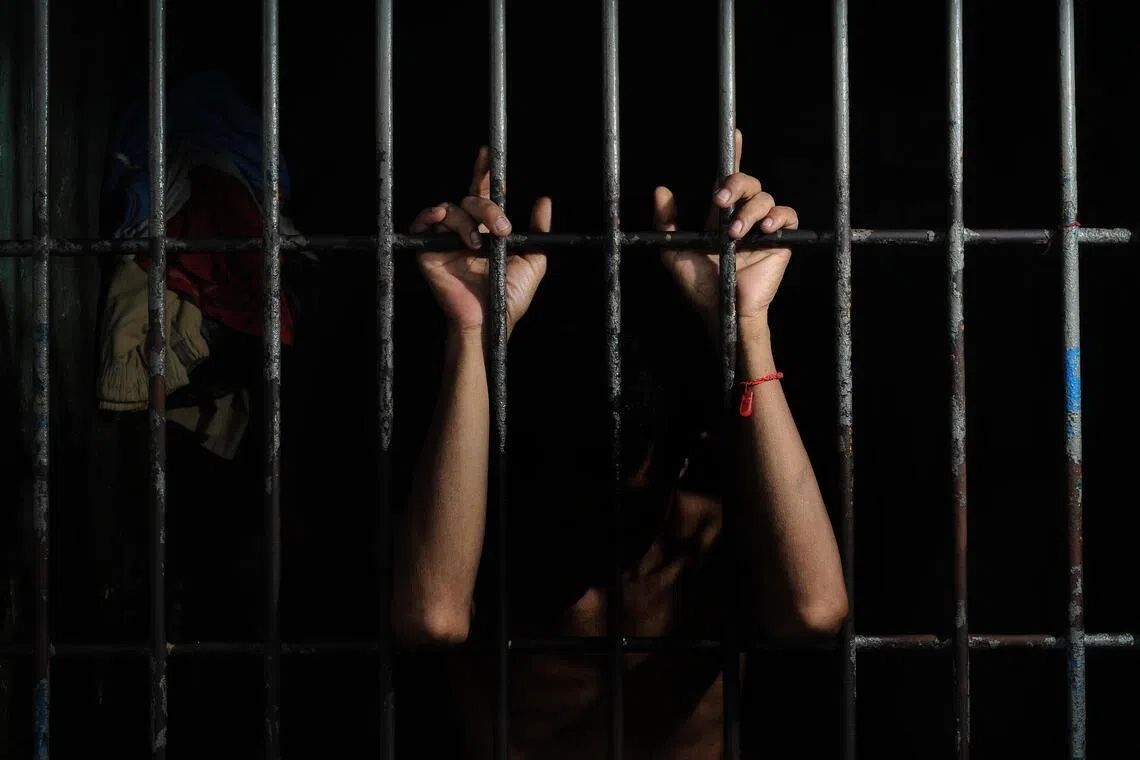
A grieving mother has initiated legal action against Japanese authorities, seeking approximately 100 million yen in damages following the tragic death of her 16-year-old daughter after an ordeal in police custody that exemplifies what critics term "hostage justice" — a practice they argue pervades Japan's criminal justice system. The lawsuit was lodged at Kobe district court in western Japan on Wednesday, June 17, drawing renewed attention to a long-standing controversy over interrogation methods and pre-trial detention practices that human rights organisations have repeatedly condemned as violating international standards.
The case involves a teenager identified only as Runa in court documents, who was arrested in June of the previous year while employed at a care facility for people with disabilities in Hyogo Prefecture. She was accused of assaulting one of her clients during a Valentine's Day gathering, though she consistently maintained her innocence throughout the ordeal. According to the complaint, her involvement was limited to gently pressing her hand against the patient's chin in an attempt to prevent the individual from biting another person — a characterisation that her legal representatives argue reveals how trivial the alleged misconduct actually was.
The 18-day period that followed her arrest proved catastrophic for Runa's health and psychological wellbeing. During this extended detention, authorities systematically isolated her from family contact, permitted communication only with her legal representatives, and subjected her to repeated interrogation sessions designed to extract a confession. Prosecutors sought to extend her detention on two separate occasions, each time overriding her lawyer's formal requests to a judge for her release. The pressure mounted considerably when investigators threatened her with placement in a reformatory facility and warned that she would be prevented from seeing her mother unless she admitted guilt. In her personal journal maintained during detention, Runa recorded instances where interrogators insisted: "You did it, didn't you? Just tell the truth" — words that capture the coercive atmosphere she endured.
Japan's criminal justice apparatus, widely criticised by international human rights bodies, operates under a system where confessions serve as the linchpin of prosecutions and where the presumption of innocence remains more theoretical than practical in many cases. The emphasis on confession-based justice creates perverse incentives that effectively incentivise suspects to incriminate themselves, whether truthfully or not, simply to escape the ordeal of prolonged detention. This structural problem is precisely what "hostage justice" describes: the practice of holding individuals in custody as leverage to compel confessions rather than as a measure to ensure court appearance or prevent evidence tampering. Suspects who deny charges or exercise their right to silence frequently face lengthy pre-trial incarceration, transforming the detention mechanism from a neutral procedural tool into an instrument of coercion.
Runa's case gains particular poignancy from her age and personal circumstances. As a minor without a record of delinquency, she lived under her parents' supervision and presented no credible flight risk or likelihood of destroying evidence. Sasaki Masahiro, the lawyer representing her mother, has questioned the fundamental justification for her arrest and detention, noting that even Japan's own legal standards should restrict such measures for juveniles to situations deemed absolutely necessary. The absence of probable cause for suspecting her of the alleged conduct was compounded by the authorities' disregard for her age and status as a first-time offender with strong family ties.
The psychological and physical toll of Runa's detention became apparent only after her release. Eighteen days after her arrest, following a collapse and vomiting episode that necessitated brief hospital treatment, prosecutors decided not to pursue charges and released her. However, the damage had already accumulated irreversibly. Runa was subsequently diagnosed with acute stress disorder, eating disorder, and post-traumatic stress disorder — a diagnostic constellation reflecting the severity of her psychological trauma. Over the following five months, her condition deteriorated dramatically. She lost weight precipitously, her body apparently shutting down as a consequence of her psychological anguish. By December, when she died, she weighed merely 20 kilograms, a figure that made her unrecognisable to her own mother. The causal chain linking her detention to her death, while necessarily inferred rather than directly measurable, appears evident in the temporal progression and medical diagnoses.
The emotional weight of Runa's story became visible at the news conference where her mother spoke publicly about the case. Describing her daughter as unrecognisable at the moment of death, she articulated a parent's fundamental need for understanding and accountability: an explanation of why her child was arrested, detained, and ultimately died. These questions transcend the specifics of an alleged assault at a care facility; they implicate the entire system that permitted such a vulnerable individual to be subjected to such conditions for such an insubstantial alleged wrongdoing.
Runa's case arrives within a broader pattern of scrutiny of Japan's interrogation practices and detention system. International human rights organisations have repeatedly issued statements deploring the "hostage justice" phenomenon as contrary to international legal standards governing criminal procedure. A particularly notable precedent involves Iwao Hakamada, who holds the unfortunate distinction of having been death row's longest-serving inmate globally before his convictions were overturned in 2024. The Supreme Court, in nullifying his convictions, explicitly found that his confessions had been extracted through interrogation methods it characterised as "inhumane" — a judicial acknowledgment that the system had produced justice through fundamentally flawed means.
The Kobe District Public Prosecutors Office, when approached for comment, declined to provide substantive remarks, stating merely that they had not yet received formal notification of the complaint. This circumspection reflects standard prosecutorial protocol but also sidesteps the substantive questions about whether Runa's detention and interrogation comported with legal standards and basic humanitarian principles. The apparent reluctance to engage with the case highlights the defensive posture that Japanese authorities often adopt when confronted with criticism of criminal justice procedures, even as pressure mounts both domestically and internationally for meaningful reform.
For Malaysian and Southeast Asian observers, Runa's case illuminates the critical importance of robust procedural safeguards protecting suspects' rights, particularly those of juveniles and individuals from vulnerable populations. As regional nations develop and strengthen their own legal systems, the cautionary example of Japan — a wealthy, stable democracy with advanced institutions — demonstrates how even well-established systems can harbour practices incompatible with human dignity when adequate oversight mechanisms are absent or insufficiently enforced. The compensation sought by Runa's mother, while substantial, cannot reverse the tragedy that unfolded in a Hyogo Prefecture police facility. What the lawsuit may accomplish, however, is forcing a reckoning with practices that remain embedded within Japan's criminal justice tradition and potentially catalysing the systemic reforms that Japanese civil society advocates have long demanded.

%22%2F%3E%3C%2Fpattern%3E%3C%2Fdefs%3E%3Crect%20width%3D%22100%25%22%20height%3D%22100%25%22%20fill%3D%22url(%23ph21o2sg)%22%2F%3E%3Crect%20width%3D%22100%25%22%20height%3D%22100%25%22%20fill%3D%22url(%23ph21o2sp)%22%2F%3E%3Ctext%20x%3D%2250%25%22%20y%3D%2250%25%22%20text-anchor%3D%22middle%22%20dominant-baseline%3D%22central%22%20fill%3D%22rgba(255%2C255%2C255%2C0.95)%22%20font-family%3D%22Georgia%2C%20'Times%20New%20Roman'%2C%20serif%22%20font-weight%3D%22700%22%20font-size%3D%22170%22%20letter-spacing%3D%22-0.02em%22%3EGabungan%3C%2Ftext%3E%3C%2Fsvg%3E)