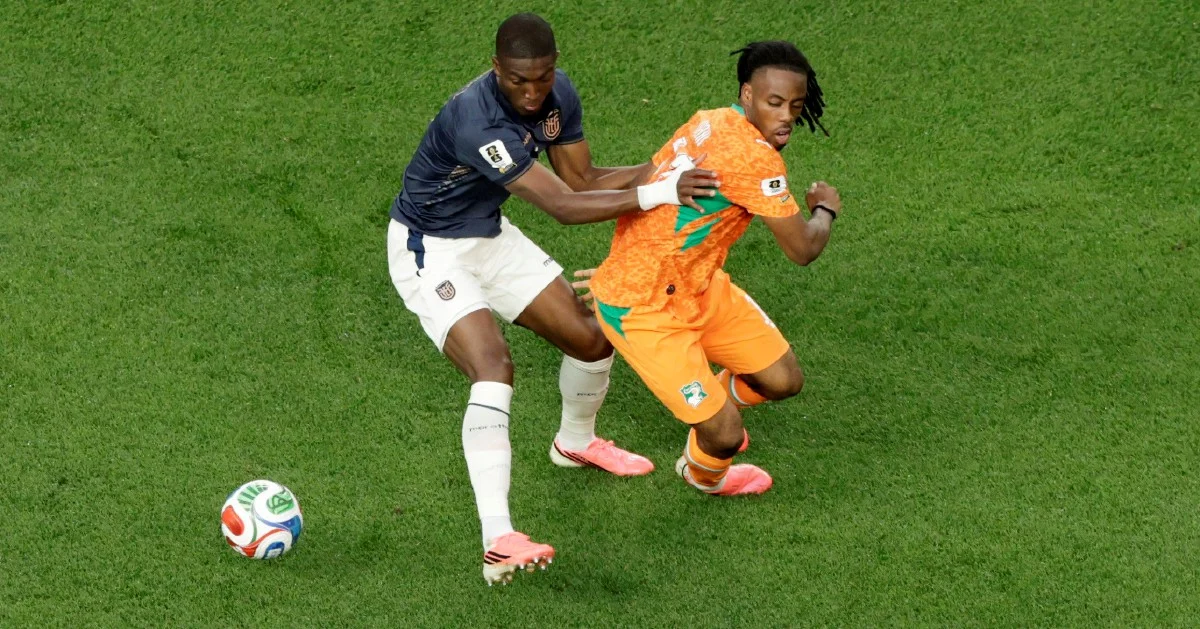
The Ivorian Football Federation announced on Thursday that striker Elye Wahi will not be part of the national team contingent heading to Canada for the weekend's World Cup encounter with Germany. The decision came just hours after reports emerged connecting the player to an ongoing investigation into alleged sports corruption centring on a Ligue 1 fixture. The federation's swift action reflects the gravity with which the governing body is treating the matter and its commitment to maintaining the integrity of national team competitions.
Wahi, who has established himself as a key attacking asset for Ivory Coast, now finds himself sidelined from what represents a significant match in the tournament. The timing of the allegations creates considerable disruption for the Ivorian coaching staff, who must now reorganise their forward line ahead of the high-profile fixture against the German squad. This development underscores how match-fixing investigations can have immediate, tangible consequences for players and teams, disrupting competition schedules and squad preparations across multiple levels of professional football.
The investigation reportedly centres on suspicious activity during a French league match, raising questions about whether Wahi was directly involved in any alleged conduct or whether he is being questioned as part of a broader inquiry. French football authorities, through their anti-corruption mechanisms, have become increasingly vigilant in recent years as instances of suspected match-fixing have emerged across European leagues. Ligue 1, despite being France's premier division, has not been immune to such concerns, prompting heightened scrutiny of unusual betting patterns and match outcomes.
For Malaysian and Southeast Asian football observers, this incident carries particular significance. Regional football associations have increasingly strengthened ties with European counterparts and participate in FIFA governance structures where match-integrity protocols are debated and refined. The case demonstrates how global football governance mechanisms respond to corruption allegations and how national federations must balance player welfare, legal processes, and competitive obligations. Southeast Asian nations, which have grappled with match-fixing concerns in domestic competitions, can observe how established football powers address such matters.
The suspension also raises questions about procedural fairness and the balance between precautionary measures and due process. Wahi has not been formally charged with any wrongdoing, yet exclusion from the national team squad represents a significant sanction during the critical World Cup phase. How federations manage such situations—navigating investigative secrecy, player reputation, and competitive necessity—has become an increasingly important aspect of modern football governance. The decision reflects confidence in the investigative process while simultaneously protecting the federation's own interests and the tournament's credibility.
From a strategic perspective, Ivory Coast faces the challenge of adapting without a proven forward during a pivotal World Cup match. Germany represents formidable opposition, and the loss of an attacking option forces tactical recalibration. The federation must draw upon alternative forwards in their squad while maintaining offensive potency. This situation illustrates how match-fixing allegations create cascading disruptions throughout team management, not merely affecting individual players but forcing broader squad adjustments and potentially affecting competitive outcomes.
The broader context of match-fixing in European football has intensified scrutiny across the sport. Betting syndicates, transnational criminal networks, and sophisticated match-manipulation schemes have prompted UEFA and national associations to implement advanced monitoring systems. Ligue 1, like other top European leagues, now employs dedicated integrity units that analyse betting anomalies, player communications, and match statistics to detect suspicious patterns. When irregularities surface, the cascading process of investigation, reporting, and action can affect multiple stakeholders simultaneously.
The timing during World Cup qualification compounds the situation's sensitivity. Players typically view World Cup participation as among football's highest honours, and exclusion—even provisionally—carries both professional and personal significance. For Wahi, the consequences extend beyond the immediate match; they potentially affect his market value, reputation, and future career trajectory. Yet federations must prioritise institutional integrity over individual convenience, particularly when corruption allegations emerge.
For FIFA and international football governance, this incident reinforces the necessity of clear protocols when investigations intersect with major competitions. The federation's swift decision suggests well-established procedures for handling such situations, though observers may question whether excluding players during ongoing investigations versus awaiting formal charges represents appropriate balance. Different national associations employ varying approaches, reflecting different legal traditions and organisational cultures.
The investigation itself remains active, and fuller details about the allegations may emerge in coming weeks. Whether Wahi faces formal charges or is ultimately cleared remains uncertain. What is clear is that his absence against Germany represents concrete immediate consequence of corruption concerns in professional football. This case will likely feature in football governance discussions regarding how associations protect competition integrity whilst respecting investigative processes and player rights—a challenge that resonates across Asian, European, and global football communities alike.

%22%2F%3E%3C%2Fpattern%3E%3C%2Fdefs%3E%3Crect%20width%3D%22100%25%22%20height%3D%22100%25%22%20fill%3D%22url(%23ph21o2sg)%22%2F%3E%3Crect%20width%3D%22100%25%22%20height%3D%22100%25%22%20fill%3D%22url(%23ph21o2sp)%22%2F%3E%3Ctext%20x%3D%2250%25%22%20y%3D%2250%25%22%20text-anchor%3D%22middle%22%20dominant-baseline%3D%22central%22%20fill%3D%22rgba(255%2C255%2C255%2C0.95)%22%20font-family%3D%22Georgia%2C%20'Times%20New%20Roman'%2C%20serif%22%20font-weight%3D%22700%22%20font-size%3D%22170%22%20letter-spacing%3D%22-0.02em%22%3EGabungan%3C%2Ftext%3E%3C%2Fsvg%3E)