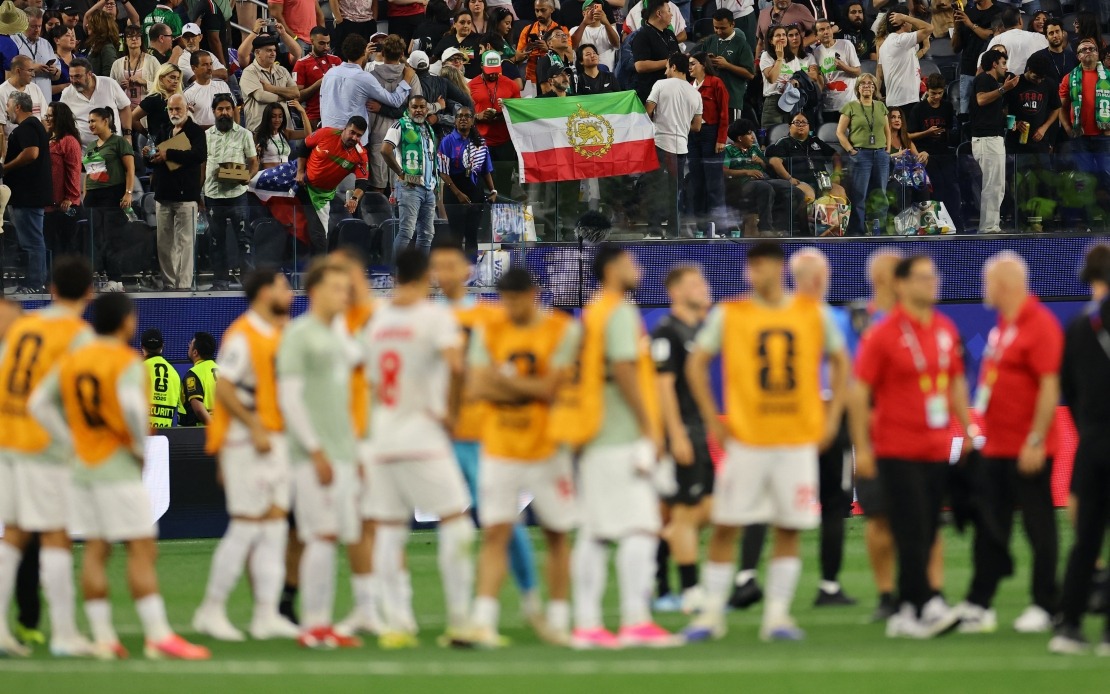
Iran's national football team manager Amir Ghalenoei has characterized his squad as the "most repressed team in the whole World Cup," alleging that authorities forced the Iranian contingent to depart Los Angeles for their Mexican training base immediately following their opening fixture against New Zealand on Monday evening. The assertion emerged during remarks to international media outlets, with Ghalenoei describing the disruption as a significant logistical burden that undermined the team's recovery preparation between matches.
According to Ghalenoei's account, the Iranian delegation had anticipated spending the night in Los Angeles and conducting a structured recovery session the following day. This standard practice allows squads to address physical fatigue, review tactical performance, and mentally prepare for subsequent matches. Instead, the team received orders to depart directly after the final whistle, forcing immediate travel to Tijuana, Mexico. The coach emphasized the cumulative toll of extended air travel combined with the inability to properly recuperate following intense match competition.
When pressed on the source of these directives, Ghalenoei declined to specify whether FIFA officials, US government agencies, or other parties had issued the orders. However, Iran captain Mehdi Taremi provided a potential clue, noting that FIFA President Gianni Infantino visited the team's locker room immediately after Monday's encounter. Taremi's remarks hinted at deeper geopolitical dimensions, suggesting the situation extended beyond standard tournament logistics. His cryptic statement—"For sure, he wants to try to help us, but it's about other things, too. Everyone knows it"—appeared to reference the long-running diplomatic tensions between the United States and Iran.
Taremi's allusion to broader context carries particular resonance given the contemporary political landscape. The Iranian captain referenced the over 100-day military conflict between the two nations, indicating that a peace settlement was expected imminently. His reluctance to elaborate directly, combined with his gesture toward geographic realities, suggested that the team's accommodation and movement restrictions reflected larger geopolitical calculations rather than routine World Cup administration. The statement implied that security, diplomatic, or political considerations may have influenced decisions affecting the Iranian delegation's participation conditions.
The logistical complications facing the Iranian team predate their World Cup campaign itself. Originally, the federation had arranged for the squad to establish its base in Tucson, Arizona, providing proximity to their opening matches while remaining within the United States. This plan proved untenable due to visa-related obstacles and logistical hurdles that emerged during the late-May preparation period. Consequently, team officials relocated their entire operation across the Mexican border to Tijuana, extending the distance between their accommodation and match venues and necessitating additional travel time.
The relocation to Mexico, while resolving visa complications, transformed the Iranian team's World Cup experience into one marked by exceptional travel demands. Rather than benefiting from the conventional advantages of hosting a tournament—proximity to facilities, reduced time zones, streamlined logistics—the squad instead found itself operating from an international base. The subsequent departure from Los Angeles added yet another layer of disruption, compounding the difficulties already created by their initial Tucson-to-Tijuana repositioning.
Ghalenoei's characterization of the Iranian team as uniquely constrained within the World Cup framework highlights the intersection of sports and international relations. The assertion that no other national delegation faced comparable restrictions suggests either exceptional security protocols directed specifically at Iran or the consequences of broader geopolitical positioning. Whether intentional or structural, the cumulative effect left Iranian players managing fatigue while simultaneously addressing the psychological weight of operating under perceived constraints.
The timing of these disclosures—emerging in international media immediately after the opening match—indicates that team management felt sufficiently aggrieved to breach typical diplomatic protocols surrounding World Cup participation. Coaches and administrators ordinarily refrain from publicizing logistical complaints, recognizing that such statements can generate negative publicity and potentially invite further scrutiny. Ghalenoei's decision to speak candidly suggests the situation warranted public acknowledgment, though the strategic ambiguity regarding specific responsible parties left room for various interpretations.
For Southeast Asian audiences, the Iranian team's circumstances offer perspective on how international sports events navigate geopolitical complexities. Nations hosting World Cups and other major tournaments must balance inclusive sporting principles with security, diplomatic, and political considerations. The Iran situation illustrates the tension inherent in that balance—the desire to welcome all nations while managing real or perceived risks, or alternatively, responding to foreign policy imperatives that extend beyond sporting administration.
The implications extend to team performance and competitive fairness. Physical recovery constitutes a measurable advantage in professional football, where marginal differences in fatigue levels influence match outcomes. If Iranian players entered subsequent fixtures with accumulated exhaustion while competing nations enjoyed proper recovery protocols, questions of competitive equity logically arise. Such disparities, whether intentional or inadvertent, undermine the meritocratic principles underlying international sports competition.
Looking forward, the Iranian team's experiences during this World Cup campaign may influence future host nation planning and FIFA administrative procedures. The need to accommodate all participating nations while addressing legitimate security and logistical concerns requires transparent protocols that prevent any squad from operating under perceived disadvantage. Ghalenoei's public statements, combined with Taremi's geopolitical allusions, have established a documented record suggesting that Iran operated under restrictions that merit scrutiny from tournament organizers and international sports governance bodies.

%22%2F%3E%3C%2Fpattern%3E%3C%2Fdefs%3E%3Crect%20width%3D%22100%25%22%20height%3D%22100%25%22%20fill%3D%22url(%23ph21o2sg)%22%2F%3E%3Crect%20width%3D%22100%25%22%20height%3D%22100%25%22%20fill%3D%22url(%23ph21o2sp)%22%2F%3E%3Ctext%20x%3D%2250%25%22%20y%3D%2250%25%22%20text-anchor%3D%22middle%22%20dominant-baseline%3D%22central%22%20fill%3D%22rgba(255%2C255%2C255%2C0.95)%22%20font-family%3D%22Georgia%2C%20'Times%20New%20Roman'%2C%20serif%22%20font-weight%3D%22700%22%20font-size%3D%22170%22%20letter-spacing%3D%22-0.02em%22%3EGabungan%3C%2Ftext%3E%3C%2Fsvg%3E)