Malaysia's People's Income Initiative (IPR) has emerged as a significant antipoverty intervention, serving 7,787 households since its launch almost three years ago, according to a written parliamentary response from the Economy Ministry released on July 1. The programme demonstrates the government's commitment to supplementing conventional poverty alleviation strategies with targeted income support mechanisms designed to tackle interlinked challenges including food insecurity and rising living costs.
The IPR operates within a framework that recognises poverty as a multidimensional problem requiring coordinated solutions. By focusing simultaneously on income generation, employment creation, and household food security, the initiative addresses root causes rather than merely treating symptoms. Ministry officials characterised the early results as encouraging, noting that the programme has successfully transitioned a meaningful cohort of beneficiary families toward economic self-sufficiency and reduced vulnerability to economic shocks.
A particularly noteworthy achievement is the reported income trajectory of participating households. The Economy Ministry disclosed that many participants have successfully attained monthly earnings exceeding RM2,000, a threshold that carries significant psychological and practical importance in Malaysia's social context. This income level represents a meaningful advancement beyond absolute poverty and suggests that the programme design effectively connects participants with sustainable income-generating activities rather than temporary relief measures.
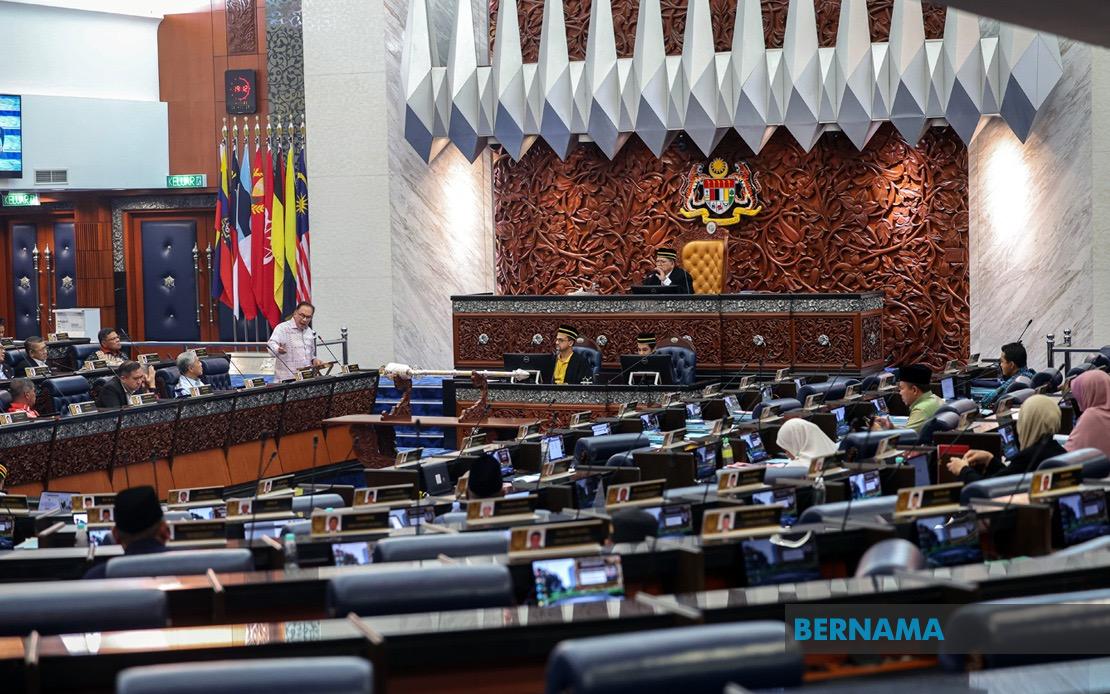
The parliamentary disclosure emerged in response to scrutiny from Wan Ahmad Fayhsal Wan Ahmad Kamal, the Machang representative from Perikatan Nasional, who sought detailed assessments of the IPR's effectiveness and its integration with Malaysia's broader data infrastructure for economic policymaking. This oversight mechanism reflects growing parliamentary interest in evaluating the return on social investment and ensuring that poverty eradication spending delivers measurable outcomes for vulnerable populations.
Beyond immediate poverty alleviation, the IPR integrates with the Main Database (PADU), Malaysia's centralised platform for consolidating household and demographic information from government agencies. This data architecture enables more efficient targeting and coordination of social programmes, reducing administrative duplication and improving the precision of government interventions. The PADU integration represents a modernisation of Malaysia's social safety net infrastructure, moving away from fragmented, agency-specific databases toward a unified ecosystem for evidence-based policymaking.
The government has made substantial progress in operationalising PADU across the federal bureaucracy. As of June 2026, 204 government agencies have established continuous data sharing and integration protocols with the centralised database, creating a foundation for coordinated service delivery. This institutional transformation, while technically routine, carries profound implications for how efficiently the state can identify and support vulnerable populations.
The data-sharing architecture has already validated its operational utility. Twenty-seven formal applications from government agencies have received approval to access PADU information for implementing programmes and policies. These approvals span multiple government objectives, including enhanced public service delivery, citizen welfare optimisation, digital service innovation, and academic research on social outcomes. The diversity of approved applications suggests that PADU is becoming embedded as a standard tool in Malaysia's governance apparatus.
For Malaysian policymakers and social development professionals, the IPR results carry several practical implications. The scheme's relative success in reaching nearly 8,000 households over three years suggests that targeted income-support models merit continued investment and potential expansion. The demonstrated capacity to move beneficiaries into monthly income brackets above RM2,000 indicates that well-designed programmes can catalyse genuine economic advancement rather than creating dependency relationships. However, the absolute numbers also indicate that poverty remains an extensive challenge, and that even a successful programme serves only a fraction of Malaysia's vulnerable population, pointing toward the necessity for complementary interventions and sustained commitment to poverty reduction.
The PADU integration dimension offers longer-term strategic benefits. By consolidating household-level data across government agencies, Malaysia is constructing the informational infrastructure necessary for precision social policy. Future anti-poverty efforts can leverage these integrated datasets to identify vulnerable populations more systematically, allocate limited resources more efficiently, and measure programme impacts with greater accuracy. This represents a transition toward data-driven social governance, a capacity that will become increasingly important as demographic changes and economic restructuring alter the nature of poverty and vulnerability in Malaysia.
For Southeast Asian readers, Malaysia's experience with integrated data systems and targeted poverty programmes offers instructive lessons. Many countries in the region struggle to maintain comprehensive information about vulnerable populations across fragmented government systems. Malaysia's investment in PADU, despite the significant infrastructure costs, demonstrates recognition that modern social governance requires integrated data ecosystems. Similarly, the IPR's focus on income generation and employment rather than unconditional cash transfers reflects regional policy trends toward promoting productive capacity and economic participation among poor households.
The parliamentary scrutiny surrounding IPR performance indicators a broader maturation of social policy accountability in Malaysia. Legislators are increasingly demanding detailed empirical evidence of programme effectiveness, not merely assertions of good intentions. This represents a healthy institutional development that should encourage government agencies to invest in robust monitoring systems and impact evaluation. As Malaysia develops, poverty alleviation policy will increasingly be evaluated through a lens of measurable outcomes and comparative cost-effectiveness rather than political rhetoric.
Moving forward, several questions warrant continued attention. The Ministry's disclosure of 7,787 benefiting households invites inquiry into the total population of eligible individuals, the programme's coverage rate, and the trajectory of participant incomes beyond the initial RM2,000 threshold. Furthermore, the sustainability of income gains among IPR participants remains critical—whether families maintain their improved economic status after programme engagement concludes will ultimately determine whether the initiative represents genuine poverty alleviation or temporary relief. These questions suggest that IPR evaluation should extend beyond enrolment figures toward longitudinal tracking of participant outcomes.

