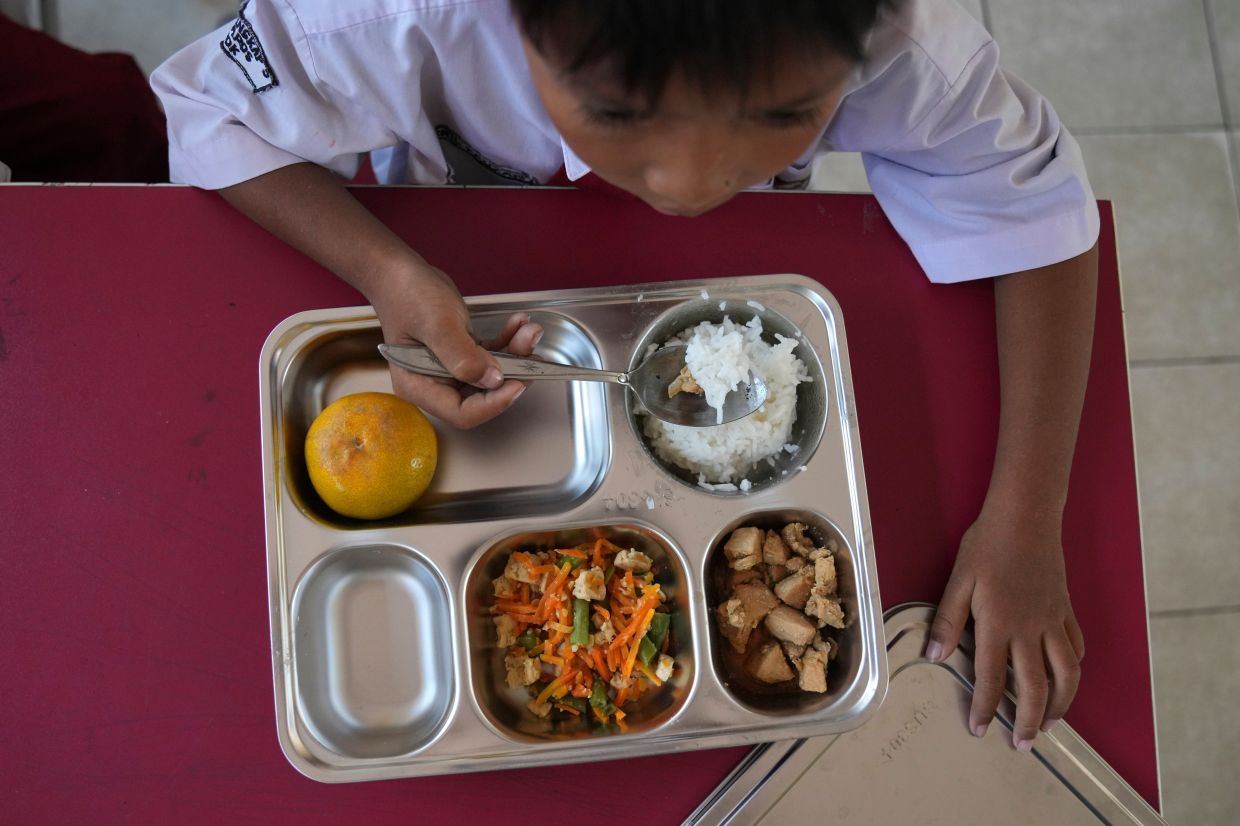
President Prabowo Subianto's marquee free meals initiative faces mounting pressure from Indonesia's anti-corruption community, which is demanding the government hit pause on the sprawling US$15 billion programme and launch a comprehensive investigation extending well beyond the officials already detained. The National Nutrition Agency, or BGN, should be dismantled entirely, according to Wana Alamsyah, head of the law and investigation division at Indonesia Corruption Watch, the prominent watchdog organisation focused on safeguarding democratic institutions and economic equity across the archipelago.
The corruption allegations surfaced after authorities arrested Dadan Hindayana, the agency's former chief, and subsequently held four others including two of his subordinates on graft-related charges. What began as a targeted probe into the leadership of an institution established less than two years ago has revealed troubling systemic vulnerabilities across an operation that now delivers meals to more than 60 million Indonesians. The scale of the programme and the speed of its rollout appear to have outpaced the capacity of oversight mechanisms, creating openings for malfeasance that ICW contends demand exhaustive examination.
According to Wana, the investigation must cast a far wider net than the current focus on top-level officials. Law enforcement should scrutinise vendors, procurement committee members, and anyone positioned to benefit from the initiative's documented governance shortcomings, he argued during an interview. The original criticism of the programme centred on inadequate planning and overly rapid implementation, suggesting structural defects rather than isolated acts of dishonesty. This interpretation aligns with ICW's prior assessment that the kitchen network underpinning meal distribution remained vulnerable to political patronage and self-dealing.
Research commissioned by ICW examining 102 foundations managing kitchens across 38 provinces uncovered extensive linkages between these operators and politically-connected figures spanning politicians, government bureaucrats, military personnel, law-enforcement bodies, and commercial interests. Such entanglement creates natural incentives for contractors and vendors to prioritise connections over competence and cost-effectiveness. A separate investigation by the Jakarta-based Centre of Economic and Law Studies reported that 79 per cent of surveyed respondents recognised potential conflicts of interest embedded in the direct appointment of vendors, highlighting how widely recognised these structural problems have become.
The timing of enforcement action raises additional questions in Wana's assessment. Problems with the programme—including documented instances of food poisoning, complaints about nutritional quality, and the prevalence of ultra-processed meals—generated substantial criticism on social media throughout 2025, yet officials did not initiate formal action until now. Wana's interpretation suggests fiscal pressures may have finally forced the government's hand; Indonesia's budget has come under stress as international petroleum prices have escalated fuel subsidy costs, making expensive flagship programmes less fiscally tenable. By initiating prosecutions and restricting the programme's scope, the government potentially shields itself from accusations of arbitrary retrenchment by appearing to respond to corruption rather than budgetary necessity.
The new director of the National Nutrition Agency, Nanik S. Deyang, has signalled a recalibration rather than abolition of the initiative. She announced that the agency will pursue efficiency gains and geographic focusing, potentially spending less than the 268 trillion rupiah (US$14.9 billion) budgeted for the current fiscal year by concentrating resources on remote and underserved regions. The revised approach emphasises nutritional quality and food safety over achieving ambitious recipient numbers, moving away from the original target of reaching 82.9 million beneficiaries in favour of delivering genuinely healthful meals through existing infrastructure such as school canteens rather than constructing new dedicated kitchens.
Deyang has also declared a freeze on approvals for new meal preparation facilities pending strengthened vetting procedures for prospective operators. This pragmatic restriction addresses one vector through which corruption flourished—the rapid, under-scrutinised expansion of the kitchen network—and signals willingness to adapt the programme rather than defend the indefensible. Simultaneously, President Prabowo has publicly declared zero tolerance for embezzlement, warning thousands of officials and programme partners that no circumstances will excuse theft of public resources. These rhetorical commitments, however, must now withstand concrete implementation challenges.
Public confidence in the programme has eroded markedly. Last month, police in Jakarta deployed force to suppress student-led protests opposing both the initiative's cost and its fundamental design, while subsequent demonstrations across major cities prompted authorities to deploy over 6,000 law-enforcement and military personnel in the capital alone. The fiscal burden of the meals scheme compounds broader anxieties about Indonesia's budgetary constraints, particularly as elevated global fuel prices inflate subsidy obligations. Economists and policy research institutes have begun questioning whether the initiative will actually deliver the promised employment, health, and economic benefits, or whether it represents wasteful expenditure that constrains resources available for more targeted development investments.
For Malaysian observers, the Indonesian experience offers cautionary lessons regarding the governance risks inherent in rapidly scaling social programmes without commensurate institutional capacity. While Malaysia has implemented substantial food assistance and nutrition initiatives, the BGN saga demonstrates how ambitious scope, inadequate planning, and insufficient oversight mechanisms can create environments conducive to corruption and misallocation. The overlap between political patronage networks and vendor selection processes that ICW documented mirrors dynamics that exist across Southeast Asia, where the intersection of development ambitions and weak procurement governance repeatedly generates scandals.
ICW's insistence on comprehensive investigation rather than accepting the agency's operational reforms reflects justified scepticism that procedural adjustments alone will address systemic vulnerabilities rooted in political patronage structures. The question Wana posed—why problems widely discussed on social media did not trigger government action in 2025 but only now, following fiscal constraints—pierces to the heart of whether Indonesian officials genuinely prioritise anti-corruption enforcement or whether such prosecutions serve primarily as convenient mechanisms for programme retrenchment. Sustained pressure from civil society and independent media will prove essential to ensuring that investigations proceed impartially and that any institutional restructuring produces genuine improvements rather than cosmetic reshuffling designed to shield connected interests.
The Attorney-General's office has not yet responded to requests for comment regarding the scope and timeline of expanded investigations. As proceedings unfold, the trajectory of this corruption probe will signal whether Indonesia's enforcement mechanisms can credibly address systemic defects in high-profile development initiatives, or whether they remain vulnerable to political manipulation that privileges expediency over accountability. For regional governments contemplating large-scale social programmes, the unfolding situation in Indonesia underscores the necessity of embedding robust procurement oversight, transparent vendor selection, and independent monitoring from inception rather than attempting remediation only after scandals demand intervention.

%22%2F%3E%3C%2Fpattern%3E%3C%2Fdefs%3E%3Crect%20width%3D%22100%25%22%20height%3D%22100%25%22%20fill%3D%22url(%23ph21o2sg)%22%2F%3E%3Crect%20width%3D%22100%25%22%20height%3D%22100%25%22%20fill%3D%22url(%23ph21o2sp)%22%2F%3E%3Ctext%20x%3D%2250%25%22%20y%3D%2250%25%22%20text-anchor%3D%22middle%22%20dominant-baseline%3D%22central%22%20fill%3D%22rgba(255%2C255%2C255%2C0.95)%22%20font-family%3D%22Georgia%2C%20'Times%20New%20Roman'%2C%20serif%22%20font-weight%3D%22700%22%20font-size%3D%22170%22%20letter-spacing%3D%22-0.02em%22%3EGabungan%3C%2Ftext%3E%3C%2Fsvg%3E)