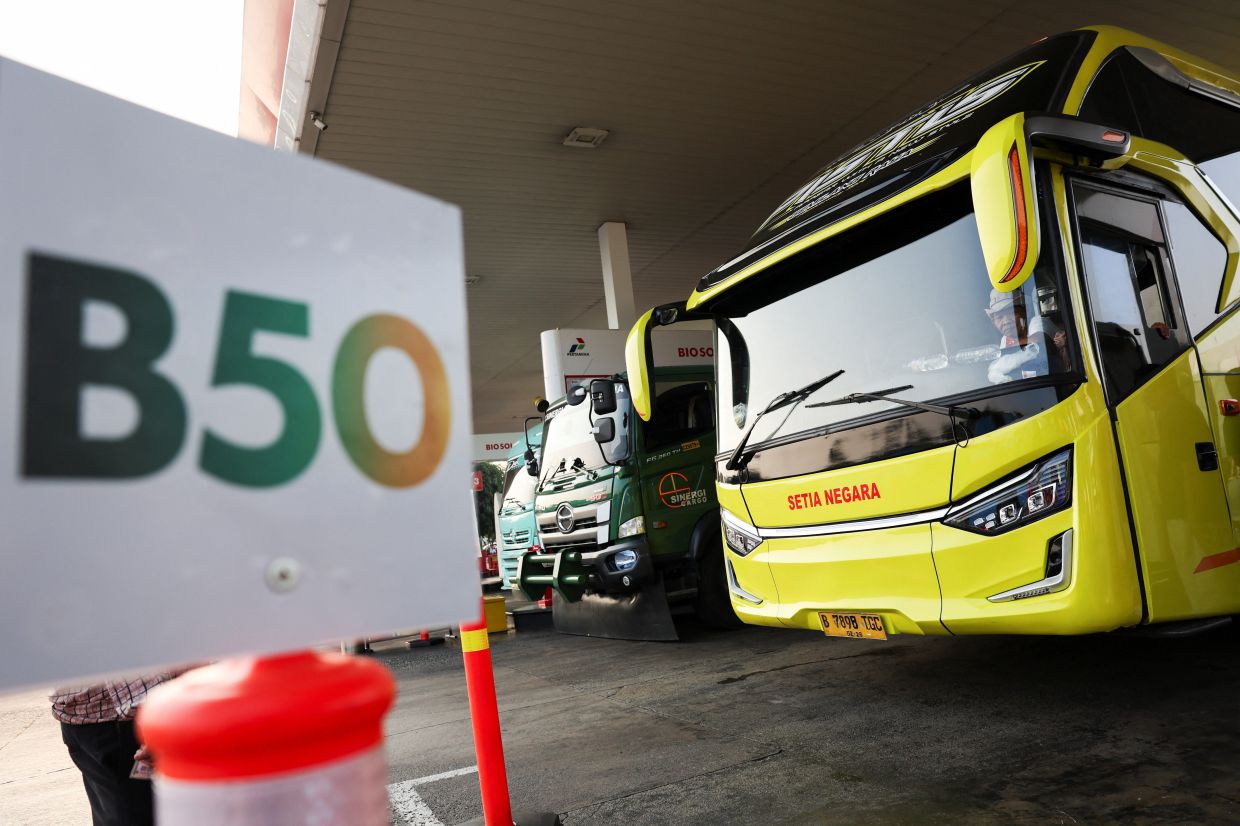
Indonesia has formally activated its B50 biodiesel mandate, marking a significant escalation in the world's largest palm oil producer's strategy to harness its agricultural dominance while simultaneously curbing expensive fuel imports. At a ceremony in Karawang, West Java, Energy Minister Bahlil Lahadalia outlined how the new programme will increase crude palm oil consumption to between 16.3 million and 17 million metric tons annually, up from 15.2 million tons under the previous B40 (40% biodiesel blend) scheme. President Prabowo Subianto, who attended the launch event, framed the initiative as part of Indonesia's broader commitment to reducing global carbon emissions, positioning the nation as a climate leader even as it expands its most carbon-intensive commodity sector.
The financial incentives driving this policy are substantial and reflect the acute pressure on Indonesia's import budget. Officials estimate the B50 programme will slash this year's diesel import expenditure by 170 trillion rupiah, equivalent to $9.41 billion, substantially larger than the 133 trillion rupiah in savings projected for 2025. These figures underscore how dependent Indonesia remains on foreign petroleum despite being Asia's largest economy by GDP. By displacing imported diesel with domestically produced biodiesel derived from palm oil, policymakers hope to preserve foreign exchange reserves while simultaneously supporting the agricultural sector that employs millions and generates crucial government revenue through export taxes and royalties.
The previous B40 scheme allocated 15.64 million kilolitres of biodiesel this year, representing a 4.68 per cent increase over 2024's consumption of 14.94 million kilolitres. The B50 upgrade will require substantially greater volumes—between 16.7 million and 18 million kilolitres of fatty acid methyl ester (FAME), the technical designation for biodiesel. This dramatic jump reflects the accelerating demands on Indonesia's palm oil refining infrastructure and processing capacity. Industry participants have been awaiting confirmation of their individual quotas under the new scheme, a critical piece of information that will determine investment in capacity expansion and purchasing decisions by fuel distributors and blending facilities nationwide.
President Prabowo revealed during the ceremony that he had initially advocated for an even more aggressive B100 (pure biodiesel) mandate, only to be dissuaded by cabinet colleagues who assured him that a 50 per cent blend would suffice to eliminate fuel imports entirely. Rather than abandoning his ambition, Prabowo instructed the energy ministry to pursue research into a 60 per cent blend as an intermediate target, suggesting that Indonesia's trajectory toward maximising palm oil utilisation in the transport sector remains unfinished business. This political dynamic is significant for regional observers, as it reveals the president's willingness to prioritise Indonesia's agricultural interests and macroeconomic objectives over potential environmental and social concerns that might arise from further intensifying palm oil cultivation.
Minister Bahlil confirmed that government-backed research into the 60 per cent blend scenario has already commenced, indicating that the B50 phase may be merely transitional rather than a final destination. The technical and logistical challenges of ramping up biodiesel production are formidable. Refineries and blending facilities must be upgraded, supply chains strengthened, and quality assurance protocols refined to ensure that higher concentrations of FAME do not compromise engine performance or fuel stability across Indonesia's diverse vehicle fleet, from motorcycles to heavy trucks. These infrastructure investments require sustained government support and industry confidence that future quotas will remain secure.
One critical outstanding issue is that the energy ministry has not yet formally issued additional biodiesel quotas for the B50 programme, creating uncertainty throughout the value chain. Businesses have been granted until the end of September to exhaust their remaining B40 stocks, a transition period that effectively signals the government's intent to enforce compliance but also provides breathing room for logistics adjustments. The absence of formal quota allocation, however, suggests that negotiations between policymakers and industry groups remain ongoing. Larger palm oil refiners and biodiesel producers are likely lobbying for allocations that reflect their existing capacity and market share, while smaller operators and new entrants may be pushing for access to the expanded market opportunity.
For Malaysia, Indonesia's aggressive expansion of its biodiesel industry carries important implications. Both nations are major palm oil producers competing in global markets, and Indonesia's decision to lock significant volumes of domestic crude palm oil into the transport fuel chain reduces the commodity available for export and potentially tightens global palm oil supply. This could benefit Malaysian producers through stronger export prices, but it also signals that Indonesia is choosing domestic consumption over export maximisation—a strategic reorientation that reflects both nationalist economic policy and the finite expansion possibilities of palm oil cultivation given land constraints and sustainability pressures.
The environmental and social dimensions of this policy remain contested. While biodiesel is technically renewable and can reduce certain tailpipe emissions, the feedstock—palm oil—has been persistently linked to deforestation, habitat destruction, and social conflicts in Indonesia and Malaysia. Expanding palm oil consumption through mandatory fuel blending mandates does not automatically guarantee that additional production will come from sustainable sources or from existing degraded land rather than newly cleared forests. Environmental groups and indigenous rights advocates have repeatedly warned that Indonesia's renewable fuel mandates risk incentivising land conversion precisely when climate science demands forest protection and peatland preservation as urgent priorities.
Indonesia's biodiesel strategy also reflects broader patterns of resource nationalism and sectoral protectionism that have become more pronounced under Prabowo's administration. By mandating domestic use of palm oil-derived fuel, the government effectively creates a captive market for agricultural commodities, insulating producers from price fluctuations in international markets while simultaneously reducing competition from imported alternatives. This approach prioritises short-term fiscal benefits and sectoral support over efficiency considerations that might recommend importing cheaper fuel while allowing Indonesian palm oil to chase higher-value uses in food, cosmetics, and industrial applications.
The B50 programme also illustrates Indonesia's multi-track approach to energy security and decarbonisation. While the government promotes biodiesel as a climate-friendly fuel, it continues to invest heavily in coal power generation and has resisted pressure to accelerate its coal phase-out timeline. Similarly, petroleum imports remain essential for aviation, shipping, and manufacturing sectors where biodiesel cannot be deployed. Therefore, the import savings claimed for the B50 scheme, while real, address only a portion of Indonesia's foreign exchange exposure to global energy prices and represent a palliative rather than transformative energy strategy.
Regional analyst attention will focus on whether Indonesia can sustain the supply chain logistics required for the B50 transition without compromising fuel quality or price stability. History suggests that mandatory fuel blending schemes often encounter implementation bottlenecks, particularly when quota systems are poorly designed or enforcement mechanisms are weak. The upcoming months will test whether the energy ministry can issue clear quota allocations, facilitate orderly transition from B40 to B50 stocks, and maintain quality standards across Indonesia's decentralised refining and distribution network. Success will validate the government's confidence in the programme; delays or quality problems could undermine both consumer confidence and industry investment in expanded biodiesel capacity.

