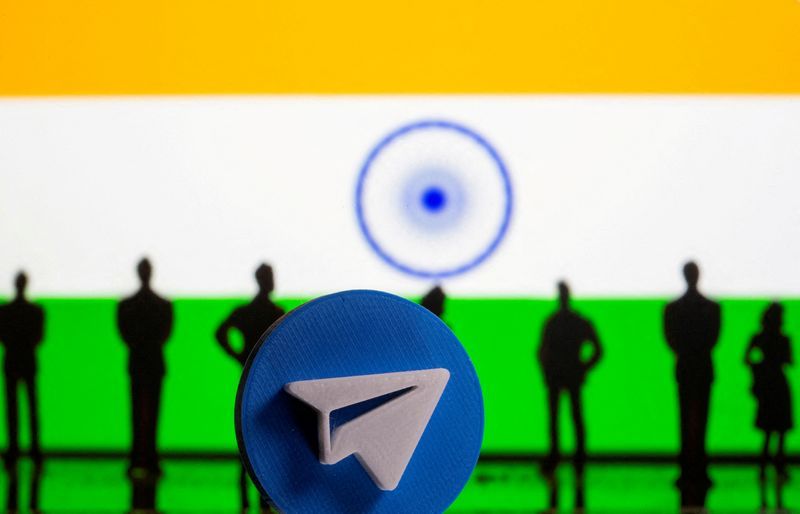
India's decision to block Telegram in June marks another flashpoint in the escalating tensions between New Delhi's government and global technology platforms, reflecting broader anxieties about how foreign-owned apps are policed within the country. The unprecedented ban, which Prime Minister Narendra Modi's administration imposed using emergency powers and set to expire on June 22, emerged from weeks of increasingly acrimonious exchanges between India's IT ministry and Telegram officials over the platform's purported failure to remove accounts advertising leaked examination papers. The confrontation underscores a fundamental disagreement about corporate responsibility, government authority, and the boundaries between national security interests and free speech protections in the digital age.
The immediate trigger for the ban centred on India's prestigious NEET entrance examination, which determines admission to medical colleges across the country and attracts over two million candidates annually. Following widespread suspicion that question papers had been leaked, the government cancelled the original examination results in May and rescheduled the test for June 21. Throughout this period, Indian authorities identified numerous channels operating on Telegram—with names such as "NEET PAPER LEAKED" and "Paper Leaked NEET"—where users were allegedly soliciting payments in exchange for access to the full examination paper. The government interpreted this activity as evidence that Telegram was being systematically exploited to defraud vulnerable students and their families, presenting a national integrity crisis that demanded immediate intervention.
Documents reviewed by international news agencies reveal that the confrontation did not emerge overnight. Rather, a two-week period of formal meetings and written exchanges preceded the ban, during which New Delhi repeatedly pressed Telegram to demonstrate concrete action against the problematic channels. Indian officials characterised the company's response as "inaction," suggesting that despite clear evidence of illicit activity, Telegram had failed to remove or restrict accounts offering to sell examination papers. These communications grew increasingly pointed, with the IT ministry essentially demanding that Telegram take preventative steps to identify and eliminate such fraudulent schemes before they could cause widespread harm to Indian students.
Telegram's position in these exchanges differed markedly from the government's characterisation. Company officials maintained that they had actively addressed unlawful content and categorically did not permit their platform to be used for the activities in question. A critical disagreement emerged around what Telegram argued were the limitations of automated detection systems when applied to contextually complex material. According to government records of a June 3 meeting, Telegram representatives indicated they faced constraints in proactively identifying "more subjective" content linked to examinations, as opposed to "objective issues" such as child sexual exploitation material or pornography. However, Telegram subsequently contested this characterisation in written communications, asserting that the company possessed proactive measures for such content but that these required more intensive human moderation resources.
The dispute over the accuracy of meeting minutes became emblematic of the broader breakdown in trust between the two parties. Telegram accused the Indian government of producing a "one-sided and inaccurate account" of their discussions, claiming that critical details regarding the company's proactive processes had been deliberately omitted from the official record. This allegation of governmental misrepresentation escalated what might have remained a technical disagreement about content moderation into a fundamental dispute about institutional integrity and good faith negotiation. The messaging app subsequently challenged the ban before the Delhi High Court, framing the government's emergency action as unconstitutional and a violation of fundamental freedoms, while the government has not yet formally responded to these allegations within the judicial proceedings.
The ban carries particular significance given Telegram's exceptional position within India's digital ecosystem. With approximately 150 million users, India represents Telegram's single largest market globally, making the country indispensable to the company's business model and user base. This dependency partly explains why Telegram mounted an aggressive legal challenge rather than capitulating to government demands. Conversely, from the government's perspective, the scale of Telegram's presence in India justified treating its alleged failures as a national emergency requiring extraordinary measures. The tension reflects a fundamental asymmetry: global technology platforms derive substantial value from their Indian operations, yet national governments possess regulatory authority and the ability to impose severe consequences for non-compliance.
Telegram's distinctive technical architecture has inadvertently facilitated its emergence as a platform of choice for fraudulent schemes. Unlike WhatsApp, which dominates India's messaging market with over 500 million users but imposes a maximum group size of 1,024 members, Telegram allows groups to expand to 200,000 participants. Additionally, Telegram permits users to participate in channels and groups without revealing their phone numbers, creating an anonymity advantage that criminals find attractive. While these features serve legitimate purposes for privacy-conscious users and large-scale public communications, they simultaneously lower barriers for organised fraud and illicit transactions. This duality positions Telegram at the intersection of technological innovation and regulatory concern, creating inherent tensions that governments globally are only beginning to grapple with.
Telegram's founder Pavel Durov publicly characterised the Indian ban as "a mistake" that would ultimately prove ineffective, arguing that exam fraud would simply migrate to alternative platforms rather than being eliminated through Telegram's blockade. He drew a provocative comparison suggesting that banning an entire service to address misuse was disproportionate, comparable to outlawing water consumption to prevent drowning. This rhetorical stance reflects a Silicon Valley perspective that emphasises platform neutrality and user agency over government-mandated content removal. However, Indian policymakers operating within a context of repeated examination fraud scandals and immense pressure from millions of affected students and families found such arguments unconvincing, viewing them as corporate deflection from legitimate social responsibilities.
This latest confrontation between India's government and a major technology platform echoes previous disputes, particularly the extended legal battle between New Delhi and Elon Musk's X platform over content removal policies. That conflict demonstrated that Indian authorities are increasingly willing to invoke emergency powers and pursue litigation against global tech companies that they believe are not adequately complying with local regulatory expectations. The pattern suggests a broader shift in India's approach to technology governance, moving away from lighter-touch regulation toward more assertive state intervention. For Malaysian and broader Southeast Asian observers, the Telegram incident serves as a cautionary tale about the political and regulatory risks that technology companies face when operating in large, complex democracies with substantial populations and high-stakes national concerns.
The resolution of the Telegram dispute will significantly influence how other technology platforms calibrate their compliance efforts in India and throughout the region. Should the courts ultimately uphold the government's emergency ban or validate Telegram's constitutional challenge, the decision will reshape expectations around corporate responsibility for user-generated content and the government's authority to restrict service provision. Meanwhile, the underlying problems that motivated the ban—examination fraud, platform misuse, and inadequate deterrence—remain unresolved regardless of Telegram's regulatory status. This suggests that the confrontation may represent not a decisive resolution but rather an opening salvo in a prolonged struggle over how technology governance will be negotiated in India and other major Asian democracies during the coming years.

%22%2F%3E%3C%2Fpattern%3E%3C%2Fdefs%3E%3Crect%20width%3D%22100%25%22%20height%3D%22100%25%22%20fill%3D%22url(%23ph21o2sg)%22%2F%3E%3Crect%20width%3D%22100%25%22%20height%3D%22100%25%22%20fill%3D%22url(%23ph21o2sp)%22%2F%3E%3Ctext%20x%3D%2250%25%22%20y%3D%2250%25%22%20text-anchor%3D%22middle%22%20dominant-baseline%3D%22central%22%20fill%3D%22rgba(255%2C255%2C255%2C0.95)%22%20font-family%3D%22Georgia%2C%20'Times%20New%20Roman'%2C%20serif%22%20font-weight%3D%22700%22%20font-size%3D%22170%22%20letter-spacing%3D%22-0.02em%22%3EGabungan%3C%2Ftext%3E%3C%2Fsvg%3E)