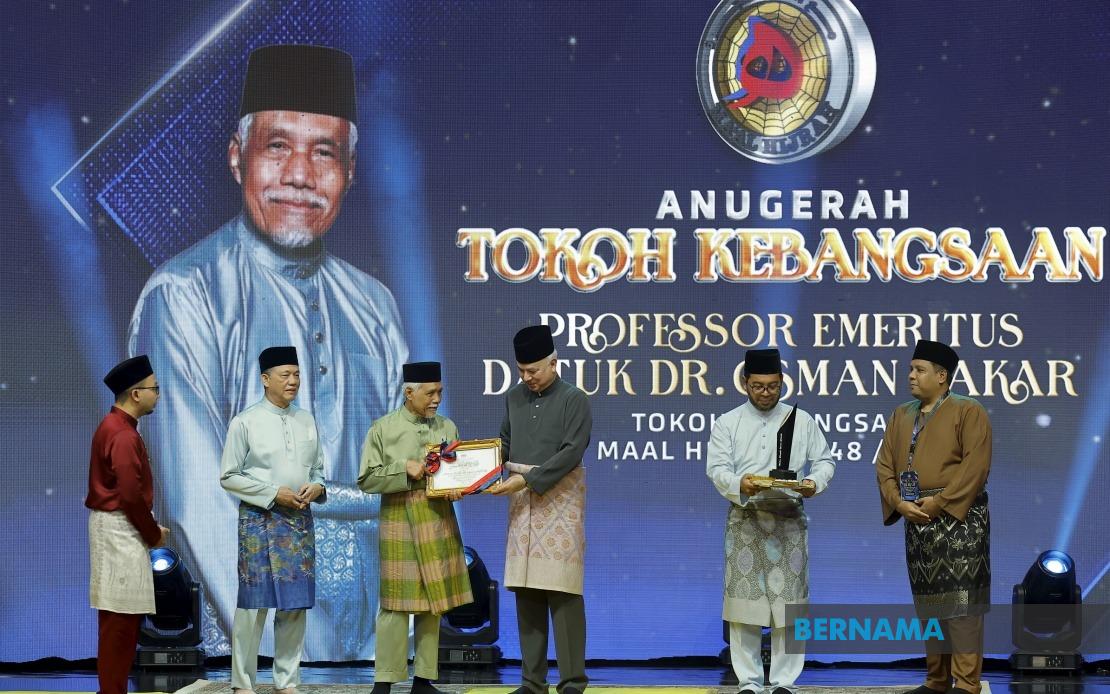
International Islamic University Malaysia Rector Prof Emeritus Datuk Dr Osman Bakar has been recognised as the National Tokoh Maal Hijrah at the national-level celebration of Maal Hijrah 1448H/2026, held at Putra Mosque in Putrajaya on June 17. The prestigious award acknowledges his contributions to Islamic scholarship and leadership within Malaysia's higher education landscape. Alongside Bakar's recognition, renowned Moroccan Islamic scholar Dr Ahmad Al-Raysuni was honoured with the International Tokoh Maal Hijrah distinction, underscoring the programme's commitment to celebrating Islamic excellence both domestically and globally.
The awards were conferred by the Sultan of Perak, Sultan Nazrin Shah, who presented the recipients with monetary prizes, trophies, and certificates of appreciation. The ceremony reflected the significance placed by Malaysia's leadership on recognising individuals who embody Islamic values and contribute meaningfully to their communities and the broader ummah. The presentation of awards by a reigning Sultan underscores the ceremonial weight and national importance attributed to these distinctions within Malaysia's Islamic institutional framework.
This year's Maal Hijrah celebration adopted the theme "MADANI Dihayati, Ummah Diberkati", a thematic choice that emphasises the government's vision of internalising the MADANI principles—encompassing compassion, unity, and community welfare—within the broader Muslim society. The theme represents a deliberate effort to connect the Islamic calendar's new year with contemporary governance priorities and social cohesion objectives. By linking Maal Hijrah observances to MADANI values, authorities seek to remind citizens of the interconnection between religious practice and the practical application of ethical governance.
Osman Bakar's selection as the national honouree carries particular significance given his prominent role in Malaysian Islamic academia. As rector of IIUM, one of Southeast Asia's leading Islamic universities, Bakar has shaped institutional direction and academic discourse on Islamic thought within a pluralistic context. His recognition reflects appreciation for his work in advancing Islamic education while maintaining academic rigour and relevance to contemporary challenges facing Muslim societies. The honour acknowledges both his intellectual contributions and his institutional leadership during a transformative period for Malaysian higher education.
The international recognition of Dr Ahmad Al-Raysuni demonstrates Malaysia's engagement with the broader Islamic scholarly community and its openness to celebrating Muslim intellectual leadership beyond national borders. Al-Raysuni, whose work spans Islamic jurisprudence and contemporary Islamic thought, brings credibility and intellectual depth to Morocco's Islamic scholarly tradition. His inclusion in the Maal Hijrah honours reflects how Malaysia positions itself within regional and global networks of Islamic scholarship, particularly in relation to North African and Middle Eastern traditions.
The attendance of Deputy Prime Minister Datuk Seri Fadillah Yusof and Minister in the Prime Minister's Department (Religious Affairs) Dr Zulkifli Hasan underscored the government's priority placed on this observance. Their presence, alongside their spouses in Fadillah's case, signalled official recognition of the ceremony's importance within Malaysia's religious and cultural calendar. Such high-level participation typically indicates government alignment with the values being celebrated and support for the individuals being honoured.
Maal Hijrah, marking the Islamic New Year, holds deep significance within Muslim communities as a time for spiritual reflection and renewal. For Malaysia, a Muslim-majority nation with a constitutional establishment of Islam, the national celebration of Maal Hijrah serves multiple functions beyond religious observance. It provides an opportunity to emphasise shared values across diverse communities, reinforce Islamic principles within public discourse, and recognise individuals whose lives exemplify these ideals. The awards mechanism transforms the religious observance into a platform for affirming national leadership priorities and celebrating role models.
The recognition of IIUM's rector comes at a time when Malaysian universities face ongoing discussions about their role in producing graduates equipped to navigate complex global challenges while maintaining ethical grounding. Bakar's honour implicitly endorses the university's approach to integrating Islamic values with contemporary knowledge and critical thinking. For institutions of higher learning across Malaysia and the region, the award sends a message about the value placed on leadership that bridges traditional Islamic scholarship with modern educational demands.
For the broader Malaysian context, the Maal Hijrah celebration and accompanying honours reflect evolving conceptualisations of Islamic leadership and excellence. Rather than limiting recognition to purely clerical or devotional roles, the awards programme celebrates individuals who contribute to Islamic thought, institutional development, and social welfare through secular and academic domains. This inclusive understanding of Islamic contribution aligns with Malaysia's constitutional framework and contemporary multicultural governance approaches.

%22%2F%3E%3C%2Fpattern%3E%3C%2Fdefs%3E%3Crect%20width%3D%22100%25%22%20height%3D%22100%25%22%20fill%3D%22url(%23ph21o2sg)%22%2F%3E%3Crect%20width%3D%22100%25%22%20height%3D%22100%25%22%20fill%3D%22url(%23ph21o2sp)%22%2F%3E%3Ctext%20x%3D%2250%25%22%20y%3D%2250%25%22%20text-anchor%3D%22middle%22%20dominant-baseline%3D%22central%22%20fill%3D%22rgba(255%2C255%2C255%2C0.95)%22%20font-family%3D%22Georgia%2C%20'Times%20New%20Roman'%2C%20serif%22%20font-weight%3D%22700%22%20font-size%3D%22170%22%20letter-spacing%3D%22-0.02em%22%3EGabungan%3C%2Ftext%3E%3C%2Fsvg%3E)