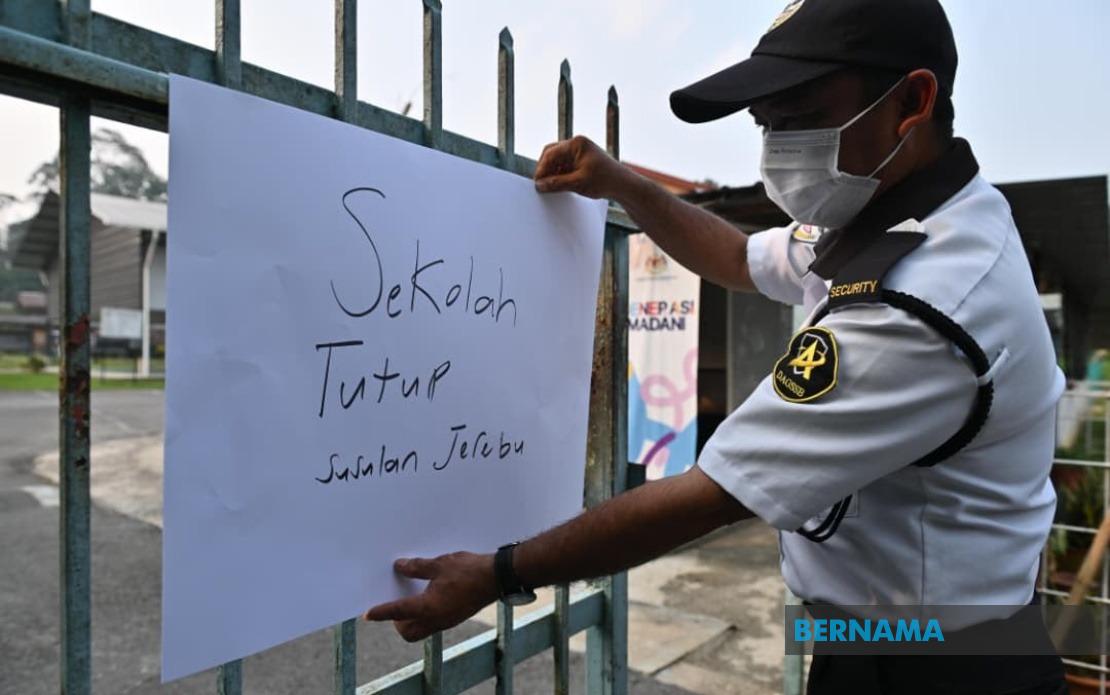
Sarawak's education sector has faced significant disruption as the state grapples with deteriorating air quality, prompting authorities to close 108 schools across the Serian district on August 12. The closures represent a direct response to Air Pollutant Index readings that have breached the 200 threshold, a critical marker that triggers mandatory school shutdowns under the National Haze Action Plan. This precautionary measure prioritises the immediate health and safety of students and educational staff, acknowledging the serious respiratory risks posed by prolonged exposure to such elevated pollution levels.
The Sarawak State Disaster Management Committee implemented the closures under its established protocols, which operate under the direct authority of the State Education Department director. Rather than abandon the academic calendar entirely, authorities have activated Home-Based Teaching and Learning—locally known as PdPR—to ensure continuity in instruction despite the physical closure of campuses. This dual approach attempts to maintain educational momentum while protecting vulnerable populations from airborne pollutants that have blanketed large portions of the state.
The air quality crisis reflects a troubling pattern that has been developing throughout August. According to JPBN Sarawak, pollution levels have shown a consistent upward trajectory since August 1, suggesting either intensifying local sources or worsening transboundary haze conditions. By 4 p.m. on August 12, the situation had categorised into distinct geographic zones of severity, with Tebedu and Serian both registering readings in the "very unhealthy" bracket—212 and 202 respectively. This geographic variability underscores how haze impacts different districts unevenly, requiring granular decision-making at the local level.
Beyond Serian's crisis zone, eleven additional areas across Sarawak reported API readings in the "unhealthy" category, spanning the state from Kuching in the southwest to Lawas in the northeast. Affected regions included Samarahan, Sri Aman, Sarikei, Sibu, Bintulu, Samalaju, Miri, Lundu, and Lubok Antu. This widespread elevation in pollution indices, despite not reaching the mandatory closure threshold in these locations, nonetheless signals a state-wide emergency that extends well beyond a single district. The fact that Sarawak's urban and economic centres like Kuching and Sibu remained in the unhealthy range demonstrates the scale of the challenge facing the state's population and economy.
Understanding the API scale provides crucial context for residents and policymakers. Readings between zero and 50 denote good air quality, whilst 51 to 100 indicate moderate conditions generally acceptable for outdoor activities. The 101 to 200 range—classified as unhealthy—already restricts certain activities and warrants caution for vulnerable groups. However, the 201 to 300 bracket where Tebedu and Serian found themselves represents "very unhealthy" conditions requiring immediate protective action. Beyond 300, the scale reaches "hazardous" status, which would precipitate even more severe restrictions. This graduated system demonstrates why the 200 threshold acts as a critical trigger point for school closures—it marks the boundary between manageable caution and public health emergency.
The state government has explicitly cautioned the public, particularly vulnerable demographics, to modify their behaviour in response to elevated pollution. Children, elderly persons, pregnant women, and individuals with pre-existing respiratory or cardiac conditions face heightened risk from prolonged exposure to the pollutants constituting the haze. Rather than issuing blanket bans on outdoor activity, authorities have advised these high-risk groups to substantially curtail their exposure, whilst recommending that the general public reduce but not necessarily eliminate time outside. This tiered guidance reflects an attempt to balance public health imperatives against the practical reality that complete societal shutdown remains economically and socially infeasible.
For Malaysian readers, particularly those in Peninsular Malaysia accustomed to seasonal transboundary haze, the Sarawak situation serves as a reminder of the vulnerability that East Malaysian states face during periods of regional air quality deterioration. Unlike the peninsula, Sarawak's isolated geography and smaller population base mean that infrastructure for pollution monitoring and response may be more stretched, whilst political attention often concentrates on the more populous western region. The scale of the current crisis—affecting over 100 schools in a single district alone—illustrates how concentrated haze impacts can be, even when not reaching the geographic breadth sometimes seen in earlier transboundary episodes.
The closure decision also reflects evolved understanding of haze-related health risks. Earlier generations of Malaysian policymakers often downplayed school closures during haze episodes, viewing them as minor inconveniences. Contemporary authorities increasingly recognise that repeated exposure to very unhealthy air quality, particularly during formative childhood years, carries genuine long-term health consequences ranging from reduced lung function to chronic respiratory conditions. The school closure mechanism thus represents a public health investment, not merely a precautionary inconvenience.
Sarawak's disaster management apparatus has taken additional steps to maintain information discipline during the crisis. Officials have explicitly cautioned residents against speculation or the circulation of unverified claims regarding haze conditions, whilst directing the public to seek updates exclusively through official government channels. This messaging reflects broader concerns about misinformation surrounding haze episodes, which have historically spawned rumours ranging from false pollution readings to unfounded claims about specific pollution sources. By establishing a single authoritative information stream, authorities attempt to prevent panic whilst reducing the proliferation of potentially misleading claims that could undermine public confidence in official guidance.
The implications for East Malaysia's economic activities and daily routines warrant consideration. Tourism, outdoor commerce, and various industrial operations all experience disruption when API readings sustain unhealthy levels for extended periods. Schools, hospitals, construction sites, and transportation networks all operate under constrained conditions. For Sarawak specifically, the current episode suggests that if trend lines continue upward, more districts may qualify for school closures in coming days. This creates cascading logistical challenges for working parents reliant on school-based childcare, potentially driving broader workforce disruptions across the state economy.
Looking forward, the current episode underscores enduring questions about haze causation and regional cooperation on air quality management. Whether current pollution derives primarily from local sources such as agricultural burning and industrial activity, or represents transboundary transport from neighbouring regions, remains central to formulating effective medium and long-term responses. The National Haze Action Plan provides essential emergency protocols, yet without addressing underlying sources—either through domestic emissions controls or diplomatic engagement on regional practices—Sarawak and other Malaysian states remain vulnerable to recurrent crises of this magnitude.

