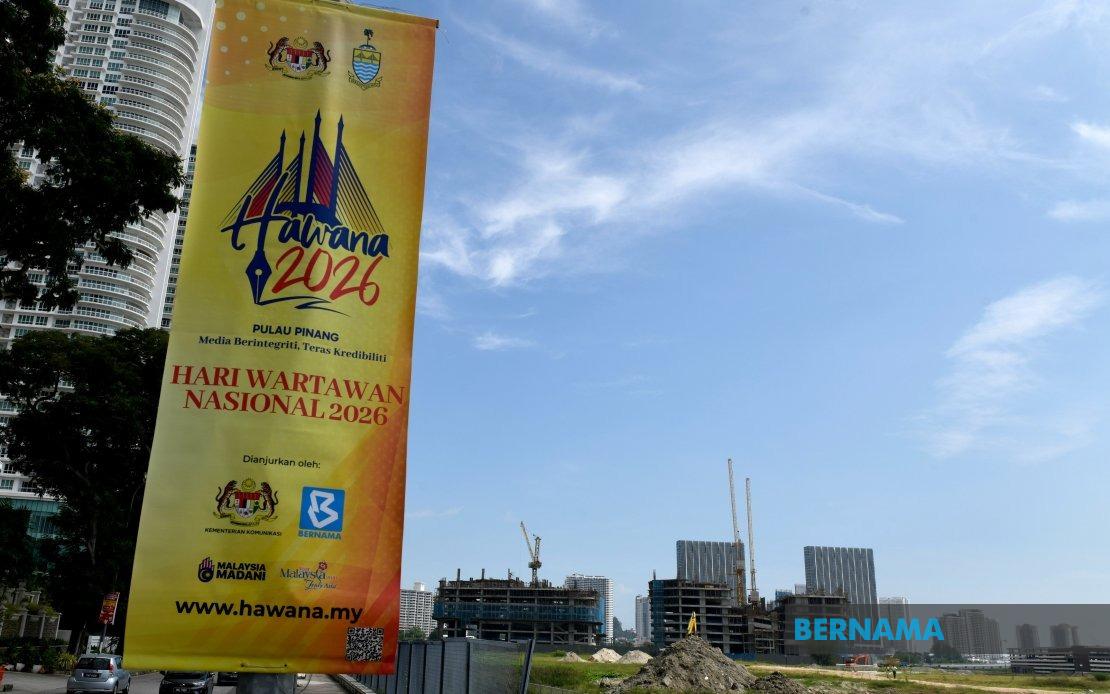
Penang will welcome approximately 1,000 media professionals from Malaysia and across Southeast Asia as it becomes the inaugural host of HAWANA 2026, the country's premier National Journalists' Day celebration scheduled for June 19-21. The three-day event represents a significant opportunity for the state to project its image as a leading tourism and cultural destination to the region's media landscape, according to Wong Hon Wai, the State Tourism and Creative Economy Committee chairman. The convergence of journalists and creative professionals is expected to generate substantial economic activity and provide Penang with the kind of high-profile regional exposure that typically requires years of conventional marketing investment.
Wong emphasised that Penang's selection as the first-time host reflects the state government's proven capacity to organise large-scale international gatherings and its established reputation as a premier tourism destination in Malaysia. The recognition signals confidence in Penang's infrastructure, hospitality ecosystem, and creative community to accommodate and engage a sophisticated audience of media practitioners. This endorsement from national organisers underscores how the state has successfully positioned itself among Malaysia's most sought-after event venues, rivalling larger urban centres in its ability to deliver world-class hospitality experiences.
The centrepiece of HAWANA 2026 will be the official ceremony on June 20 at the PICCA Convention Centre at Butterworth Arena, where Prime Minister Datuk Seri Anwar Ibrahim will officiate proceedings. This high-level political endorsement amplifies the event's significance and ensures coverage in national and international media outlets. The ceremony will bring together journalist leaders, government officials, and industry stakeholders to honour the profession's contributions to Malaysian society whilst affirming the theme of media integrity and credibility—a message that resonates across Southeast Asia where press freedom and professional standards remain subjects of active debate.
Beyond the formal proceedings, Wong articulated how the event positions media as essential partners in Penang's economic development. Journalists and media professionals play a crucial role in shaping perceptions of destinations among potential tourists and investors. By providing accurate, compelling narratives about Penang's attractions, these practitioners amplify the state's competitive advantages across regional and global markets. Wong noted that effective media coverage translates directly into visitor confidence, which in turn drives bookings and spending across Penang's hospitality, food and beverage, retail, and attraction sectors.
The anticipated economic spillover extends across multiple industries. Hotels throughout Penang and neighbouring Seberang Perai have reportedly experienced strong booking activity in anticipation of the event, suggesting tourism operators are capitalising on the influx. Accommodation capacity, particularly in Seberang Perai where the main venue is located, is sufficient to host the expected crowds. Beyond lodging, the visiting media contingent and their accompanying families are expected to generate demand for dining, ground transportation, shopping, and local experiential offerings—creating multiplier effects throughout the local economy.
Wong stressed that within Malaysia's creative industries—encompassing design, music, digital content, performing arts, and cultural production—media coverage serves as a crucial amplifier for emerging talent and innovative enterprises. When local creative professionals and brands receive exposure through respected media platforms, they gain access to wider markets and enhanced credibility. For Penang specifically, which has cultivated a growing reputation as a creative hub in Southeast Asia, this visibility translates into opportunities for local artists, designers, and entrepreneurs to secure regional collaborations and international partnerships. The state government recognises this dynamic and positions HAWANA 2026 as a vehicle for showcasing Penang's creative ecosystem to an influential audience.
Complementing the formal HAWANA conference is the RIUH Pi HAWANA Carnival, a three-day public festival expecting approximately 30,000 visitors. This grassroots element democratises access to the event, allowing ordinary Penang residents and tourists to engage with creative industries firsthand. The carnival will feature over 24 local creative brands operating stalls, 20 food vendors representing Penang's diverse culinary heritage, and 16 live stage performances. Artists scheduled to perform include Exists, Bunkface, Masdo, Sakura Band, Budak Nakal Hujung Simpang, and Chelsea Ng—a lineup reflecting Malaysia's contemporary music landscape across multiple genres and audience demographics.
The carnival's free admission is strategically significant, removing financial barriers to participation and ensuring broad community engagement. Hands-on workshops will enable visitors to explore creative pursuits ranging from visual arts and digital media to artisanal crafts. This educational component positions the event as more than entertainment or commerce; it becomes a platform for skills transfer and community development, potentially inspiring participants to pursue careers or hobbies within creative fields. For young people in Penang particularly, direct exposure to successful creative professionals and working creative businesses provides tangible examples of viable career pathways beyond conventional employment.
The thematic positioning of HAWANA 2026 around media integrity and credibility carries particular resonance in Southeast Asia's contemporary media environment. Across the region, concerns about misinformation, journalistic independence, and the quality of public discourse shape how societies view media institutions. By hosting a regional gathering centred on professional standards and ethical practice, Penang becomes a visible advocate for media excellence. This association enhances the state's soft power—its ability to shape how it is perceived regionally—beyond conventional tourism marketing.
For Malaysia's journalism community, HAWANA provides an annual occasion to recognise their profession's contributions whilst building solidarity and professional networks. Journalists from different news organisations, platforms, and regional markets converge to exchange experiences, best practices, and perspectives on industry challenges. These professional connections often yield lasting collaborations and friendships that transcend individual newsrooms, strengthening Malaysia's media ecosystem through personal relationships and mutual understanding. The ASEAN participation dimension extends these networking benefits across borders, creating opportunities for comparative journalism and cross-regional story collaboration.
Wong's characterisation of media as partners in tourism and creative economy development reflects a sophisticated understanding of modern destination branding. Rather than viewing journalists as external observers to be managed, the state government explicitly positions them as collaborators in regional economic development. This perspective acknowledges that authentic, credible media narratives drive more sustained tourism demand than paid advertising alone. When journalists independently verify and communicate a destination's authentic attractions—its food culture, creative vibrancy, historical significance—they create believable narratives that resonate with potential visitors and investors.
Looking beyond June 2026, the event's legacy will partly depend on sustained follow-through from Penang's tourism and creative sectors. The carnival and conference generate immediate economic activity and media exposure, but long-term benefits accrue only if local businesses and creative practitioners effectively leverage the connections, visibility, and momentum generated during these three days. Tourism operators who provide excellent service to visiting journalists may receive favourable coverage that translates into future visitation. Creative brands that showcase their work effectively during the carnival may secure media partnerships or retail opportunities that extend far beyond the event itself.
Penang's hosting of HAWANA 2026 therefore represents more than a single event on the calendar. It crystallises the state's strategic positioning as Malaysia's premier destination for tourism, creative enterprise, and international engagement. The convergence of media professionals, government leadership, creative practitioners, and the general public around themes of journalistic integrity and cultural creativity creates conditions for meaningful dialogue about Malaysia's role in a dynamically evolving Southeast Asian economy. For visitors and participants, the event offers authentic encounters with Penang's distinctive character—its multicultural heritage, innovative spirit, and hospitable community—precisely the elements that transform casual tourism interest into lasting affinity and repeat visitation.

%22%2F%3E%3C%2Fpattern%3E%3C%2Fdefs%3E%3Crect%20width%3D%22100%25%22%20height%3D%22100%25%22%20fill%3D%22url(%23ph21o2sg)%22%2F%3E%3Crect%20width%3D%22100%25%22%20height%3D%22100%25%22%20fill%3D%22url(%23ph21o2sp)%22%2F%3E%3Ctext%20x%3D%2250%25%22%20y%3D%2250%25%22%20text-anchor%3D%22middle%22%20dominant-baseline%3D%22central%22%20fill%3D%22rgba(255%2C255%2C255%2C0.95)%22%20font-family%3D%22Georgia%2C%20'Times%20New%20Roman'%2C%20serif%22%20font-weight%3D%22700%22%20font-size%3D%22170%22%20letter-spacing%3D%22-0.02em%22%3EGabungan%3C%2Ftext%3E%3C%2Fsvg%3E)