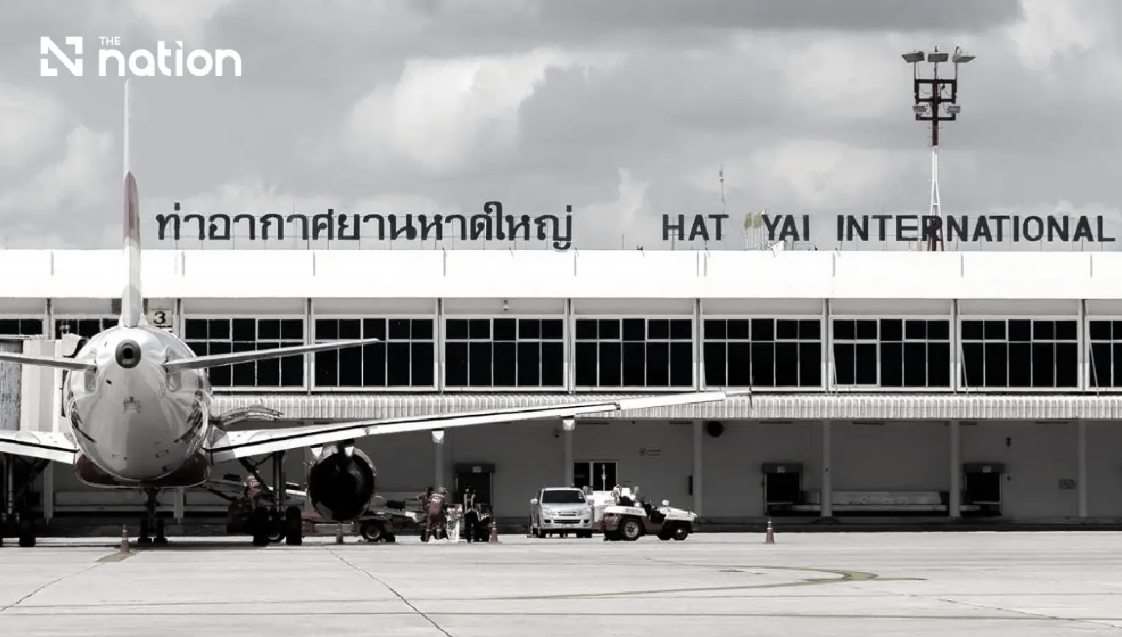
Hat Yai International Airport in southern Thailand's Songkhla Province brought one of its runways offline on June 17 after an incident involving an airport emergency vehicle created hazardous conditions on the flight deck. The closure of Runway 26 during the afternoon prompted airport authorities to issue a Notice to Airmen (NOTAM) and redirect incoming aircraft, disrupting schedules and causing uncertainty among passengers with connections to the southern hub.
The runway remained out of service from approximately 1:55 pm until 4:30 pm that Wednesday as airport personnel secured the incident area and assessed whether the surface had been damaged. The decision to close the runway reflected standard aviation safety protocols, whereby any obstruction or potential hazard on an active flight deck requires immediate cessation of operations on that runway until thoroughly investigated and cleared. Hat Yai International, a significant regional airport serving southern Thailand, northern Malaysia, and surrounding areas, operates with limited runway capacity, making even temporary closures consequential for traffic flow.
The fire engine accident itself raised questions about ground operations management at the facility. Airport emergency vehicles are essential to flight safety, equipped to respond to in-flight emergencies and ground incidents within minutes. When such vehicles themselves become hazards, it underscores the complexity of managing diverse operations on an active airfield where heavy equipment, aircraft, ground support vehicles, and personnel interact constantly. No details emerged regarding the severity of the fire engine damage, injuries to personnel, or the circumstances leading to the accident.
Flight-tracking data revealed that Thai Airways flight TG263 and Thai Lion Air flight SL712, both scheduled to arrive at Hat Yai that afternoon, were directed to Krabi Airport approximately 160 kilometres to the south. Krabi, situated on Thailand's Andaman coast, served as the alternative destination for aircraft unable to utilize Hat Yai's primary runway. This diversion imposed logistical challenges for passengers who faced unexpected routing, longer journey times to their final destinations, and potential cascading delays affecting downstream connections.
Passengers aboard affected flights experienced the frustration typical of such incidents, with limited information available from airport authorities during the closure period. One family member of a traveller on TG263 reported contacting Hat Yai Airport directly to understand why landings had been suspended, receiving only vague acknowledgment of an emergency without substantive explanation. The communication gap highlighted how airports sometimes prioritize operational responses over transparent passenger communication during unfolding crises.
The temporary closure demonstrated the vulnerability of regional aviation hubs with single or limited runway infrastructure. Unlike major international airports such as Suvarnabhumi in Bangkok, which operate multiple parallel runways, Hat Yai's reliance on Runway 26 means that any closure, whether planned maintenance or emergency-driven, immediately cascades through the network. Aircraft circling in holding patterns, fuel considerations, and downstream scheduling complications all emerge when a single runway becomes unavailable.
For Malaysian travellers and businesses relying on Hat Yai as a gateway to southern Thailand, such disruptions carry tangible consequences. The airport serves significant cross-border traffic, particularly from Kedah, Perlis, and northern Perak. Business passengers, tourists, and workers transiting through the airport face accumulated delays that ripple through their itineraries. Airlines operating the route absorb costs associated with diversions, fuel surcharges from unexpected routing, and potential compensation obligations to affected passengers.
The incident also raised implicit questions about maintenance protocols and staff training for ground equipment operators. Fire engines and emergency vehicles require specialized operators with comprehensive understanding of airfield movement areas, blind spots created by aircraft, taxiway markings, and safety zones. The mechanics of how a fire engine became involved in an accident on an active runway warrant investigation by Thai aviation authorities and potentially by international oversight bodies if systemic issues were identified.
That Yai International Airport serves as a critical node in Southeast Asian regional aviation, connecting Thailand with Malaysia, and facilitating onward connections throughout the region. The airport handles significant charter and scheduled service traffic, supporting both tourism and commercial operations. Runway infrastructure investments and safety protocols at such facilities influence the entire region's aviation reliability and competitiveness with alternative routes and gateways.
Airlines operating through Hat Yai typically maintain contingency procedures for runway closures, identifying alternate airports and rebooking protocols. However, executing these contingencies in real time requires coordination across multiple entities including airport operations, airline dispatch, air traffic control, and ground services at diversion airports. The successful diversion of flights to Krabi demonstrated that these systems functioned despite the disruption, though passenger comfort and schedule integrity suffered inevitable compromise.
The incident underscored broader themes in regional aviation safety and operational resilience. As Southeast Asian airports modernize and expand to accommodate growing traffic, maintaining rigorous standards across ground operations becomes increasingly critical. The fire engine accident, though seemingly isolated, exemplifies how secondary systems and support operations warrant the same safety discipline as primary flight operations.
Hat Yai Airport authorities did not immediately release comprehensive details about the fire engine accident, its causes, or measures implemented to prevent recurrence. Transparency regarding such incidents builds passenger confidence and allows industry stakeholders to learn from mishaps. As regional aviation expands and competition intensifies among Thai, Malaysian, and Singaporean airports for traffic, operational reliability and safety records increasingly influence airline routing decisions and passenger preferences.

%22%2F%3E%3C%2Fpattern%3E%3C%2Fdefs%3E%3Crect%20width%3D%22100%25%22%20height%3D%22100%25%22%20fill%3D%22url(%23ph21o2sg)%22%2F%3E%3Crect%20width%3D%22100%25%22%20height%3D%22100%25%22%20fill%3D%22url(%23ph21o2sp)%22%2F%3E%3Ctext%20x%3D%2250%25%22%20y%3D%2250%25%22%20text-anchor%3D%22middle%22%20dominant-baseline%3D%22central%22%20fill%3D%22rgba(255%2C255%2C255%2C0.95)%22%20font-family%3D%22Georgia%2C%20'Times%20New%20Roman'%2C%20serif%22%20font-weight%3D%22700%22%20font-size%3D%22170%22%20letter-spacing%3D%22-0.02em%22%3EGabungan%3C%2Ftext%3E%3C%2Fsvg%3E)