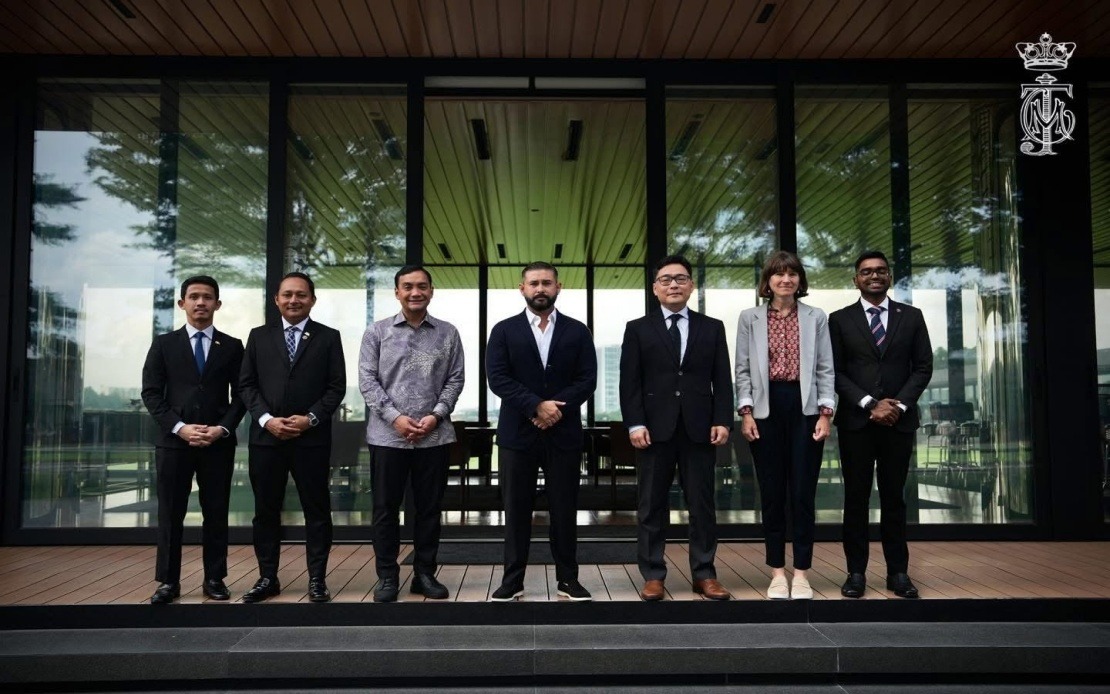
A landmark educational initiative is set to transform learning outcomes for 100 students across two secondary schools in Johor, through a strategic collaboration between the state government and Harvard University. The Program for Scientifically-Inspired Leadership (PSIL), originally established by the American institution in 2019, is designed to cultivate a generation of analytically sharp leaders equipped with contemporary problem-solving capabilities. The partnership signals a significant investment in raising educational standards within the state, bringing internationally-recognised pedagogical approaches to classrooms in Sekolah Menengah Kebangsaan (SMK) Tasek Utara and SMK Seri Kota Puteri 2, with implementation scheduled to commence in January 2027.
Aznan Tamin, who chairs the Johor State Education and Information Committee, outlined the programme's core philosophy during an announcement, emphasising that PSIL functions as a holistic learning framework rather than a conventional curriculum supplement. The curriculum places particular weight on nurturing students' capacity for active engagement with material, developing their ability to think critically about complex problems, honing their communication prowess, and cultivating leadership qualities that extend beyond the classroom. This multifaceted approach recognises that technical knowledge alone proves insufficient in a rapidly evolving global economy; instead, the programme positions soft skills and intellectual flexibility as equally vital components of student development. By grounding these competencies within a scientifically-informed context, the initiative aims to produce graduates capable of bridging the gap between theoretical understanding and practical application.
The scale of the intervention extends beyond direct student participation, with the programme encompassing professional development opportunities for 40 educators from Sekolah Rintis Bangsa Johor (SRBJ). These teachers will participate in intensive workshops focused on active learning pedagogy, equipping them with contemporary instructional methodologies that prioritise student-centred rather than teacher-centred learning models. Such investment in educator capacity-building reflects an understanding that sustainable educational transformation requires supporting the practitioners at the frontline. The workshops will expose Johor teachers to evidence-based teaching strategies that have proven effective within Harvard's own institutional context, potentially creating a multiplier effect as these educators subsequently apply refined techniques across their wider spheres of influence.
The partnership received formal endorsement when Tunku Mahkota Ismail, the Regent of Johor, welcomed a Harvard delegation led by Dr Dominic Mao, assistant director of Undergraduate Studies and Lecturer in Molecular and Cellular Biology, alongside Dr Andrea Wright, assistant dean of Harvard College. This high-level engagement underscores the political commitment to internationalising Johor's education sector, positioning the state as a hub for cross-border academic collaboration within Southeast Asia. The reception of Harvard representatives by the state's regent sends a powerful symbolic message to both the local community and the broader regional education landscape regarding Johor's ambitions to establish itself among Asia-Pacific education leaders.
SRBJ's educational philosophy, which serves as the institutional foundation for this partnership, offers important context for understanding why Harvard selected this particular school system as a partner. The institution has deliberately structured its approach around simultaneous mastery of both English and Malay, rejecting a false dichotomy between linguistic competence and cultural rootedness. Simultaneously, SRBJ prioritises science, technology, engineering and mathematics (STEM) competencies, recognising these disciplines as central to twenty-first century economic participation. The school further emphasises personality development and student employability, moving beyond narrow academic metrics to consider the holistic formation of young people prepared for professional success. These elements align closely with Harvard's own institutional values, creating substantial philosophical common ground.
The competency assessment framework embedded within the PSIL model represents a particularly significant innovation for Malaysian education. Rather than relying exclusively on domestic assessment standards, the programme introduces evaluation methodologies calibrated to international benchmarks, allowing students and educators to measure progress against globally comparable metrics. This approach provides Johor students with transparent information about their standing relative to peers internationally, while simultaneously ensuring alignment with Malaysia's Ministry of Education policies, thus avoiding any tension between global aspirations and national curriculum requirements. Such integration of international standards with domestic policy represents sophisticated educational planning.
For Malaysian secondary education more broadly, this initiative carries implications extending beyond Johor's borders. The success of the PSIL programme in these two schools will likely generate increased interest from other state education systems contemplating similar international partnerships. Southeast Asia has witnessed growing appetite among governments and parents alike for educational approaches that marry local cultural values with globally-competitive academic outcomes. Malaysia, positioned as a relatively economically advanced nation within the region, faces particular pressure to ensure its education system produces graduates capable of competing not merely regionally but globally. The Johor-Harvard collaboration provides a potential model that other Malaysian states might adapt or replicate.
The timing of the programme's implementation, scheduled for January 2027, provides a reasonable preparation window for SRBJ, the participating schools, and Harvard to undertake detailed logistical planning and curriculum adaptation. This lead time allows for careful consideration of how the programme's content and pedagogical approaches might be optimised for the Malaysian context, ensuring that while international best practices inform the initiative, the final implementation reflects genuine cultural and institutional fit rather than merely transplanting American models wholesale. The phased approach to programme expansion—beginning with these 100 students and 40 teachers—also permits evaluation and refinement before any potential scaling up.
The broader educational ecosystem in Johor stands to benefit from the knowledge transfer embedded within this partnership. When Harvard faculty interact with SRBJ educators, pedagogical innovations travel in both directions. Malaysian teachers bring their own contextual expertise and insights about student learning in their particular setting, potentially enriching Harvard's own understanding of global educational variations. This mutual exchange represents a key distinction between genuine educational partnership and one-directional knowledge transfer, positioning the collaboration as intellectually reciprocal rather than hierarchical.

%22%2F%3E%3C%2Fpattern%3E%3C%2Fdefs%3E%3Crect%20width%3D%22100%25%22%20height%3D%22100%25%22%20fill%3D%22url(%23ph21o2sg)%22%2F%3E%3Crect%20width%3D%22100%25%22%20height%3D%22100%25%22%20fill%3D%22url(%23ph21o2sp)%22%2F%3E%3Ctext%20x%3D%2250%25%22%20y%3D%2250%25%22%20text-anchor%3D%22middle%22%20dominant-baseline%3D%22central%22%20fill%3D%22rgba(255%2C255%2C255%2C0.95)%22%20font-family%3D%22Georgia%2C%20'Times%20New%20Roman'%2C%20serif%22%20font-weight%3D%22700%22%20font-size%3D%22170%22%20letter-spacing%3D%22-0.02em%22%3EGabungan%3C%2Ftext%3E%3C%2Fsvg%3E)