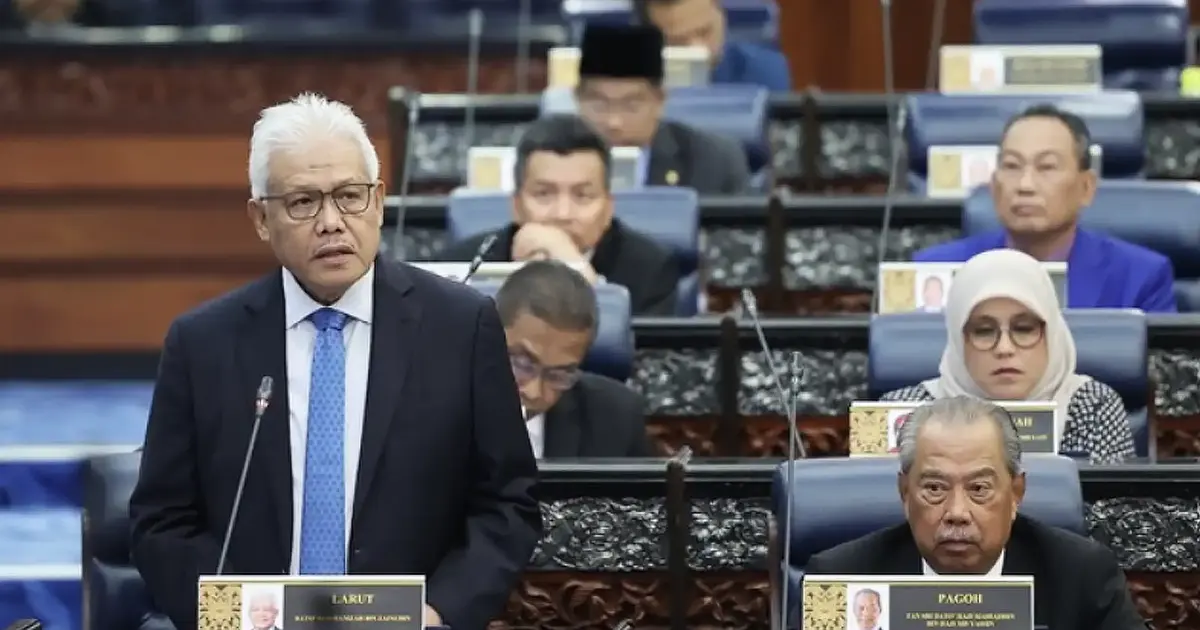
Malaysia's parliamentary seating arrangements have shifted once again, reflecting the fluid nature of opposition politics in the Dewan Rakyat. Hamzah Zainudin has resumed occupancy of the opposition leader's seat in the front row, a position that carries considerable symbolic weight in parliamentary theatre and legislative proceedings. The reshuffling displaces Bersatu president Muhyiddin Yassin, who previously held a location immediately adjacent to the opposition leader's desk—a proximity that underscored his party's standing within the opposition coalition. Muhyiddin has now been relocated eight seats further back along the front bench, a demotion that suggests evolving coalition dynamics among Malaysia's opposition groupings.
The seating arrangement in parliament, while apparently procedural, communicates important messages about party hierarchies and factional allegiances that extend well beyond the Dewan Rakyat's chamber. Opposition leaders typically occupy designated frontbench positions that afford them optimal visibility, acoustics for parliamentary contributions, and proximity to government benches during debates. The front row placement is conventionally reserved for the leader of the opposition coalition or the member commanding the largest opposition parliamentary contingent. Hamzah's return to this seat therefore signals a restoration of status that may have been temporarily eclipsed by internal coalition negotiations or shifting parliamentary alignments.
Muhyiddin's previous placement immediately beside the opposition leader's position had indicated Bersatu's elevated role within the broader opposition architecture. Bersatu, as a Malay-Muslim centric party that commands a significant parliamentary presence, has wielded considerable influence in opposition strategy and coalition building despite not formally holding the opposition leader title. The party's relocation down the bench represents either a recalibration of coalition priorities or a resolution of internal disputes that may have temporarily elevated Muhyiddin's visibility. Such shifts frequently accompany broader political negotiations, whether involving parliamentary procedure, committee appointments, or strategic positioning ahead of anticipated legislative votes.
The Dewan Rakyat's seating chart remains a barometer of opposition unity and factional tensions. Unlike Westminster parliaments where opposition benches are typically contiguous and clearly demarcated, Malaysian parliamentary arrangements sometimes fragment opposition members across multiple bench rows depending on which coalition or grouping they represent. Hamzah's prominence in the prime opposition seat, combined with Muhyiddin's recession, may reflect PKR's continued centrality to opposition coordination, particularly if Hamzah is actively leading parliamentary strategy or coordinating cross-bench opposition initiatives. Such coordination becomes crucial during government legislative programmes, budget votes, and confidence motions where opposition cohesion can meaningfully influence parliamentary outcomes.
For Malaysian political observers, seating arrangements frequently presage substantive political developments. Parliamentary historians and analysts often correlate bench movements with coalition renegotiations, impending leadership transitions, or shifting alliances with independent members and smaller parties. The current rearrangement could indicate that opposition leadership has consolidated around Hamzah's persona or parliamentary role, potentially at the expense of Muhyiddin's previous prominence. Alternatively, it might simply reflect administrative protocols or changes to opposition whip assignments that adjust seating based on active parliamentary participation levels.
Bersatu's positioning remains strategically important given its electoral competitiveness in certain constituencies and its ideological alignment with segments of the Malay-Muslim electorate traditionally supportive of UMNO and PAS. The party's relocation may not diminish its substantive influence over opposition legislative strategy, particularly on matters affecting religious institutions, Islamic affairs, or constitutional questions where Bersatu commands theological and organizational credibility. Opposition parliamentary effectiveness frequently depends less on bench proximity than on coordinated voting discipline, shared policy platforms, and the capacity to exploit government parliamentary vulnerabilities through procedural manoeuvres and strategic amendments.
The political implications extend beyond the Dewan Rakyat's chamber. Visible hierarchies within opposition spaces often influence perceptions among grassroots party members, potential coalition partners, and the broader Malaysian electorate. Hamzah's restoration to the opposition leader's seat may energize his supporters within whatever party framework he occupies, while Muhyiddin's repositioning might trigger internal Bersatu discussions about the party's coalition role and strategic direction. These bench movements frequently generate commentary within opposition intellectual circles and among media analysts monitoring coalition stability.
Malaysian parliament's opposition benches have experienced considerable churning since the 2022 general election, which fragmented opposition cohesion and created complex three-way competitive dynamics involving the ruling coalition, Perikatan Nasional, and looser opposition arrangements. Seating protocols must navigate these multiple competing claims for parliamentary prominence while maintaining procedural neutrality. The Speaker and parliamentary administration typically allocate seats based on party strength, coalition membership, and established parliamentary conventions, though occasional rearrangements occur when coalitions formally restructure or when individual members change affiliations.
For Malaysian governance, opposition parliamentary presence matters substantively. Opposition members table questions during parliamentary sittings, move amendments to government legislation, deliver policy critiques that enter the parliamentary record, and occasionally mobilize independent members or cross-bench votes on contentious matters. The effectiveness of these interventions depends on coordination capacity, access to information, and parliamentary communication networks rather than primarily on bench seating. Nevertheless, the symbolic restoration of Hamzah to the opposition leader's chair signals that whoever orchestrates opposition parliamentary strategy regards his role or representation as central to ongoing coalition efforts against the government.
The seating adjustment also reflects broader patterns in Malaysian opposition politics where coalition arrangements remain provisional, frequently negotiated between distinct party leaderships with sometimes divergent strategic objectives. Hamzah's repositioning and Muhyiddin's relocation represent one moment in what will likely be continuing adjustments as opposition parties navigate parliamentary life, anticipate electoral positioning, and manage internal factional disputes. For Malaysian political observers, such bench movements serve as readable signals of deeper coalition realignments, even when formal announcements about coalition restructuring remain absent.