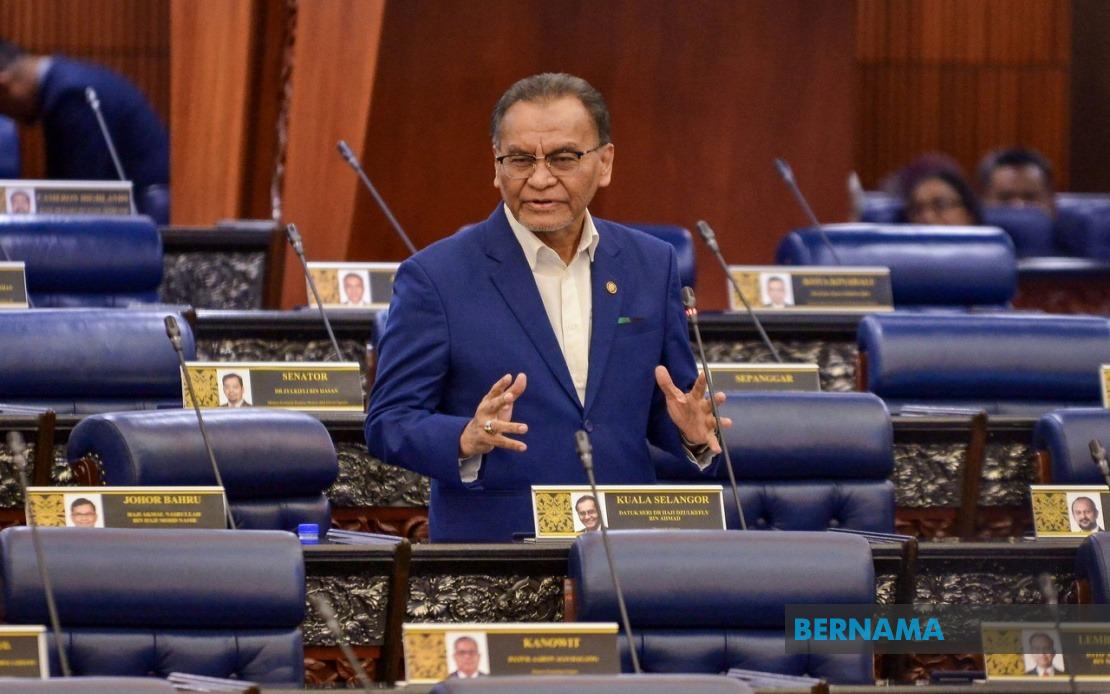
The Malaysian government is moving to address escalating private healthcare costs through a multi-pronged approach centred on the introduction of MediAsas, an accessible medical insurance and takaful scheme designed specifically for the country's M40 middle-income bracket. Health Minister Datuk Seri Dr Dzulkefly Ahmad outlined the initiative as part of a broader policy framework aimed at ensuring vulnerable and middle-income populations maintain meaningful access to health protection without bearing unsustainable financial burdens.
MediAsas represents a strategic intervention within the RESET framework, a comprehensive governmental policy designed to tackle the mounting expense of private medical services. The scheme distinguishes itself by offering premium rates that remain manageable for the M40 demographic, whilst gradually implementing Diagnosis Related Group (DRG)-based payment mechanisms within participating private hospitals. This approach seeks to introduce cost-control mechanisms into the private sector whilst maintaining affordability for consumers, creating a middle ground between the fully subsidised public system and the unregulated private market.
Crucially, the government has clarified that MediAsas does not displace or diminish the public healthcare infrastructure that continues to serve all Malaysians. The national public health system, which encompasses 154 hospitals and over 3,000 healthcare facilities, remains the foundation of universal health coverage and is sustained through taxation. Instead, MediAsas functions as a complementary layer of protection, offering the M40 group additional choices and expanded coverage options without eroding the public sector's capacity or mandate.
The implementation strategy follows a measured rollout designed to test operational viability before nationwide expansion. The pilot programme will launch at month's end across the Klang Valley region, involving six insurance and takaful companies in a controlled environment. This approach allows policymakers to refine the scheme, address emerging challenges, and gather evidence on pricing, claims processing, and provider participation before scaling nationally. The nationwide expansion is scheduled for January 2027, providing a six-month testing window to optimise delivery mechanisms.
For the M40 demographic, MediAsas addresses longstanding gaps in healthcare protection. Middle-income families often fall into a coverage void, earning too much to qualify for targeted B40 programmes but too little to comfortably afford comprehensive private insurance. The scheme specifically incorporates provisions for pre-existing conditions, non-communicable diseases (NCDs) such as diabetes and hypertension, and mental health coverage—conditions frequently excluded or heavily penalised under conventional private insurance products. This inclusive design recognises the health profile of Malaysia's ageing population and the rising prevalence of chronic conditions.
The broader healthcare protection ecosystem extends beyond MediAsas. The government maintains the Healthcare Scheme for the B40 Group (PeKa B40), the MADANI Healthcare Scheme, and MySalam as dedicated instruments protecting lower-income populations. These initiatives collectively ensure that access to health protection is stratified according to ability to pay whilst maintaining universal coverage principles. The multi-scheme approach reflects recognition that different income groups face distinct barriers and require tailored solutions.
Interoperability of electronic medical records represents another critical dimension of the RESET framework. By enabling seamless data sharing between public and private providers, the government aims to eliminate redundant diagnostic tests and imaging studies. This technical infrastructure improvement addresses a significant source of healthcare inefficiency and cost escalation, benefiting both individual patients through reduced out-of-pocket expenses and the healthcare system through improved resource allocation.
The restructuring of private hospital billing practices forms the third pillar of this comprehensive reform strategy. Current private hospital billing lacks transparency and standardisation, with charges varying dramatically between facilities for identical procedures. Implementing DRG-based payment mechanisms introduces pricing discipline and predictability, enabling patients and insurers to understand costs upfront and compare across providers. This market transparency should theoretically encourage competition on quality and efficiency rather than allowing unchecked price inflation.
From a Malaysian public health perspective, MediAsas addresses a critical policy challenge: ensuring that rising private sector costs do not create a two-tier system where only wealthy Malaysians access quality care. The M40 group—comprising families earning approximately RM4,000 to RM8,000 monthly—represents a crucial middle stratum. Enabling this group to access sustainable private healthcare options through affordable insurance reduces pressure on the public system whilst allowing those who prefer private providers to do so without financial catastrophe.
The regional context amplifies this initiative's significance. Across Southeast Asia, healthcare cost inflation has outpaced wage growth for a decade, creating access crises in middle-income countries. Malaysia's approach—combining public universal coverage with targeted affordable private insurance products—offers a pragmatic model potentially instructive for neighbouring nations confronting similar pressures. The emphasis on interoperability and billing standardisation reflects emerging international best practice in managing mixed public-private healthcare systems.
The timing of MediAsas reflects evolving health insurance markets. Malaysians increasingly seek private healthcare for perceived quality or convenience, yet conventional private insurance remains prohibitively expensive. Takaful products, which operate on Islamic principles of pooled risk and mutual assistance, complement conventional insurance by offering alternatives aligned with values held by many Malaysian consumers. The inclusion of both conventional insurance and takaful companies in the pilot programme recognises religious diversity and consumer preference.
Longer-term sustainability depends on whether MediAsas pricing remains actuarially sound whilst remaining affordable for the target demographic. The scheme requires careful calibration: premiums must reflect genuine risk and claims experience to avoid future insolvency, yet affordability is the explicit policy objective. Over-pricing undermines the access mandate; under-pricing creates financial instability. Success will depend on rigorous claims management, careful network stewardship with private providers, and potential government subsidy if market mechanisms prove insufficient.
The MediAsas initiative ultimately reflects the government's commitment to ensuring that Malaysia's middle class—increasingly squeezed between public system pressures and private market costs—retains viable healthcare options. By introducing an intermediate insurance product backed by regulatory oversight and aligned with public health objectives, policymakers are attempting to preserve healthcare as a shared social responsibility rather than allowing it to fragment into purely commercial dimensions accessible only to the wealthy.

