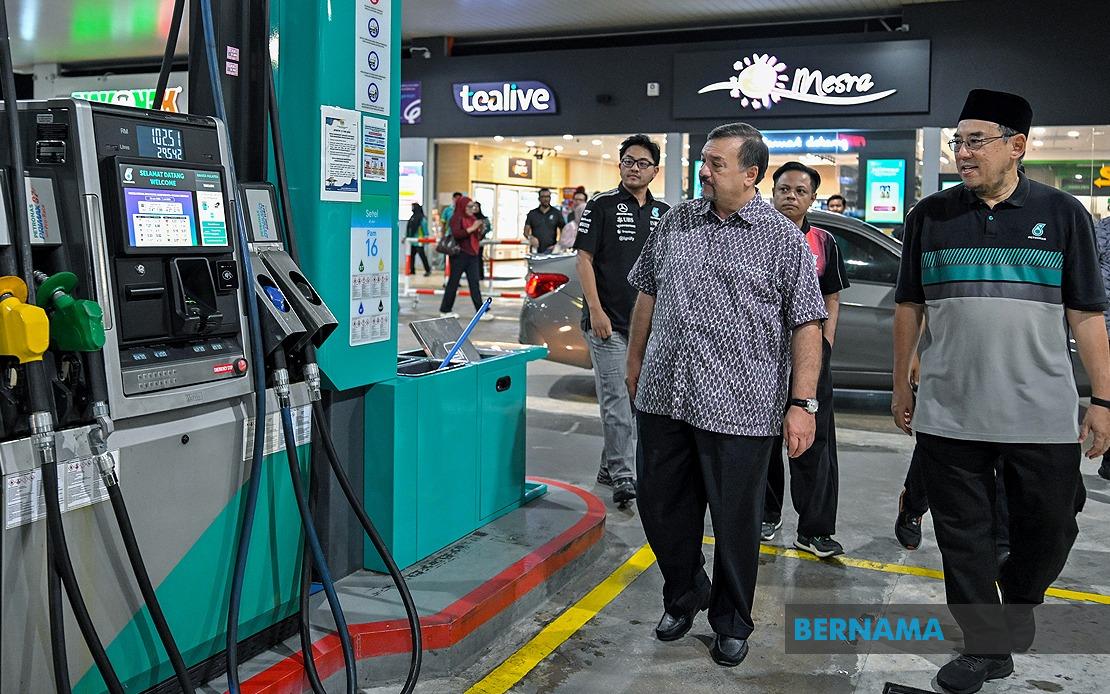
The government's diesel subsidy initiative has demonstrated strong uptake during its early rollout phase, with more than 18,000 applications lodged for additional fuel allocations since the BUDI MADANI Diesel programme commenced. Speaking on June 28, Second Finance Minister Datuk Seri Amir Hamzah Azizan highlighted the programme's smooth implementation across Peninsular Malaysia, noting that the first two days of operation had generated over 40,000 separate transactions as eligible users accessed the subsidised fuel benefits.
The BUDI MADANI Diesel scheme extends an extra 100 litres of subsidised diesel monthly to owners of qualifying diesel-powered pickup trucks and SUVs, representing a substantial expansion of Malaysia's fuel support system. Eligible applicants can register through the official BUDI MADANI portal, which has been designed to streamline the application process and minimise friction for users seeking to participate in the programme. For those experiencing difficulties with online registration, the government has established multiple support channels including assistance at Inland Revenue Board offices, Urban Transformation Centres, and dedicated service counters operated by several major petroleum companies.
A notable feature of the programme addresses practical complications that arise when registered vehicle owners differ from actual users—a common situation in Malaysian commercial transport operations. The government has introduced a quota transfer mechanism that allows authorised individuals to redirect their fuel allocation to another party, provided the request is submitted and approved through the official portal. This flexibility recognises the realities of vehicle ownership and usage patterns in the local economy, particularly among businesses that operate fleets of light commercial vehicles.
The technical framework supporting quota transfers demonstrates considerable sophistication in execution. Once a transfer application receives approval, petrol station verification systems are updated to recognise the new user through their identity card number, which becomes linked to the fuel quota. This ensures that when the designated individual presents at a fuel pump, the point-of-sale system automatically identifies them as the authorised quota holder and applies the subsidised rate accordingly. Importantly, while the quota itself transfers to the new user's identity, the underlying allocation remains permanently attached to the specific vehicle, preventing any possibility of quota-hopping between vehicles.
The pricing structure of BUDI MADANI Diesel offers substantial savings relative to unsubsidised fuel costs. During the initial implementation phase, eligible users access diesel at RM2.15 per litre under a flexible arrangement permitting up to 200 litres monthly. From July 1 onwards, the government will reduce the subsidised rate further to RM2.10 per litre, providing additional relief to participating vehicle owners. This progressive price adjustment reflects the government's commitment to gradually stabilising the subsidy structure while maintaining meaningful cost advantages for the targeted user base.
Second Finance Minister Amir Hamzah's inspection visit to the NKVE Damansara Bound Petronas service station, accompanied by Treasury secretary-general Tan Sri Johan Mahmood Merican, underscored official confidence in the programme's operational readiness. Officials confirmed that neither the digital infrastructure nor the participating petroleum retailers had reported significant technical problems during the critical early rollout period. This absence of friction reflects months of prior system development and coordination between government agencies and private fuel retailers.
The regulatory framework underpinning BUDI MADANI Diesel forms part of Malaysia's broader approach to managing energy costs for small and medium-sized commercial operators. Pickup trucks and SUVs powered by diesel fuel constitute important assets for numerous Malaysian enterprises, from construction companies to agricultural businesses and transport operators. By targeting fuel subsidies to these vehicle segments, the government aims to provide targeted relief where operational fuel costs represent a material component of business expenses.
The volume of applications received during the opening phase suggests strong market awareness of the scheme among eligible vehicle owners. The 18,000 applications recorded by 10 pm on June 28 indicate that information dissemination and promotional efforts had successfully reached the intended audience. This rapid engagement contrasts with some government subsidy schemes that experience slower adoption during initial phases, suggesting that both the communication strategy and the perceived benefits of BUDI MADANI Diesel have resonated with target users.
Looking toward the July 1 full implementation date, officials have signalled their focus on maintaining operational stability and user satisfaction. The smooth functioning demonstrated in the early phase provides a foundation for scaling operations as the user base expands beyond the initial applicant pool. Government representatives have indicated commitment to monitoring system performance and petrol station operations closely to identify and resolve any emerging bottlenecks before widespread public participation begins.
The BUDI MADANI Diesel programme also represents an evolution in how Malaysia administers fuel subsidies, moving toward more targeted and digitally-enabled distribution compared to blanket price controls. By restricting eligibility to specific vehicle categories and implementing quota limits, the approach aims to deliver subsidy benefits efficiently while managing fiscal exposure. The integration of identity verification and quota-tagging technology creates an audit trail that can support programme monitoring and evaluation.
For Malaysian business operators reliant on diesel fuel, particularly those operating in logistics, construction, and agriculture sectors, the expanded subsidy scheme promises meaningful reductions in operational costs. The ability to transfer quotas among authorised users adds flexibility that accommodates diverse business structures and working arrangements. As the programme advances into its broader implementation phase, experiences from these early days will likely inform refinements to ensure the scheme delivers its intended economic benefits to participating sectors of the economy.

