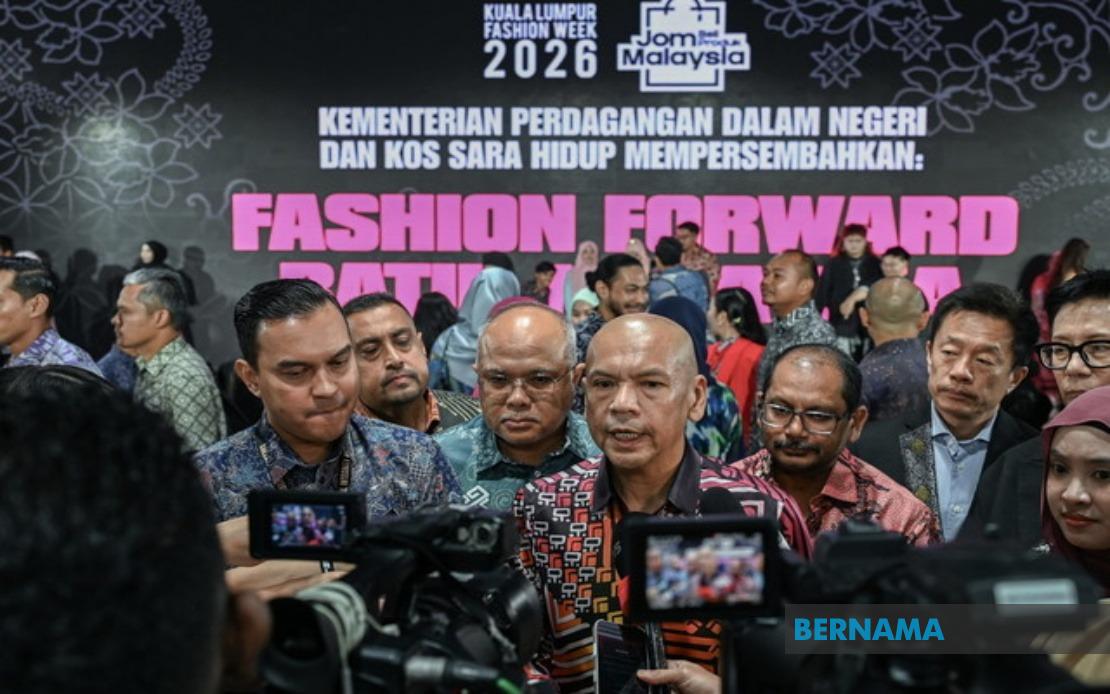
The government is actively seeking input from industry players, entrepreneurs, and other stakeholders to strengthen policies designed to promote the use and purchase of locally-made products, according to Domestic Trade and Cost of Living Minister Datuk Armizan Mohd Ali. Speaking at the Kuala Lumpur Fashion Week 2026, Armizan emphasized that the administration wants to ensure its initiatives are genuinely responsive to the practical concerns and opportunities within Malaysia's business ecosystem, rather than operating on assumptions disconnected from ground realities.
The outreach initiative comes as a newly formed Cabinet Committee to empower the use and purchase of local products prepares to hold its inaugural meeting. Chaired by Deputy Prime Minister Datuk Seri Fadillah Yusof, with the KPDN serving as secretariat, the committee represents a significant structural shift in how government agencies approach local product development. Previously, different ministries and departments often pursued separate agendas without coordinating their efforts, leading to fragmented and sometimes contradictory policies. By consolidating decision-making authority under a single committee, the government aims to create a unified strategic framework that all agencies will implement consistently.
Stakeholders are encouraged to submit their proposals and feedback directly to the KPDN or relevant government agencies, which will then present these inputs to the Cabinet Committee for consideration. This two-way communication channel reflects a recognition that effective policy-making requires listening to those who operate within the regulatory and market environment on a daily basis. Local entrepreneurs, manufacturers, retailers, and exporters possess valuable insights into which policies actually work and which create unnecessary friction or unintended consequences.
The committee's composition underscores the cross-sectoral nature of supporting local products. Beyond the KPDN, membership includes the Ministry of Economy, the Ministry of Investment, Trade and Industry, the Ministry of Tourism, Arts and Culture, the Ministry of Entrepreneur Development and Cooperatives, the Finance Ministry, and various related agencies. This inclusive structure ensures that product promotion touches all relevant dimensions, from manufacturing and export capability to cultural positioning and financial accessibility. The coordination mechanism should eliminate situations where one ministry's initiative contradicts another's, creating clarity for businesses about government expectations and support.
A primary concern motivating this push is the growing anxiety among local entrepreneurs regarding the influx of foreign products into Malaysia, particularly through e-commerce and online retail platforms. The ease with which international merchants can now reach Malaysian consumers directly—bypassing traditional distribution channels—has fundamentally altered competitive dynamics. Without strategic intervention to level the playing field, locally-produced goods risk being marginalized in their own market. The government views its role as ensuring fair competition while simultaneously building the capacity and visibility of domestic producers.
The strategic objective extends beyond simple protectionism. The committee aims to reduce Malaysia's dependence on imported products, increase the economic contribution of locally-made goods to gross domestic product, and create meaningful opportunities for local entrepreneurs to scale their operations. These goals align with broader economic resilience considerations; economies that rely too heavily on imports face vulnerability to supply chain disruptions and currency fluctuations. Building robust domestic production capacity provides a buffer against external shocks while generating employment and wealth within the country.
The government is leveraging high-profile cultural and commercial events to amplify the local products message. The Kuala Lumpur Fashion Week represents a particularly strategic platform, given the international reach and media attention it attracts. By positioning Malaysian batik and other locally-designed fashion items at a world-class event, the government seeks to establish local products as premium offerings rather than merely domestic alternatives. The event's media value reached USD32 million in the previous year, demonstrating its substantial influence within global fashion industry circles. This exposure translates directly into brand recognition and market access opportunities for Malaysian producers.
The Jom Beli Produk Malaysia movement—the overarching initiative driving these efforts—represents a collaborative rather than purely regulatory approach. Rather than simply mandating that government agencies prioritize local purchases or imposing tariffs and restrictions, the government is working with industry partners to make locally-made products more attractive through better design, quality, marketing, and availability. This partnership model respects market dynamics while creating conditions where local products can compete effectively on their merits.
Batik production exemplifies the potential for traditional Malaysian crafts to achieve contemporary commercial success. Batik carries deep cultural significance while producing items with genuine international appeal. By connecting batik artisans and manufacturers with fashion industry channels and international consumers, the government can simultaneously preserve cultural heritage, support rural and urban creative workers, and generate export revenue. The Fashion Forward Batik segment at KLFW demonstrates how heritage crafts and modern commerce can reinforce rather than contradict each other.
The cultural and creative industries more broadly have demonstrated remarkable economic importance. According to the 2024 Cultural and Creative Satellite Account Report, these sectors contributed RM130.7 billion to Malaysia's GDP, representing 6.8 percent of total economic output. This substantial figure indicates that investment in strengthening local creative industries yields significant returns. Supporting fashion, design, handicrafts, and related creative fields offers multiple benefits simultaneously—economic growth, employment, cultural preservation, and international soft power projection.
For Malaysian businesses, the establishment of this Cabinet Committee and the government's explicit invitation for stakeholder input signal genuine intent to reshape the policy environment. Rather than waiting passively for government directives, entrepreneurs should actively engage in this feedback process, presenting specific obstacles they face and concrete suggestions for improvement. Those who contribute effectively to shaping policy will likely find themselves better positioned to benefit from the resulting initiatives and support programs. The window for substantive input into these foundational policy discussions is likely to be open only temporarily, making timely engagement strategically important.
The success of this initiative ultimately depends on follow-through. Establishing committees and inviting feedback matters little if government agencies continue operating inconsistently or if commitments remain unfulfilled. However, the seriousness with which senior leadership—including the Deputy Prime Minister—has engaged with this agenda suggests meaningful institutional commitment. As the Cabinet Committee begins its work and stakeholder feedback flows in, the real test will be whether Malaysian policy responds meaningfully to input received and whether coordinated government action actually materializes. For the broader regional context, Malaysia's deliberate effort to support local products while maintaining open markets offers a balanced model that other Southeast Asian nations may study and potentially adapt to their own circumstances.

