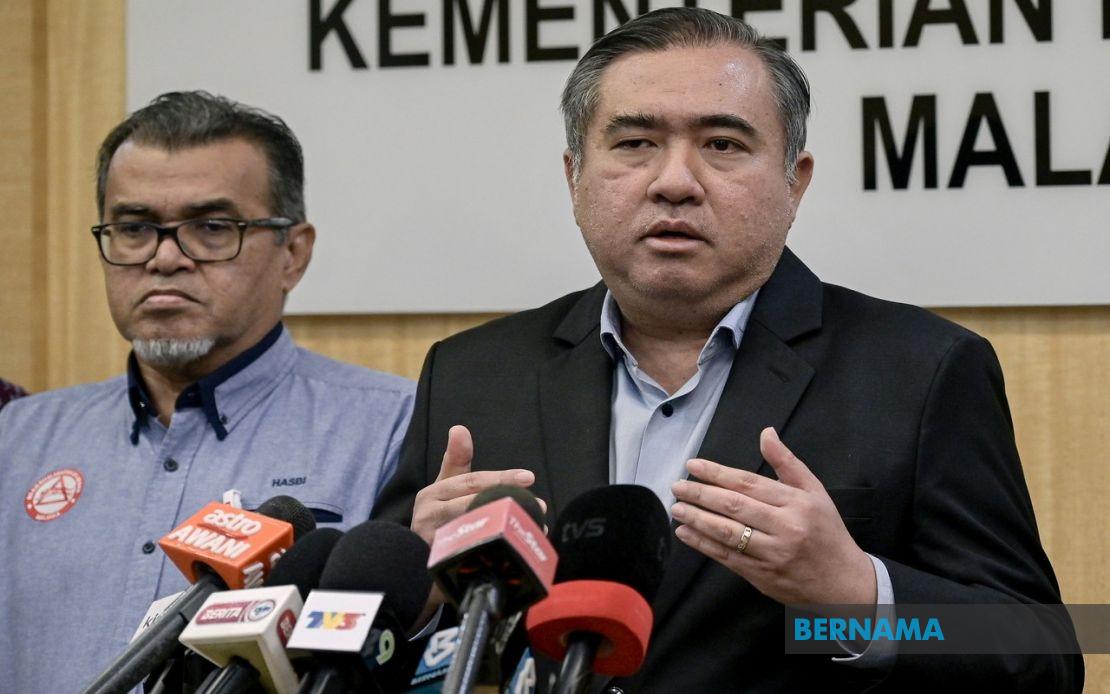
Malaysia's Transport Minister Anthony Loke has drawn a clear line between government oversight of port ownership and non-interference in corporate management decisions, clarifying longstanding policy following recent international scrutiny of leadership changes at a major port operator. Speaking at a press conference in Putrajaya on July 17, Loke explained that while the government maintains strict regulatory control over shareholding structures in strategically important assets like ports, it does not involve itself in internal corporate appointments, regardless of whether those positions are filled by Malaysian or foreign nationals. This distinction underscores how Malaysia balances national interests in critical infrastructure with the operational autonomy needed for efficient commercial management.
The minister's comments came in response to reporting by international media regarding Sultan Ahmed Sulayem, former chairman and chief executive of global port operator DP World, assuming the role of executive chairman at MMC Ports Holdings Bhd following the sudden resignation of group chief executive Azman Shah Mohd Yusof. The leadership transition had attracted international attention and triggered questions about whether such senior appointments required government approval or signalled a shift in the company's strategic direction. Loke's intervention sought to normalize such transitions within Malaysia's regulatory framework and reassure stakeholders about the consistency of government policy.
At the heart of Malaysia's approach lies a straightforward ownership requirement: any company holding port concessions or operating other strategically critical national assets must maintain at least 51 per cent Malaysian ownership. This threshold, enshrined in government policy, represents the government's primary lever for protecting national interests in vital infrastructure sectors. By maintaining majority Malaysian control at the ownership level, policymakers ensure that key decisions affecting Malaysia's maritime economy ultimately rest with Malaysian shareholders and boards of directors, even if day-to-day operational leadership may involve international expertise. This framework reflects a pragmatic approach that seeks to attract world-class management talent while preserving Malaysian stewardship of critical assets.
Loke emphasized that government regulation focuses exclusively on the shareholding question, not on who occupies executive positions or other management roles within these companies. He pointed to precedent within Malaysia's own port sector: the Port of Tanjung Pelepas, one of the country's major facilities, is led by a foreign national chief executive officer, yet operates successfully under government oversight. The existence of such arrangements demonstrates that Malaysia has long operated with this distinction between ownership oversight and management non-interference, suggesting this is not a new or controversial principle but rather standard practice. For investors and international port operators considering involvement in Malaysia, this clarity provides assurance that they can attract and deploy experienced global management without facing government obstruction.
The minister made clear that any changes to shareholding structures do represent a different matter entirely. Such alterations must be formally notified to the government through appropriate channels, including the Public-Private Partnership Unit (UKAS), ensuring transparency and allowing government authorities to verify that ownership thresholds remain intact. This notification requirement creates an audit trail and prevents stealth changes to ownership that might circumvent the 51 per cent Malaysian ownership mandate. When asked specifically whether the ministry had received any shareholding change notifications related to MMC Ports Holdings Bhd, Loke indicated that it had not, suggesting that the leadership transition involving Sulayem had not involved alterations to the company's ownership structure.
The distinction Loke articulated carries particular significance for Malaysia's competitive positioning in regional maritime commerce. Southeast Asia has emerged as a critical hub for global shipping and port services, with intense competition among facilities across Singapore, Thailand, Vietnam, and Indonesia. For Malaysian ports to remain attractive to major shipping lines and operators, they must offer both the certainty of Malaysian strategic control and the operational flexibility to employ world-class management. International port operators regularly circulate senior executives across their global networks to drive efficiency, innovation, and service improvements. By maintaining a clear separation between ownership regulation and management autonomy, Malaysia signals that it can accommodate such global best practices while protecting its national interests.
The appointment of Sultan Ahmed Sulayem specifically underscores this point. Sulayem brings decades of experience from DP World, one of the world's largest port operators, having built a reputation for transforming port operations and expanding capacity across multiple continents. His assumption of an executive chairman role at MMC Ports Holdings suggests a strategic effort to infuse international best practices and potentially pursue expansion or efficiency improvements. For Malaysian policymakers, permitting such leadership transitions without bureaucratic obstruction demonstrates confidence that the 51 per cent ownership requirement provides sufficient protection for national interests while allowing the company to benefit from global expertise.
Loke's clarification also addresses concerns that might have arisen from the international reporting. Some observers may have interpreted the sudden leadership change and Sulayem's arrival as evidence of foreign takeover or loss of Malaysian control. By explicitly reaffirming ownership requirements and confirming no shareholding changes had been notified, Loke provided reassurance to Malaysian stakeholders while signaling to international investors that the regulatory environment remains stable and predictable. This kind of clear, proactive communication from senior government officials helps prevent misunderstandings and speculation that could otherwise damage investor confidence or create unnecessary political controversy.
The broader context for Loke's remarks reflects Malaysia's strategic approach to managing globalization of its critical infrastructure sectors. The country must simultaneously attract foreign investment and operational expertise while retaining meaningful control over assets essential to national security and economic interests. The 51 per cent ownership threshold represents a middle ground: it is substantial enough to ensure Malaysian stakeholders maintain decision-making authority through shareholder votes and board composition, yet allows significant foreign participation and investment. Many developing nations employ higher thresholds or more restrictive foreign investment rules; Malaysia's approach is comparatively liberal while still safeguarding core interests.
For port operators and international shipping companies, Loke's statements provide important clarity on the investment environment. Major port operators considering operations in Malaysia can be confident that managerial decisions—including hiring, promotion, and operational strategy—will not face government interference provided ownership structures comply with regulations. This predictability matters significantly in an industry where operational decisions must often be made quickly and with flexibility to respond to market conditions. Companies considering whether to invest in Malaysian port operations or expand existing presence can factor in reasonable confidence that governments won't suddenly intervene in management matters based on political considerations.
The Transport Minister's remarks also implicitly address concerns about potential political interference in corporate management. In some jurisdictions, government claims of non-interference in corporate matters have proven hollow, with officials subsequently intervening when particular individuals or policies fall out of favor politically. By articulating clear boundaries and pointing to precedent like the Port of Tanjung Pelepas, Loke established expectations that Malaysia intends to honor its separation of government oversight and management autonomy. Maintaining this distinction is essential not just for immediate investor confidence but for Malaysia's broader reputation as a jurisdiction with predictable, rules-based governance.
Looking forward, Loke's clarification establishes a template for handling similar transitions at other strategic assets. As Malaysia's maritime sector continues to develop and international players seek deeper involvement in regional port infrastructure, the government's willingness to welcome experienced foreign management while maintaining Malaysian ownership control may become increasingly important. The precedent Loke has established suggests that future leadership appointments at Malaysian port operators, even those involving prominent international figures, will be evaluated within a straightforward framework focused on ownership and regulatory compliance rather than subjective government preferences about individual appointees.
Ultimately, the minister's intervention reflects confidence that Malaysia's strategic interests are adequately protected through ownership requirements and that operational excellence benefits everyone—the government, Malaysian stakeholders, international partners, and ultimately Malaysian consumers and businesses dependent on efficient port services. By declining to meddle in management appointments while maintaining clear ownership boundaries, Malaysia positions itself as a modern, pragmatic nation capable of balancing legitimate national interests with the operational flexibility required to compete effectively in the global maritime economy.

