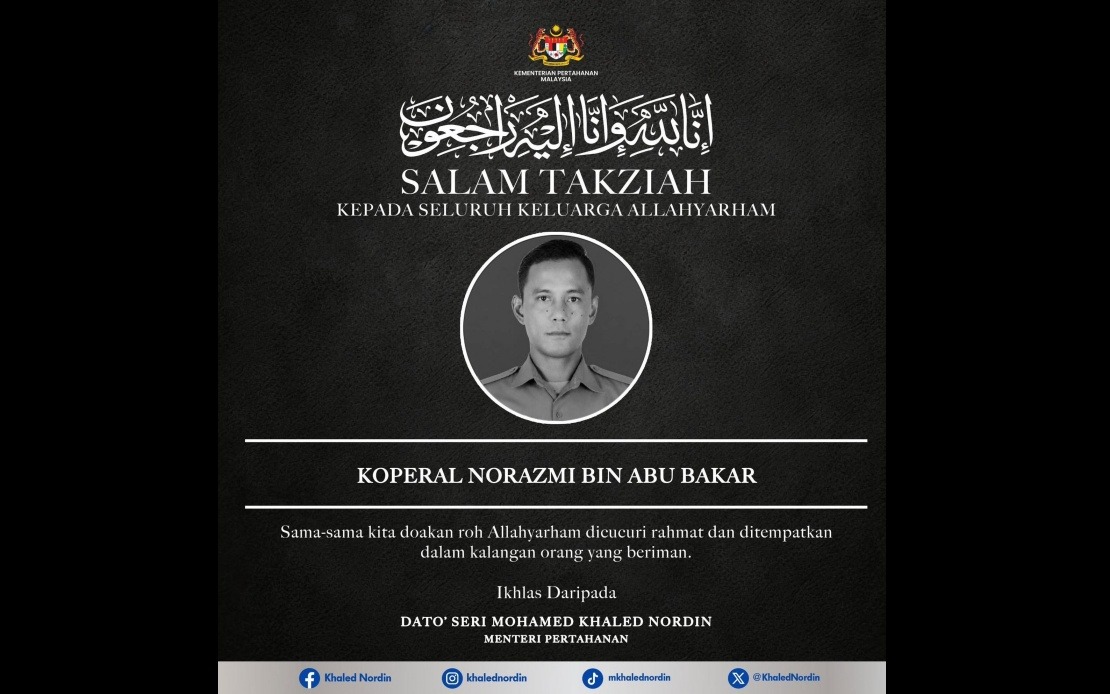
The Malaysian government and Defence Ministry have conveyed their deepest sympathies to the families of Corporal Norazmi Abu Bakar and Private Siti Khadijah Sungip, both of whom lost their lives in an explosion that occurred during a grenade-throwing training exercise at Hobart Camp firing range in Gurun, Kedah, on June 16. The blast claimed the lives of the two armed forces personnel in what has been confirmed as a tragic accident during routine military training operations.
Defence Minister Datuk Seri Mohamed Khaled Nordin released a statement expressing the ministry's profound sorrow at the incident. He extended prayers and wishes for the victims' families to find strength and resilience during this difficult period. The minister's remarks underscored the gravity of the loss and the government's commitment to supporting the bereaved families through their grief.
Corporal Norazmi, who served with the 6th Battalion, Royal Malay Regiment, and Private Siti Khadijah, attached to the 1st Squadron, Royal Army Engineers Regiment, sustained severe injuries in the incident, which occurred at approximately 10:57 am. Despite immediate medical intervention and transportation to Sultan Abdul Halim Hospital in Sungai Petani, both servicemen tragically succumbed to their injuries en route to the medical facility. Their deaths mark a sobering reminder of the inherent risks military personnel face during training activities.
In his social media statement, the Defence Minister invoked religious sentiment, requesting that Allah SWT grant mercy to the souls of both deceased personnel and admit them among His faithful servants. This expression reflected the broader national sentiment and cultural values in honouring those who serve the armed forces. The ministry's swift acknowledgment of the incident demonstrated institutional responsibility in addressing a significant loss within military ranks.
The Malaysian Army formally confirmed the identities and circumstances of the fatalities through official channels. Both victims' military affiliations were clearly documented, with their respective regiments being among the professional and well-trained units within the Malaysian armed forces. The involvement of personnel from both the Royal Malay Regiment and the Royal Army Engineers Regiment highlighted how training accidents can affect multiple branches of military operations.
Military training exercises involving live ammunition and explosives carry inherent risks that cannot be entirely eliminated despite rigorous safety protocols. Grenade-throwing drills are fundamental components of infantry training worldwide, designed to ensure soldiers develop proficiency with essential combat tools. However, incidents such as this underscore the critical importance of maintaining the highest safety standards and adhering strictly to established operational procedures during such exercises.
Army Chief General Tan Sri Azhan Md Othman has initiated a comprehensive investigation to establish the precise cause of the explosion. This inquiry will examine various factors including equipment malfunctions, procedural deviations, environmental conditions, and training protocol compliance. The findings from such investigations typically inform future safety measures and training modifications to prevent similar tragedies from occurring.
Training accidents within military establishments carry significant implications beyond the immediate loss of life. They prompt critical evaluations of safety frameworks, supervision levels, and equipment maintenance standards. The incident at Hobart Camp will likely trigger a thorough review of grenade-throwing exercise protocols across Malaysian armed forces training facilities, potentially leading to enhanced safety measures and revised operational guidelines.
For Malaysian military personnel and their families, such incidents underscore the genuine hazards inherent in service. Despite living in a period of relative peace, armed forces members face tangible occupational risks during routine training. The loss of these two servicemen, one male and one female, reflects the diverse composition of modern Malaysian military forces and affects families across different communities.
The timing and location of the incident—at Hobart Camp in Kedah's Gurun area, a recognised military training facility—indicates this occurred at an established and presumably well-regulated training complex. This raises questions about the specific circumstances that allowed such a tragedy to unfold and whether additional oversight mechanisms might have prevented the outcome. Regional military establishments will undoubtedly review their own protocols in light of these events.
The government's prompt expression of condolences and commitment to investigation demonstrates institutional responsiveness to military casualties. Beyond symbolic gestures, such incidents typically trigger reviews of compensation arrangements, family support services, and rehabilitation protocols for injured military personnel. The Defence Ministry's involvement signals that findings from the investigation will likely result in policy adjustments affecting training operations nationally.
As investigations proceed, the broader military community will observe carefully how the Malaysian armed forces address the findings and what preventive measures are implemented. The tragic loss of these two dedicated personnel serves as a sobering reminder that even routine training activities demand unwavering adherence to safety protocols and continuous vigilance. Both Corporal Norazmi and Private Siti Khadijah are remembered as professionals who made the ultimate sacrifice.

%22%2F%3E%3C%2Fpattern%3E%3C%2Fdefs%3E%3Crect%20width%3D%22100%25%22%20height%3D%22100%25%22%20fill%3D%22url(%23ph21o2sg)%22%2F%3E%3Crect%20width%3D%22100%25%22%20height%3D%22100%25%22%20fill%3D%22url(%23ph21o2sp)%22%2F%3E%3Ctext%20x%3D%2250%25%22%20y%3D%2250%25%22%20text-anchor%3D%22middle%22%20dominant-baseline%3D%22central%22%20fill%3D%22rgba(255%2C255%2C255%2C0.95)%22%20font-family%3D%22Georgia%2C%20'Times%20New%20Roman'%2C%20serif%22%20font-weight%3D%22700%22%20font-size%3D%22170%22%20letter-spacing%3D%22-0.02em%22%3EGabungan%3C%2Ftext%3E%3C%2Fsvg%3E)