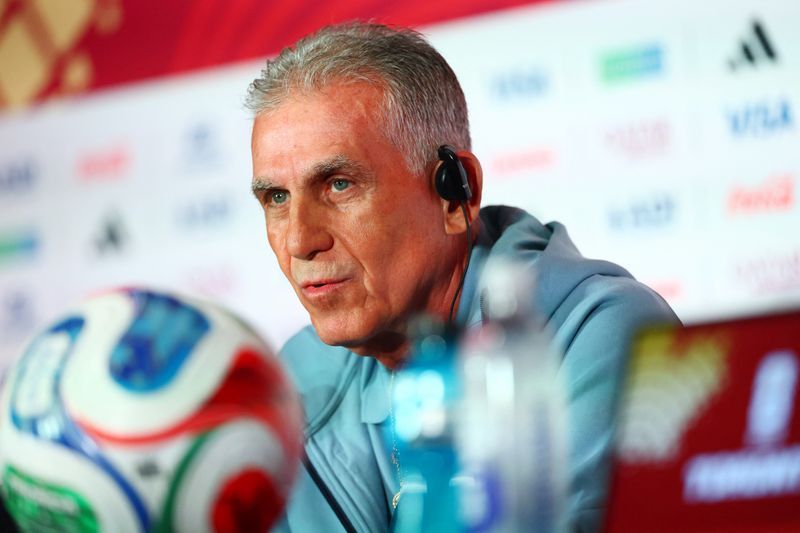
Ghana's World Cup ambitions remain on track despite an extraordinary circumstance threatening to derail their campaign on the eve of their opening match. Coach Carlos Queiroz delivered a carefully composed message on Tuesday as a Canadian federal court heard an appeal challenging the government's refusal to allow midfielder Thomas Partey entry to the country. With the match against Panama scheduled for Wednesday at Toronto Stadium, the timing could hardly be more precarious for the West African side, yet Queiroz displayed the measured diplomacy of a seasoned tournament veteran, insisting his squad possesses contingency plans for every scenario.
Partey's legal predicament stems from allegations of rape and sexual assault made against him in Britain, charges which the Villarreal midfielder has consistently denied. Canadian immigration authorities determined his presence posed concerns sufficient to deny him entry, a decision that immediately triggered an appeal process. The midfielder's potential absence represents a significant loss for Ghana—he is among their most accomplished players operating at Europe's highest level, and his technical quality and midfield control would normally be considered crucial assets in a World Cup contest.
Queiroz's carefully calibrated response at his press conference reflected understanding of the politically sensitive terrain he was navigating. Rather than elaborate extensively on Partey's situation, he deflected with measured language, describing discussion of the matter as "nonsense" unworthy of extended commentary. This approach served multiple purposes: it avoided inflaming the appellate proceedings, prevented further scrutiny of a player facing serious allegations, and allowed the coach to maintain focus on Ghana's immediate footballing objectives. His philosophy, he suggested, was pragmatic rather than accusatory—work with the resources available rather than dwelling on circumstances beyond his control.
The strategic optimism underpinning Queiroz's public statements masked a more complex reality. Ghana enters this World Cup without several key players and with questions about their cohesion, making the loss of even one established talent difficult to absorb. Yet Queiroz's 47 years of managerial experience across multiple continents had likely prepared him for precisely such complications. His assertion that "we have our plan settled" suggested Ghana had already begun preparing alternative midfield configurations, whether based around possession-oriented football or more direct approaches suited to different available personnel.
When turning his attention to Panama, Queiroz offered a notably balanced assessment. He acknowledged Panama as an organised and experienced opponent capable of implementing a structured defensive approach, yet he avoided painting the Central Americans as overwhelmingly threatening. Instead, he outlined Ghana's counter-strategy with the confidence of someone who believed his team possessed the attributes necessary for victory. He highlighted Ghana's advantages in areas where World Cup matches are often decided: pace, technical skill, one-on-one situations, and physical strength. This framing suggested Ghana would approach the contest not as underdogs hoping to avoid defeat, but as a team expecting to impose its football on proceedings.
The Panama matchup presented Ghana with an opportunity to establish early momentum in Group L, a section of the tournament where results often determine which teams progress. Panama, though increasingly competitive in North American football, has historically found World Cup campaigns challenging. For Ghana, a victory would provide psychological advantage heading into subsequent fixtures and demonstrate that operational disruptions had not fundamentally undermined their competitive readiness. Conversely, a poor result could spiral into a psychological crisis, particularly if Partey's unavailability became a convenient scapegoat for below-par performance.
Queiroz's final observations touched upon FIFA's introduction of mandatory hydration breaks, a new regulation generating considerable debate within the football community. Rather than dismiss the measure outright, he advocated for transparent evaluation once the tournament concluded. His suggestion that an "integrity report" be commissioned to determine whether the rule genuinely prioritised player welfare or served commercial interests revealed the scepticism many coaches harboured toward FIFA's decision-making. This perspective resonated with concerns throughout African and Asian delegations, where higher ambient temperatures made hydration breaks particularly consequential, potentially affecting tactical dynamics and match flow.
The broader context surrounding Ghana's World Cup campaign extended beyond Partey's visa complications. The team faced considerable pressure following a decade during which they had struggled to recapture the dynamism displayed in their 2010 run to the quarter-finals. Successive tournaments had seen Ghana fail to progress beyond group stages, creating an imperative for this campaign to represent a turning point. Queiroz's appointment as coach had generated optimism, given his track record revitalising programmes in crisis, but his arrival had come late enough that fundamental squad reconstruction remained incomplete.
For Malaysian and Southeast Asian observers, Ghana's situation illustrated the complexities confronting smaller footballing nations attempting to compete at the highest level. Resource constraints, limited access to globally-competitive playing environments, and the vulnerability of squads built around relatively few world-class players meant that marginal factors—an injury, an administrative decision, visa complications—could disproportionately impact competitive outcomes. The Partey situation exemplified how factors entirely external to football could reshape tournament narratives and national aspirations.
As Ghana prepared to take the field against Panama, the resolution of Partey's appeal would either validate Queiroz's stoicism or underscore how precarious elite-level football could be for nations from the global south. The Canadian federal court's decision would likely arrive shortly before kickoff, adding an unusual pressure dimension to Ghana's opening fixture. Regardless of the outcome, Queiroz's insistence that Ghana possessed multiple pathways to success suggested the coach believed his squad's football could transcend administrative complications—a conviction he would need his players to validate when the match began.

%22%2F%3E%3C%2Fpattern%3E%3C%2Fdefs%3E%3Crect%20width%3D%22100%25%22%20height%3D%22100%25%22%20fill%3D%22url(%23ph21o2sg)%22%2F%3E%3Crect%20width%3D%22100%25%22%20height%3D%22100%25%22%20fill%3D%22url(%23ph21o2sp)%22%2F%3E%3Ctext%20x%3D%2250%25%22%20y%3D%2250%25%22%20text-anchor%3D%22middle%22%20dominant-baseline%3D%22central%22%20fill%3D%22rgba(255%2C255%2C255%2C0.95)%22%20font-family%3D%22Georgia%2C%20'Times%20New%20Roman'%2C%20serif%22%20font-weight%3D%22700%22%20font-size%3D%22170%22%20letter-spacing%3D%22-0.02em%22%3EGabungan%3C%2Ftext%3E%3C%2Fsvg%3E)