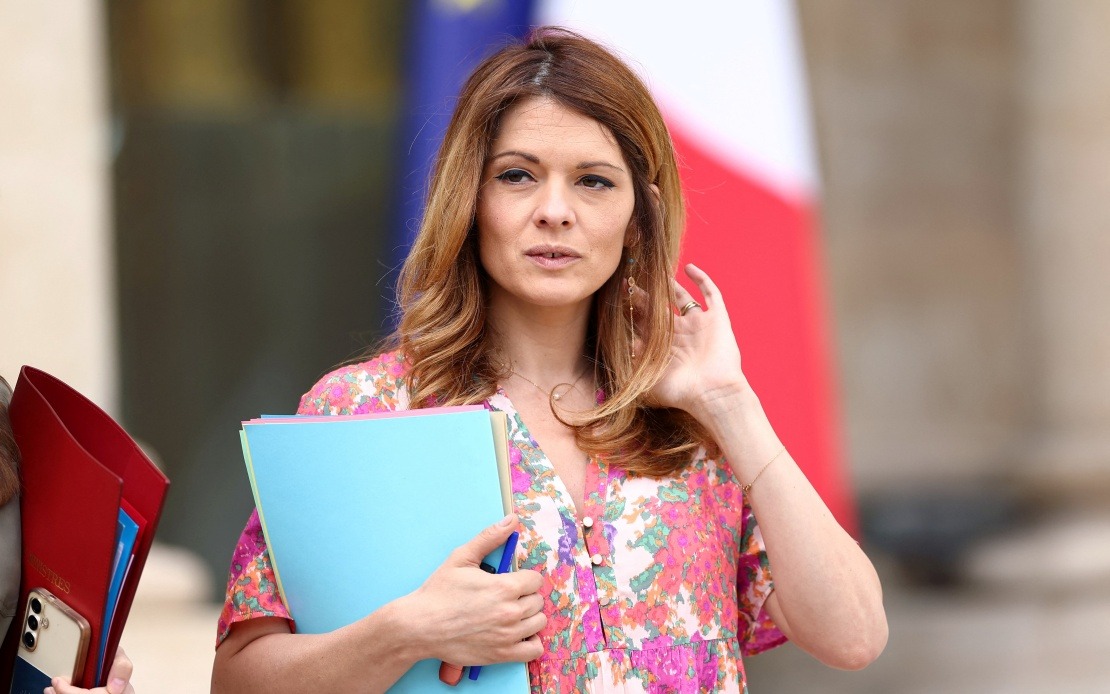
The French government has formally confirmed that the nation's next presidential election will take place across two rounds on April 18 and May 2, 2027, according to an announcement made during a Cabinet session on Wednesday. The declaration came through Government Spokesperson Maud Bregeon, who provided assurances that the electoral calendar was constructed through legitimate consultations with all parliamentary groups and in accordance with the country's constitutional framework. This two-stage voting process mirrors France's established democratic tradition, wherein a runoff between the top two candidates occurs if the initial round produces no outright winner with majority support.
The scheduling decision has generated considerable friction within French political circles, particularly regarding the placement of the second round voting just a day following May 1 International Workers' Day. This proximity to the traditional labour demonstrations has raised eyebrows among several opposition politicians, who contend that the timing potentially creates complications for campaigning and voter mobilisation. Bruno Retailleau, a prominent opposition figure, publicly characterised the chosen dates as lacking neutrality, implying that the administration may have engineered the calendar to gain strategic advantage in the electoral process.
Bregeon moved to deflect such accusations, emphasising that the government did not incorporate partisan considerations into this scheduling process. She maintained that the electoral regulations themselves remain universally applicable across all candidates and political movements, and that these rules would be consistently administered throughout the campaign phase regardless of when voters cast their ballots. This assertion forms a cornerstone of the government's defence against allegations of manipulating the election calendar for incumbent advantage.
The spokesperson further suggested that French political organisations have considerable experience managing campaign activities around major public holidays and labour celebrations. She remarked that politicians and their teams possess the capability and expertise to navigate campaign strategies both before and after May 1 demonstrations, implying that the timing presents no insurmountable logistical obstacle to fair electoral competition. This argument attempts to normalise the potentially sensitive scheduling by framing it as a manageable administrative matter rather than a substantive impediment.
Bregeon underscored that the government had engaged in comprehensive dialogue with all political forces represented in parliament before finalising these dates. According to her account, the consultation process examined multiple scheduling scenarios and considered what she termed all existing constraints within the electoral and governmental framework. This presentation seeks to portray the decision-making as inclusive and transparent, even if the final outcome has attracted criticism from opposition quarters.
The government's position rests substantially on the assertion that no electoral calendar can achieve universal satisfaction. Bregeon acknowledged this reality, noting that perfection in scheduling remains unattainable given the complexity of French political life and the numerous considerations that must be balanced. However, she insisted that the chosen timeframe provides adequate opportunity for candidates to communicate their political programmes and policy proposals to voters throughout the designated campaign period.
For regional observers in Southeast Asia, this French electoral arrangement carries particular significance in demonstrating how established democracies navigate the mechanics of selecting national leadership. The controversy surrounding May 1 timing reflects broader tensions about how electoral schedules can inadvertently advantage certain political movements or introduce perceptions of bias, even where none may exist. Malaysian and other regional democracies similarly grapple with optimal election timing that balances administrative efficiency, public accessibility, and perceptions of impartiality.
The timing dispute also highlights how labour movements and working-class mobilisation remain politically sensitive dimensions of democratic electoral processes in Western European contexts. The proximity of presidential voting to International Workers' Day carries symbolic weight beyond mere scheduling logistics, touching on questions of whose interests and voices receive prominence during electoral cycles. This dimension distinguishes French electoral politics from many Southeast Asian contexts, where labour day celebrations occupy different cultural and political positions.
Looking ahead, the April-May 2027 election will occur during a period of potential economic and geopolitical uncertainty for France and the European Union broadly. The five-year interval from the previous 2022 election provides ample time for political movements to reorganise, develop new electoral coalitions, and position themselves for what could represent a significant realignment of French political forces. The two-round system itself ensures that whichever candidate ultimately prevails will possess demonstrated support from an absolute majority of participating voters, a threshold that many single-round electoral systems do not guarantee.
The government's insistence on the legitimacy of these dates, coupled with continued opposition scepticism, foreshadows what may become an ongoing feature of French electoral discourse during the coming years. Questions about whether the scheduling decision reflects genuine administrative necessity or subtle political calculation will likely resurface during the campaign itself, potentially influencing how voters perceive the fairness and impartiality of the electoral process. This dynamic underscores the delicate balance that all democracies must maintain between technical electoral management and public confidence in democratic institutions.

