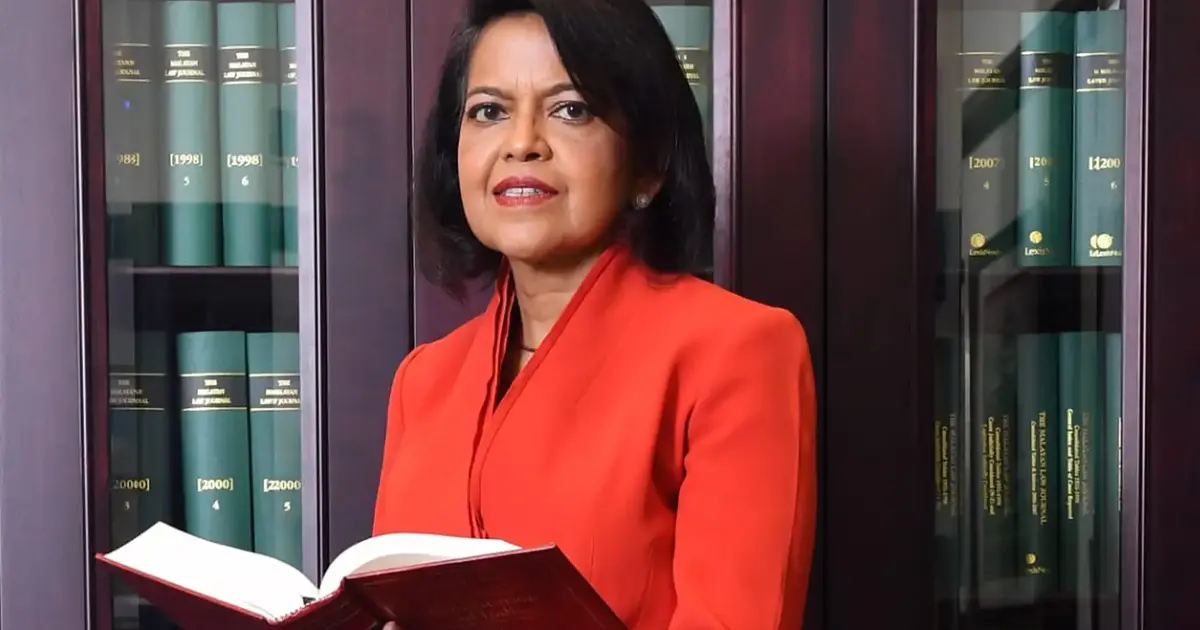
The Malaysian Media Council has turned to the judiciary in appointing Nallini Pathmanathan, a former Federal Court judge, to lead the organisation as its new chairman. The appointment arrives at a critical juncture for Malaysia's media landscape, which faces mounting pressures ranging from evolving digital platforms to heightened demands for editorial accountability and transparent governance structures.
Pathmanathan's judicial background brings considerable institutional credibility to the role. Her career on the Federal Court positioned her at the apex of Malaysia's legal hierarchy, where she would have developed deep familiarity with constitutional issues, judicial independence, and the rule of law—all foundational concerns for media regulators navigating an increasingly complex information ecosystem. The council appears to be signalling that media governance requires not merely industry expertise, but the kind of impartial judgment traditionally associated with the bench.
The media industry in Malaysia confronts an unusually complex set of challenges that transcend traditional concerns about editorial standards and journalistic practice. Digital transformation has fundamentally altered news distribution, audience engagement, and revenue models for traditional outlets. Meanwhile, the proliferation of social media platforms has created an increasingly fragmented information landscape where misinformation spreads rapidly and audience trust in institutional media remains fragile. These structural shifts demand leadership capable of thinking strategically across multiple regulatory domains.
Beyond digital disruption, Malaysian media organisations grapple with perceptions of bias, political capture, and editorial conflicts of interest. Public confidence in the fourth estate has eroded in recent years, with surveys consistently showing that significant segments of the population question whether major outlets serve the public interest or narrow political and commercial interests. The council's responsibility includes establishing and maintaining ethical standards that can help rebuild institutional credibility, a task requiring someone with demonstrated commitment to principled governance.
Pathmanathan's appointment also reflects recognition that media regulation increasingly intersects with broader questions of constitutional law, free expression, and the limits of government authority. These are domains where judicial experience provides genuine intellectual preparation. A former Federal Court judge understands intimately how courts interpret constitutional protections for press freedom, the tensions between security and transparency, and the principles governing legitimate restrictions on speech. Such knowledge proves invaluable when advising industry participants on compliance and best practice.
The council faces particular pressure regarding the balance between protecting legitimate media freedom and addressing genuine harms from irresponsible journalism or coordinated disinformation campaigns. This tension has intensified during recent election cycles and public health crises, where contested narratives about facts and figures have real-world consequences. Leadership from someone trained in judicial reasoning—weighing competing interests, applying legal principles to novel circumstances, and justifying decisions through transparent reasoning—potentially helps navigate these treacherous waters.
For Malaysian readers and media consumers, this appointment signals that the council intends to approach its regulatory mission with greater formality and transparency than might characterise purely industry-driven governance. A chairman with Pathmanathan's background would likely champion documented processes, reasoned decisions, and accountability mechanisms that reflect judicial standards. This could elevate the council's authority when adjudicating disputes between outlets, addressing complaints from the public, or establishing industry guidelines.
Regionally, Malaysia's media governance approach attracts attention across Southeast Asia, where similar questions about balancing press freedom with social stability and accuracy occupy policymakers throughout the Association of Southeast Asian Nations. The decision to appoint a retired judge suggests one model for professionalising media councils—recruiting from the judiciary rather than drawing exclusively from journalism, academics, or political appointees. Other regional governments may study how this approach affects media credibility and industry compliance.
However, appointing a judge also introduces new considerations. Media practitioners may worry whether someone steeped in formal legal reasoning fully grasps the practical constraints and creative challenges inherent in contemporary journalism. Courts apply established law; journalists report on developing situations with incomplete information and deadline pressures. The council must help Pathmanathan understand these distinctions, ensuring her leadership translates judicial integrity into practical media governance without excessive legalism that stifles legitimate reportorial functions.
The broader context includes Malaysia's ongoing struggles with press freedom rankings, which have lagged behind regional peers in international assessments. Observers attribute this partly to regulatory uncertainty, political pressure on editorial decisions, and inconsistent enforcement of media rules. Appointing an independent figure from outside the political establishment—even one from the judiciary—represents a modest step toward depoliticising media governance, though systemic change would require much broader institutional reform.
Pathmanathan inherits an organisation that must establish itself as a credible arbiter of industry standards in a rapidly fragmenting media ecosystem. Her judicial experience suggests she understands the importance of institutional independence, transparent reasoning, and principled decision-making. Whether the Malaysian Media Council can translate these qualities into genuine influence over industry behaviour and public trust will depend on decisions she makes regarding enforcement priorities, stakeholder engagement, and the substantive standards the council champions.

%22%2F%3E%3C%2Fpattern%3E%3C%2Fdefs%3E%3Crect%20width%3D%22100%25%22%20height%3D%22100%25%22%20fill%3D%22url(%23ph21o2sg)%22%2F%3E%3Crect%20width%3D%22100%25%22%20height%3D%22100%25%22%20fill%3D%22url(%23ph21o2sp)%22%2F%3E%3Ctext%20x%3D%2250%25%22%20y%3D%2250%25%22%20text-anchor%3D%22middle%22%20dominant-baseline%3D%22central%22%20fill%3D%22rgba(255%2C255%2C255%2C0.95)%22%20font-family%3D%22Georgia%2C%20'Times%20New%20Roman'%2C%20serif%22%20font-weight%3D%22700%22%20font-size%3D%22170%22%20letter-spacing%3D%22-0.02em%22%3EGabungan%3C%2Ftext%3E%3C%2Fsvg%3E)