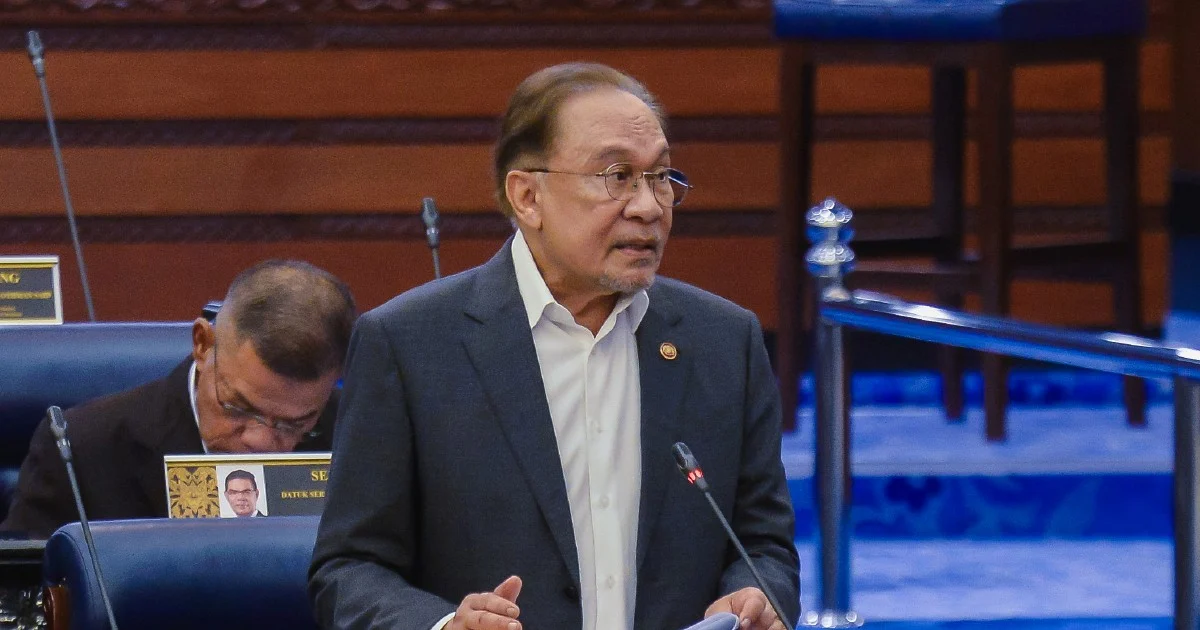
The federal government is actively engaged in dialogue with Sarawak to increase the state's special grant entitlements under the Malaysia Agreement 1963 (MA63), according to Prime Minister Datuk Seri Anwar Ibrahim. The announcement marks a tangible step in addressing one of the east Malaysian state's most persistent fiscal grievances and reflects the central government's willingness to recalibrate financial arrangements with Sarawak at a time of broader political realignment in Putrajaya.
The MA63, which established the terms under which Sarawak and Sabah joined the Malaysian federation in 1963, has long been a focal point of tension between the federal government and Sarawak. The agreement contains provisions governing revenue distribution, constitutional protections, and autonomy over specific policy domains. Sarawak's pursuit of enhanced compensation under this framework represents not merely a technical budgetary adjustment but a symbol of the state's assertion of its constitutional standing within the federation and recognition of its significant resource contributions.
The timing of these negotiations carries particular significance within Malaysia's contemporary political landscape. Sarawak, led by Chief Minister Abang Johari Openg, has progressively consolidated its political independence over the past decade, establishing itself as a powerbroker capable of influencing national coalitions. The state's bargaining position has strengthened considerably, particularly following the results of recent electoral contests and the state government's demonstrated ability to command its own parliamentary representation with relative autonomy from peninsular-based political dynamics.
Special grants under MA63 have historically been calculated on relatively modest bases, a source of enduring frustration for Sarawak policymakers who point to the state's resource wealth and limited federal infrastructure investment relative to peninsular counterparts. The grant mechanisms were designed in an era when fiscal relationships and resource valuations differed markedly from contemporary conditions, creating what Sarawak officials characterise as structural undercompensation. Increasing these allocations would acknowledge both inflation since 1963 and the relative economic weight Sarawak carries within Malaysia's overall economy.
For the federal government under Anwar Ibrahim's leadership, acceding to Sarawak's demands carries strategic advantages extending beyond immediate fiscal accounting. The administration has emphasised national unity and consensual governance frameworks, positioning itself as responsive to the constitutional and economic concerns of all states, particularly in East Malaysia where federal-state relations have historically been more fraught. Enhanced grants to Sarawak demonstrate commitment to these principles while potentially forestalling more disruptive demands or political discord that could complicate Putrajaya's broader domestic agenda.
The negotiations also reflect longer-term structural pressures within Malaysian federalism. Both Sarawak and Sabah have increasingly asserted MA63 as a foundational document requiring fresh interpretation and application. Beyond grant increases, these dialogues encompass questions of constitutional autonomy, control over state resources, immigration policies, and religious affairs—domains where MA63 confers specific protections to the East Malaysian states. The conversations represent not isolated fiscal haggling but part of a broader renegotiation of constitutional relationships in the federation.
From a regional Southeast Asian perspective, these developments underscore how resource-rich territories within multinational federations seek to maximise their fiscal and political positions. Sarawak's trajectory offers instructive parallels to negotiations between resource-producing provinces and central governments elsewhere in the region, illustrating the persistent tension between national solidarity frameworks and sub-national resource claims. The manner in which Malaysia manages these discussions may influence patterns across other ASEAN federations grappling with similar distributional pressures.
The negotiations also bear on Malaysia's broader fiscal policy and infrastructure priorities. Enhanced grants to Sarawak will require corresponding adjustments in federal budgeting or increased taxation, creating ripple effects across Peninsular Malaysia and Sabah. Policymakers must balance demands for equity and constitutional recognition against requirements for macroeconomic stability and equitable treatment of other states. The outcome will establish precedents for how Sabah and potentially other states frame future claims against the federal purse.
Anwar Ibrahim's confirmation of these talks signals executive commitment to progressing the matter rather than allowing it to languish in administrative channels. Direct prime ministerial engagement typically indicates serious intention to reach settlement, though negotiations remain fluid and outcomes uncertain. The discussions involve complex calculations regarding appropriate compensation levels, formula adjustments, and implementation timelines—technical issues concealing substantive political choices about Malaysian federalism's future architecture.
For Malaysian observers and policymakers in other states, these developments merit careful attention. Sarawak's successful assertion of enhanced fiscal entitlements could encourage similar demands from other states, particularly those arguing for undercompensation relative to resource contributions or population needs. The precedent established through these negotiations may therefore reverberate through Malaysian federal-state relations for years to come, potentially reshaping the distribution of resources and autonomy across the federation. The conversations between Putrajaya and Sarawak represent not merely technical adjustments to grant formulas but a consequential moment in Malaysia's evolving constitutional practice.

