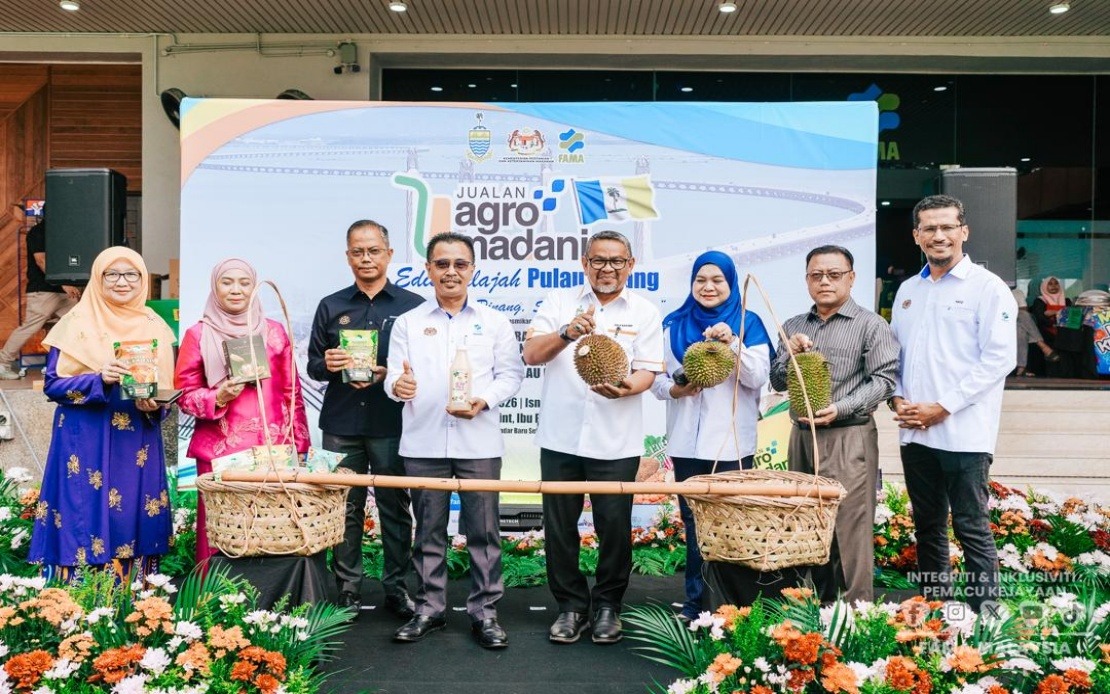
The Federal Agricultural Marketing Authority (FAMA) has demonstrated significant momentum in its Agro MADANI Sales (JAM) initiative, generating RM46.72 million in revenue across 1,833 nationwide events between January and May 2024. This performance underscores the agency's expanding role in reshaping Malaysia's agricultural marketing landscape by creating direct-to-consumer channels that benefit both small-scale entrepreneurs and shoppers seeking quality produce at competitive prices.
FAMA positions the JAM programme as a cornerstone initiative for modernising how local agricultural goods reach market. Rather than relying solely on traditional distribution networks that can inflate consumer prices and squeeze farmer margins, the platform operates as a dynamic intermediary that reduces supply chain friction. By organising regular pop-up markets in different states, FAMA enables growers and food processors to bypass conventional middlemen, retain higher profit margins, and build direct relationships with customers who increasingly demand transparency about food origins and quality standards.
The Penang edition, held at FAMA's Selayang headquarters on Monday, represents the third iteration of the JAM programme and exemplifies the scalability of the model. The event deployed 45 sales lots featuring products from 30 Penang-based entrepreneurs, with organisers projecting 2,000 visitor footfall and a RM100,000 sales target. This particular activation carries strategic significance for Penang's economic diversification agenda, as the state has positioned itself as a hub for value-added agricultural products and specialty food items that command premium pricing in domestic and export markets.
The range of products showcased at the Penang event illustrates the sophistication of Malaysia's contemporary agri-food ecosystem. Beyond commodity fruits, the programme highlighted specialty durian varieties such as Black Thorn, Red Prawn, and Hor Lor cultivars grown in Balik Pulau—a region renowned for producing premium specimens that fetch high prices in regional markets. The inclusion of Cempedak King alongside these offerings signals industry confidence in developing alternative high-value fruits that can compete with durian's market dominance, particularly among consumers exploring diverse tropical fruit experiences.
The integration of food and beverage entrepreneurs represents a critical expansion of the JAM programme's scope. By offering Penang's iconic culinary heritage—nasi kandar, laksa, char kuey teow, mee sotong, and traditional sarbat beverages—alongside agricultural products, FAMA creates a holistic food experience that attracts diverse demographic segments. This cross-selling approach appeals to visitors beyond traditional produce shoppers, generating foot traffic that benefits all participating vendors and creating an informal cultural marketplace that distinguishes JAM events from conventional supermarket offerings.
Government coordination has emerged as essential infrastructure for the programme's success. FAMA's collaboration with the Penang state government and support from Penang Rural Development, Agrotechnology, Food Security and Cooperatives Committee Exco Datuk Rashidi Zinol demonstrates how state-level economic development initiatives can amplify federal agricultural programmes. The involvement of the Penang Bumiputera Development Council adds institutional weight to entrepreneurship development objectives, suggesting that targeted support for Bumiputera vendors remains integral to Malaysia's inclusive economic growth framework.
The financial performance across the five-month period reflects broader consumer appetite for direct-to-producer purchasing models. RM46.72 million in cumulative sales across 1,833 events translates to an average of approximately RM25,500 per event—a metric that varies significantly based on venue size, local population density, and product mix. In high-density urban areas like the Klang Valley, individual events likely generate substantially higher revenue, while smaller towns register more modest figures. This geographic variance offers FAMA valuable intelligence for optimising event scheduling and product sourcing strategies across different regional markets.
For small and medium-scale agricultural entrepreneurs, the JAM platform addresses persistent marketing challenges that have historically limited growth potential. Many Malaysian farmers and food processors struggle to access reliable retail shelf space or navigate the complex distribution requirements of supermarket chains. JAM events lower these barriers by providing temporary, affordable booth space alongside professional infrastructure—parking, crowd management, regulatory compliance support—that individual entrepreneurs cannot easily replicate independently. Vendors gain exposure to hundreds or thousands of potential repeat customers within a single day, building brand recognition and direct sales channels simultaneously.
Consumer benefits extend beyond price advantages to encompass food safety assurances and product knowledge. Direct producer engagement enables buyers to ask questions about cultivation methods, processing standards, and ingredient sourcing—information increasingly valued by health-conscious Malaysian consumers concerned about pesticide residues, additives, and supply chain transparency. FAMA's institutional backing provides implicit quality endorsement, as the authority conducts product verification and maintains hygiene standards across all participating vendors, reducing perceived risk for shoppers purchasing unfamiliar products from first-time vendors.
The programme's expansion trajectory suggests growing recognition of its economic and social utility within government circles. If current growth momentum persists, the annual revenue figure could substantially exceed RM100 million, representing a meaningful contribution to direct agricultural sales nationally. This scale would position JAM as a significant alternative to e-commerce platforms for agricultural products, particularly valuable for vendors lacking digital marketing expertise or those targeting price-sensitive consumer segments less inclined toward online food shopping.
Regional implications warrant consideration as FAMA refines the JAM model. Southeast Asian neighbours including Thailand, Vietnam, and Indonesia operate comparable farmer market programmes with varying degrees of success and government integration. Malaysia's approach, emphasising state government collaboration and institutional quality standards, offers insights into scaling such initiatives across diverse regional contexts. If documented and shared through ASEAN agricultural forums, the JAM experience could inform regional food security strategies and agricultural entrepreneur development initiatives.
Looking forward, FAMA's stated commitment to strengthening the agri-food marketing chain while maintaining affordable consumer access positions the JAM programme as durable policy infrastructure rather than temporary promotional activity. Sustaining this momentum requires consistent resource allocation, continuous venue expansion into under-served regions, and adaptive responses to seasonal agricultural production cycles. Success ultimately depends on balancing vendor profitability with consumer affordability—a tension that well-designed distribution channels like JAM can effectively manage.

