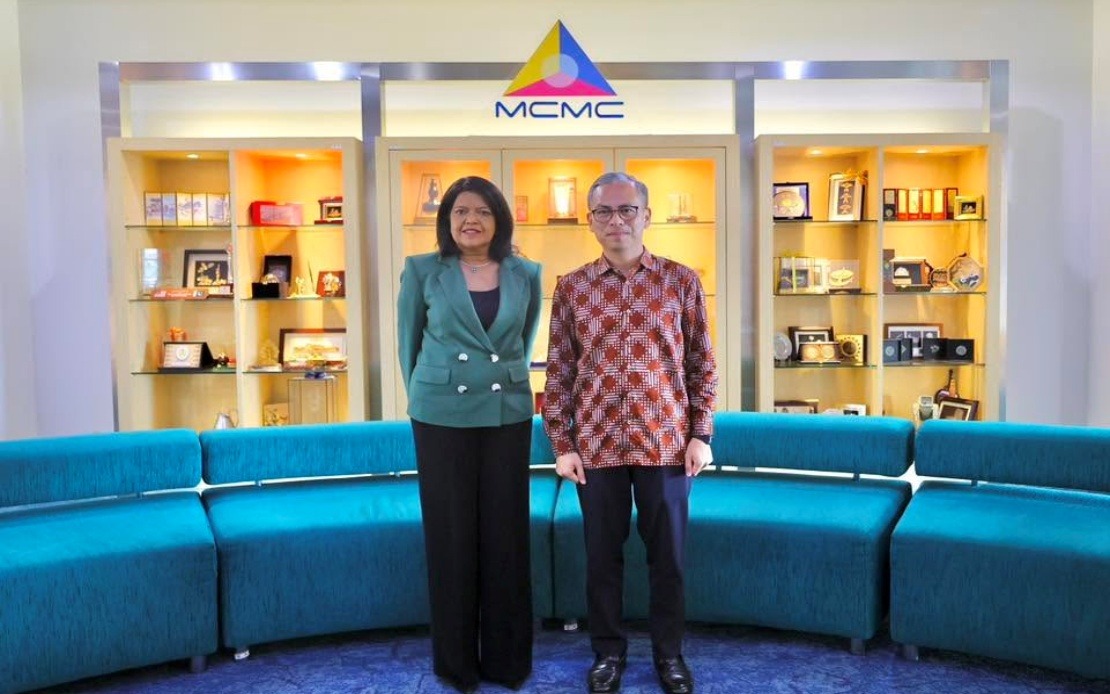
Communications Minister Datuk Fahmi Fadzil has offered his congratulations to Tan Sri Nallini Pathmanathan following her appointment as chairman of the Malaysian Media Council, signalling government support for the media industry's self-regulatory leadership at a time of heightened scrutiny over press standards and editorial independence across the region.
Nallini, a former Federal Court judge with extensive experience in judicial matters, takes the helm of the industry body established under the Malaysian Media Council Act 2025. Her appointment represents a significant shift in governance for Malaysia's media sector, bringing judicial credibility and institutional gravitas to an organization tasked with maintaining professional standards within newsrooms and media organisations nationwide.
In his public endorsement via Facebook, Fahmi articulated a vision for the council's direction under Nallini's leadership. He emphasised the importance of balancing press freedom with responsible journalism, a distinction that carries particular weight in Southeast Asia where governments and media outlets frequently debate the boundaries of acceptable reporting. The minister's statement underscores official expectations that the council will serve as a credible arbiter of media conduct while preserving the sector's ability to investigate and report on matters of public concern.
The MMC board unanimously endorsed Nallini's appointment during a meeting held on May 26, according to a statement released by the council. This unanimity signals broad confidence across the industry in her capacity to navigate the sometimes contentious relationship between media freedom advocates and those calling for stronger accountability mechanisms. Her judicial background positions her as someone capable of interpreting complex questions about editorial rights and public interest obligations with nuance and legal precision.
The council itself occupies an increasingly important space within Malaysia's media landscape. As a self-regulatory body rather than a government agency, the MMC operates with nominal independence, though the appointment of a former judge signals an effort to enhance public perception of its impartiality. This distinction matters considerably for regional credibility: media councils that appear genuinely independent from state control tend to command greater respect from international press freedom monitors and professional journalism organisations.
Fahmi's remarks specifically highlighted the council's role in strengthening journalistic ethics—a concern that has gained prominence across Southeast Asia as digital misinformation spreads and traditional news outlets face economic pressures that sometimes compromise editorial standards. By naming ethical standards as a priority, the minister acknowledged growing public concern about accuracy, source verification, and the distinction between opinion and reporting in Malaysian media.
The sustainability of the media industry emerged as another theme in the minister's statement. This reflects a practical reality facing newsrooms throughout the region: as advertising revenue shifts online and younger audiences consume news through social platforms, traditional publishers struggle financially. Self-regulatory bodies like the MMC can potentially help sustain the sector by building public trust—arguably the industry's most valuable asset. A council that effectively enforces ethical standards may help traditional media outlets differentiate themselves from unverified online content.
Nallini's appointment also carries symbolic importance for gender representation in senior governance roles within Malaysia's media sector and broader institutional leadership. Her appointment to head the council demonstrates that high-profile institutional positions, particularly those requiring legal expertise and institutional credibility, are increasingly open to women—a shift that reflects evolving corporate governance standards and professional meritocracy.
The timing of this appointment, occurring under the auspices of legislation enacted in 2025, suggests a broader recalibration of Malaysia's regulatory approach to media. Rather than direct government control, the framework appears to emphasise industry self-governance with judicial oversight. This model reflects global trends toward lighter-touch regulation, though critics in Southeast Asia sometimes question whether industry-led regulation adequately protects the public interest or whether media organisations consistently prioritise accountability over commercial interests.
Looking forward, Nallini's leadership will face several pressing challenges. She must establish the council's credibility with journalists who remain sceptical of regulation, with the public concerned about misinformation, and with government officials expecting responsible coverage. Balancing these competing interests requires diplomatic skill alongside judicial temperament—qualities her background suggests she possesses.
For Malaysian readers and regional observers, the appointment represents a test of whether self-regulatory mechanisms can effectively govern an industry increasingly fragmented between traditional outlets, digital platforms, and social media. The council's success under Nallini's leadership may influence how other Southeast Asian nations approach media governance, particularly those considering whether to strengthen industry self-regulation or implement more formal state controls.
Fahmi's public commendation also indicates that the government intends to work constructively with the council rather than view it as adversarial—a positioning that could either enhance its independence or complicate its credibility, depending on how future editorial disputes unfold. The coming months will reveal whether the MMC, under Nallini's direction, can command sufficient respect from all stakeholders to function effectively as an authoritative voice on media standards.

%22%2F%3E%3C%2Fpattern%3E%3C%2Fdefs%3E%3Crect%20width%3D%22100%25%22%20height%3D%22100%25%22%20fill%3D%22url(%23ph21o2sg)%22%2F%3E%3Crect%20width%3D%22100%25%22%20height%3D%22100%25%22%20fill%3D%22url(%23ph21o2sp)%22%2F%3E%3Ctext%20x%3D%2250%25%22%20y%3D%2250%25%22%20text-anchor%3D%22middle%22%20dominant-baseline%3D%22central%22%20fill%3D%22rgba(255%2C255%2C255%2C0.95)%22%20font-family%3D%22Georgia%2C%20'Times%20New%20Roman'%2C%20serif%22%20font-weight%3D%22700%22%20font-size%3D%22170%22%20letter-spacing%3D%22-0.02em%22%3EGabungan%3C%2Ftext%3E%3C%2Fsvg%3E)