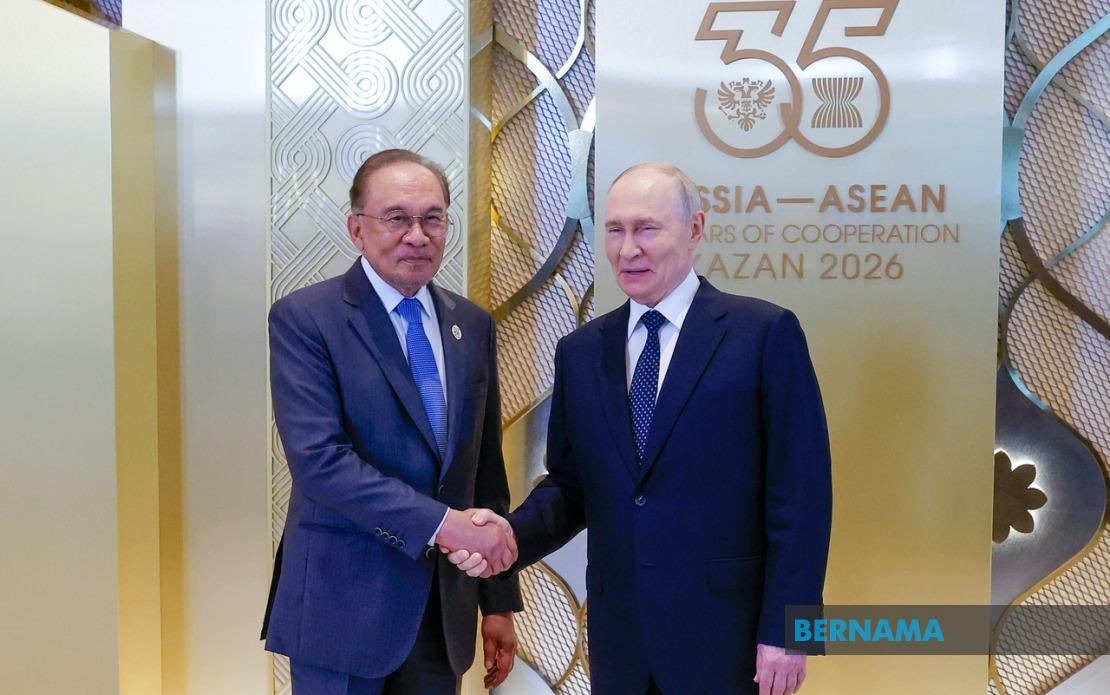
Prime Minister Datuk Seri Anwar Ibrahim has underscored the vital importance of structured dialogue and engagement mechanisms in navigating an increasingly complex international landscape marked by persistent challenges and unpredictability. Speaking at the ASEAN-Russia Commemorative Summit in Kazan, Anwar stressed that multilateral forums and bilateral diplomatic channels serve as essential foundations for deepening comprehension and fostering constructive relationships between sovereign nations. The remarks come as Malaysia, along with other Southeast Asian states, continues to balance relationships with major powers in an era of geopolitical flux.
The Prime Minister attended a state gala dinner hosted by President Vladimir Putin on June 17 and 18, where he articulated Malaysia's position on the value of sustained diplomatic engagement. According to Anwar, such high-level summits transcend mere ceremonial functions and instead represent substantive opportunities for leaders to exchange perspectives, identify shared interests, and establish frameworks for mutually beneficial collaboration. This perspective reflects a broader Malaysian diplomatic philosophy emphasising dialogue over confrontation and the pursuit of common ground even amid divergent national interests.
Anwar highlighted that these engagement platforms are particularly consequential for ASEAN member states seeking to deepen relations with Russia. Given the region's historical ties to the Soviet Union and contemporary Russian interests in Southeast Asia, the commemorative summit provides a structured venue for advancing cooperation across diverse sectors including trade, energy, technology, and cultural exchange. For Malaysia specifically, which maintains pragmatic relations with both Western powers and non-aligned nations, such forums allow for the articulation of regional interests without surrendering strategic autonomy.
The gala dinner itself served a dual diplomatic purpose, according to the Prime Minister. Beyond its ceremonial dimension, the event functioned as an informal setting where leaders could engage in candid discussions away from formal negotiating tables. Anwar noted that such personal interactions, facilitated by displays of Russian cultural heritage and historical achievements, contribute significantly to rapport-building among participating delegations. This recognition of soft power's role in diplomacy reflects contemporary understanding that international relations extend beyond transactional economic or security agreements.
The significance of the ASEAN-Russia Commemorative Summit extends beyond bilateral Malaysia-Russia relations. As ASEAN president or key participant, Malaysia helps shape the regional bloc's collective approach to major powers. The summit provides an opportunity to assert ASEAN's centrality in regional affairs and its commitment to maintaining constructive relationships with powers beyond the Indo-Pacific sphere. This positioning is strategically important given the intensifying great power competition in the region and the need for Southeast Asian nations to retain flexibility in their foreign policy approaches.
Anwar's emphasis on mutual understanding carries particular resonance given global tensions and the proliferation of competing narratives about international order. By stressing the importance of dialogue and trust-building, the Prime Minister articulates a diplomatic approach that prioritises communication over isolation. This stance reflects Malaysia's long-standing commitment to the principle of non-interference and peaceful resolution of disputes, principles enshrined in ASEAN's founding documents.
The exploration of cooperation areas alluded to by Anwar potentially encompasses numerous domains. Russia's expertise in energy, particularly given global transitions in fuel sources, remains relevant to Malaysia's diversified energy portfolio. Educational exchanges, defence partnerships, cultural programmes, and scientific collaboration represent additional avenues where bilateral relations could yield mutual benefits. For ASEAN collectively, Russia's role as a permanent UN Security Council member and its significance in global affairs make sustained engagement strategically prudent.
The timing of such summits also merits consideration. Held amid global uncertainties ranging from geopolitical tensions to economic disruptions, these forums provide valuable opportunities to assess shared challenges and explore collaborative responses. Issues such as climate change, pandemic preparedness, terrorism, and maritime security affect both ASEAN states and Russia, making dialogue increasingly necessary rather than merely desirable. The Prime Minister's remarks implicitly acknowledge that unilateral approaches to global challenges prove insufficient.
As Finance Minister, Anwar's participation underscores Malaysia's multi-dimensional approach to international relations. The presence of senior economic officials at such summits signals potential for exploring financial cooperation, investment flows, and trade arrangements. Malaysia's position as a developing economy seeking diversified economic partnerships makes such engagement valuable for pursuing national development objectives.
The Prime Minister's statement represents more than diplomatic courtesy. It articulates a coherent vision of international relations rooted in reciprocal respect, genuine dialogue, and the recognition that shared challenges require shared responses. For Malaysian readers and policymakers, Anwar's remarks reinforce the importance of maintaining balanced foreign relations and leveraging diplomatic channels to advance national interests. The emphasis on platforms for engagement rather than confrontation reflects a pragmatic diplomacy suited to contemporary realities where isolation proves counterproductive and dialogue remains the primary tool for advancing shared prosperity.

%22%2F%3E%3C%2Fpattern%3E%3C%2Fdefs%3E%3Crect%20width%3D%22100%25%22%20height%3D%22100%25%22%20fill%3D%22url(%23ph21o2sg)%22%2F%3E%3Crect%20width%3D%22100%25%22%20height%3D%22100%25%22%20fill%3D%22url(%23ph21o2sp)%22%2F%3E%3Ctext%20x%3D%2250%25%22%20y%3D%2250%25%22%20text-anchor%3D%22middle%22%20dominant-baseline%3D%22central%22%20fill%3D%22rgba(255%2C255%2C255%2C0.95)%22%20font-family%3D%22Georgia%2C%20'Times%20New%20Roman'%2C%20serif%22%20font-weight%3D%22700%22%20font-size%3D%22170%22%20letter-spacing%3D%22-0.02em%22%3EGabungan%3C%2Ftext%3E%3C%2Fsvg%3E)