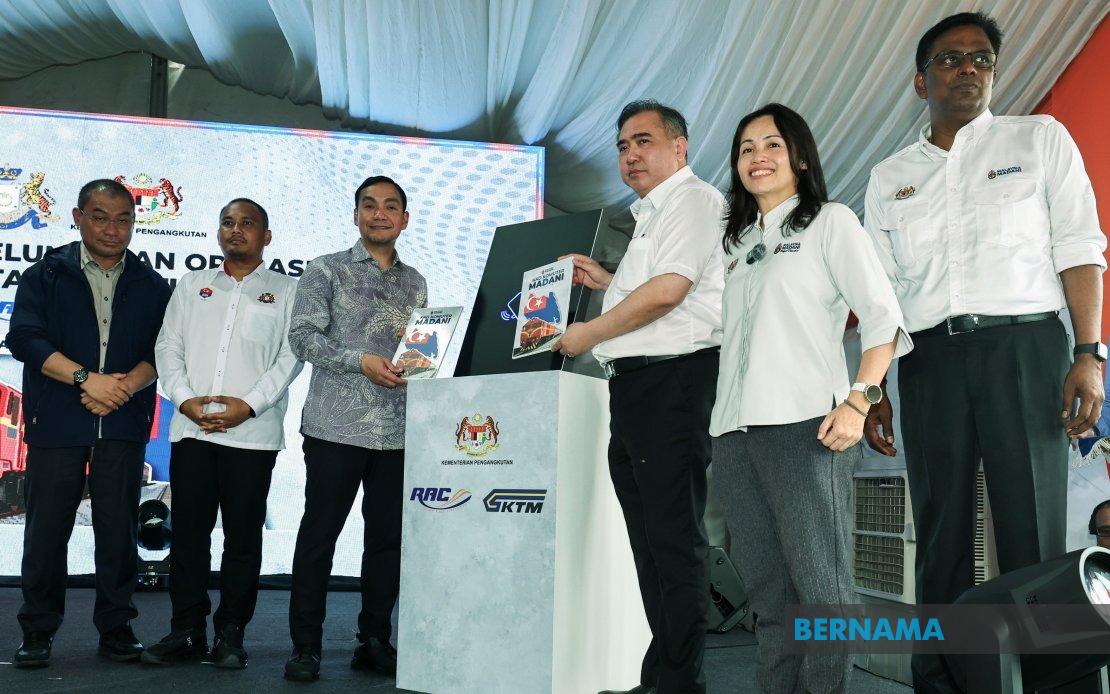
Johor Menteri Besar Datuk Seri Onn Hafiz Ghazi has flagged the Elevated Autonomous Rapid Transit (E-ART) project as indispensable infrastructure for managing transport demand in Johor Bahru as the Johor Bahru-Singapore Rapid Transit System (RTS) Link approaches its operational launch in 2025. Speaking at the inauguration of the Southern Shuttle train service at KTM Kulai Station, Onn Hafiz stressed that without the E-ART, the city risks facing acute gridlock once cross-border passenger volumes spike following the RTS Link's completion.
The menteri besar's remarks underscore a critical planning challenge facing Malaysia's southern economic gateway. Johor Bahru's expanding metropolitan population of approximately 1.8 million residents—comparable to the entire population of Penang—generates substantial daily mobility pressures that existing road infrastructure struggles to absorb. The arrival of the RTS Link will substantially amplify this burden by channelling tens of thousands of additional commuters and travellers into and out of the city centre daily, creating cascading effects across the urban transport network.
Onn Hafiz characterised the E-ART as a long-term structural solution rather than a temporary palliative. While the state and federal governments have implemented various interim measures to soften congestion impacts, including expanding Park & Ride facilities and deploying smart traffic management systems at JB Sentral, these interventions are inherently limited in scope and duration. The menteri besar acknowledged that such short- and medium-term strategies provide only breathing room while permanent solutions remain under development or construction.
The distinction between interim and lasting remedies carries profound implications for Johor Bahru's competitiveness as an international commercial hub. The city functions as Malaysia's primary cross-border gateway, with exceptionally high volumes of vehicular and human traffic flowing between the two countries. Without adequate public transport infrastructure, the RTS Link's efficiency gains risk being substantially negated by congestion on secondary routes, deterring international investment and frustrating commuters. The E-ART represents an attempt to create a comprehensive, high-capacity network that complements rather than competes with the RTS Link.
Transport Minister Anthony Loke and Deputy Communications Minister Teo Nie Ching, who holds the Kulai parliamentary seat, attended the Southern Shuttle launch event, signalling federal-level engagement with Johor's transport infrastructure agenda. Their presence suggests some alignment between state and central government priorities, though implementation timelines and budgetary commitments remain subject to broader fiscal and political considerations. The attendance of these figures also reflects the political visibility of transport policy in the region, where mobility challenges directly affect electoral sentiment.
The E-ART project represents a technological shift toward autonomous rapid transit systems, differentiating it from conventional heavy or light rail approaches. Such elevated systems offer advantages including minimal land acquisition disruption, weather resilience, and operational flexibility compared to ground-level alternatives. However, they also entail substantial capital expenditure and technological integration challenges that necessitate careful project management and expertise. The decision to prioritise this technology reflects broader regional trends toward modern mobility solutions in dense urban environments.
Onn Hafiz articulated a broader argument about the RTS Link and E-ART as interconnected components of federal intervention that extend tangible benefits to Johor residents. By framing transport infrastructure as a direct manifestation of federal responsiveness to state concerns, the menteri besar positions transport policy within a larger narrative about intergovernmental relations and resource allocation. This framing carries political weight, particularly in a state where centre-periphery tensions have historically surfaced in discussions about development priorities and fiscal transfers.
The timing of the Southern Shuttle's launch provided an opportunity to showcase progress on intermediate transport initiatives while pressing for acceleration of the E-ART project. The Southern Shuttle operates as a commuter rail service that addresses mobility needs in Kulai and surrounding areas, offering a tangible example of expanded rail capacity. However, such incremental projects, while valuable, cannot substitute for the comprehensive network integration that a modern elevated rapid transit system would provide.
For Malaysian policymakers and Southeast Asian transport planners observing Johor Bahru's infrastructure development, the E-ART initiative illustrates tensions inherent in managing rapid urbanisation alongside enhanced cross-border connectivity. As regional integration deepens through infrastructure projects like the RTS Link, secondary cities must develop sophisticated transport networks capable of absorbing spillover demand without compromising urban livability. The E-ART concept addresses this challenge through technological and spatial innovation, though success depends on timely completion and effective integration with complementary services.
Onn Hafiz's explicit call for federal government acceleration of the E-ART project reflects growing urgency as the RTS Link's operational date approaches. With only months remaining before the cross-border service commences, the narrow window for implementing supporting infrastructure is narrowing. Should the E-ART project face further delays, Johor Bahru risks experiencing a period of acute congestion immediately following RTS Link operations, potentially undermining confidence in both transport systems and necessitating costly interim mitigation measures.

%22%2F%3E%3C%2Fpattern%3E%3C%2Fdefs%3E%3Crect%20width%3D%22100%25%22%20height%3D%22100%25%22%20fill%3D%22url(%23ph21o2sg)%22%2F%3E%3Crect%20width%3D%22100%25%22%20height%3D%22100%25%22%20fill%3D%22url(%23ph21o2sp)%22%2F%3E%3Ctext%20x%3D%2250%25%22%20y%3D%2250%25%22%20text-anchor%3D%22middle%22%20dominant-baseline%3D%22central%22%20fill%3D%22rgba(255%2C255%2C255%2C0.95)%22%20font-family%3D%22Georgia%2C%20'Times%20New%20Roman'%2C%20serif%22%20font-weight%3D%22700%22%20font-size%3D%22170%22%20letter-spacing%3D%22-0.02em%22%3EGabungan%3C%2Ftext%3E%3C%2Fsvg%3E)