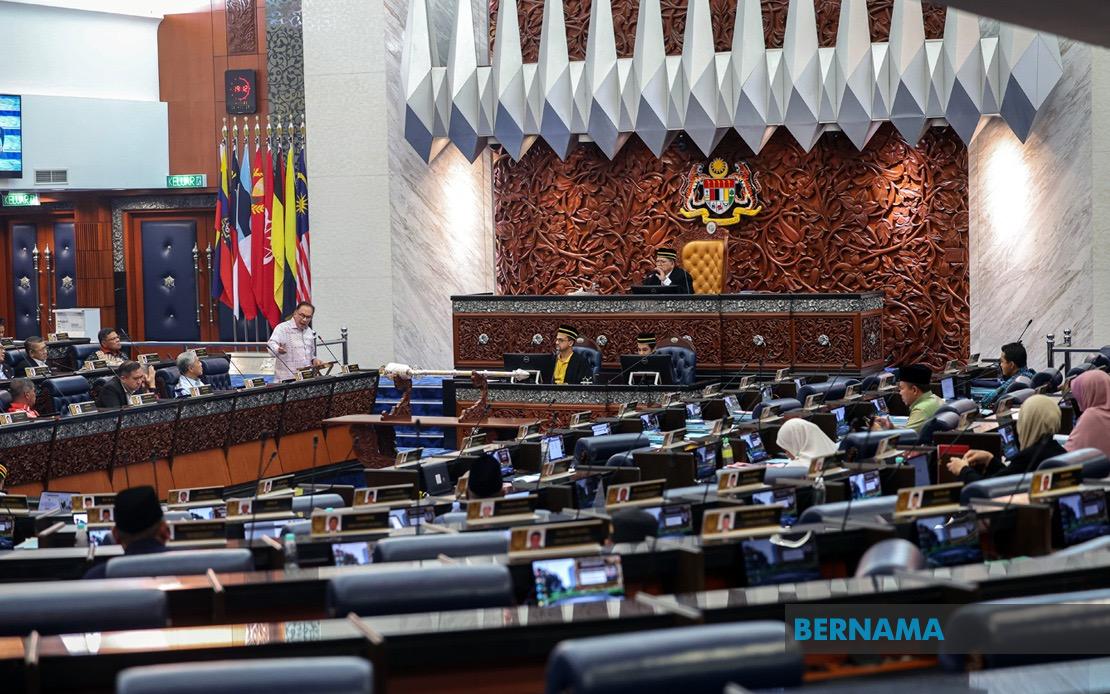
Parliament has given its formal approval to redirect RM14.5 billion in remaining proceeds from Malaysian Government Investment Issues issued during the first five months of 2026 into the Development Fund, according to a voice vote in the Dewan Rakyat. The motion, debated by representatives from both the ruling and opposition benches, gained majority support after technical clarification on the government's borrowing framework and capital spending requirements.
The Development Fund, which finances physical infrastructure and longer-term capital projects across Malaysia, draws revenue from multiple sources including transfers from the Consolidated Revenue Account, loan repayments, and bond issuances. The latest infusion represents a significant portion of the broader RM95 billion MGII issuance programme that the government undertook during the first half of 2026, structured to manage several competing fiscal priorities simultaneously.
Deputy Finance Minister Liew Chin Tong outlined the composition of the total RM95 billion MGII programme when presenting the motion. Of this amount, RM55 billion was earmarked to refinance Malaysian Government Investment Issues that had reached maturity, preventing disruption to the government's debt service obligations. A further RM2 billion addressed short-term redemptions of Malaysian Islamic Treasury Bills, the shariah-compliant equivalent of conventional treasury instruments. The remaining RM38 billion was allocated to partially address the anticipated fiscal deficit for 2026, the gap between government revenue and total spending commitments.
The mechanics of the transfer illustrate how Malaysia's constitutional framework constrains borrowing authority. The government is legally restricted to raising debt only for development expenditure—capital investments in infrastructure, education facilities, healthcare institutions, and similar long-term assets. Operating expenditure, which covers salaries, subsidies, and routine administrative costs, must be financed exclusively from tax revenue and other government income sources. This distinction explains why parliament must formally approve the transfer of bond proceeds into the Development Fund rather than allowing them to flow directly into general consolidated accounts.
Between January and May 2026, the government issued RM40 billion in MGII instruments. After accounting for RM25.5 billion dedicated to refinancing maturing obligations, the net contribution available for development purposes totalled RM14.5 billion. The government has signalled that additional MGII issuances covering the June through December period will require separate parliamentary approval during the next legislative sitting, maintaining transparency over the incremental accumulation of public debt throughout the year.
Liew addressed concerns raised by Datuk Zulkafperi Hanapi regarding potential crowding-out effects in Malaysia's domestic financial markets. This phenomenon occurs when large government bond issuances absorb available investment capital, potentially limiting credit availability for private sector borrowers or reducing rates of return for institutional investors like the Employees Provident Fund and Retirement Fund Incorporated. The deputy minister countered that government securities offerings actually serve the institutional investment needs of these entities, which require safe, liquid assets matching their long-term liability profiles.
Moreover, Liew emphasised that the government has progressively reduced its annual new borrowing requirements over recent years, suggesting that debt accumulation is being managed within sustainable parameters. By providing reliable domestic investment vehicles in Malaysian Government Securities and MGII, the government creates opportunities for the EPF, KWAP, and commercial banks to continue deploying capital within Malaysia at competitive returns. This domestic financial circulation becomes strategically important for currency stability; if local institutional investors lack sufficient quality investment opportunities in ringgit-denominated assets, they may redirect capital overseas, potentially weakening the currency.
The MGII programme exemplifies the complex balancing act facing Malaysia's fiscal authorities. Growth in infrastructure—whether roads, railways, ports, or digital networks—requires sustained capital investment to maintain international competitiveness and support economic expansion. Yet the government cannot finance indefinite capital projects purely from current revenue without either raising taxes significantly or cutting operating services. Issuing development bonds allows the cost of long-lived infrastructure to be distributed across multiple generations of taxpayers and bond investors who benefit from these assets over decades.
For Malaysian investors and financial institutions, the MGII issuance programme shapes portfolio allocation and return expectations. The Development Fund's acquisition of these proceeds will eventually materialise as tangible economic assets—completed highways, expanded port capacity, upgraded water infrastructure—that contribute to longer-term productivity gains. The timing and scale of MGII issuances also influences broader monetary conditions and interest rates in the economy, affecting mortgage costs, business lending rates, and savings returns across the financial system.
Parliamentary oversight of these transactions, while procedurally routine, maintains formal democratic accountability over the government's borrowing decisions and capital allocation strategies. The requirement to debate and approve successive tranches of MGII transfers provides legislators from both supporting and opposing parties opportunities to scrutinise fiscal planning, pose questions about spending priorities, and ensure that capital investments align with stated national development objectives.
The approval of the RM14.5 billion transfer arrives amid broader global economic uncertainties and regional financial volatility. Malaysia's ability to access capital markets at reasonable costs and to deploy borrowed resources productively depends partly on investor confidence in fiscal discipline and project execution. As parliament moves toward approving the final MGII tranches for 2026, the focus remains on ensuring that development spending generates adequate economic returns and that debt obligations remain manageable relative to projected government revenues in coming years.

