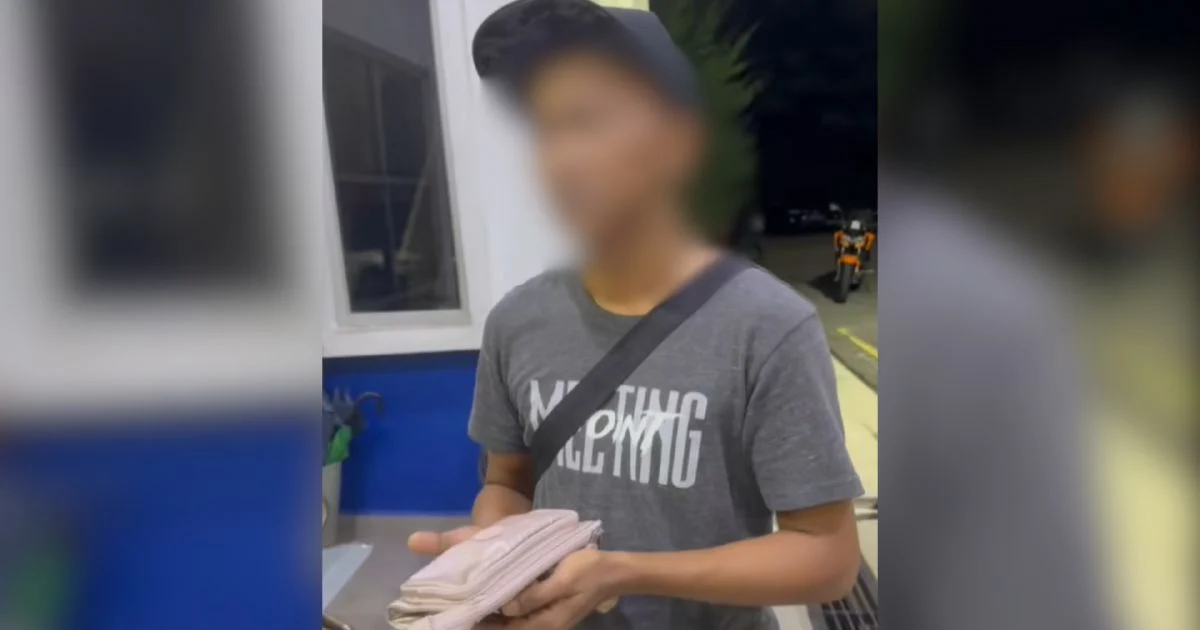
A delivery worker in his late thirties has been taken into police custody in Kajang following allegations that he pocketed RM10,000 discovered in a misplaced wallet at a shopping complex in Semenyih. The arrest comes as Malaysian authorities continue to investigate theft cases involving found items that circulate through retail spaces across the Klang Valley region.
The suspect, identified as being 37 years old, was apprehended after investigators traced the cash that went missing from the leather wallet. Security personnel at the supermarket initially located the abandoned item but it subsequently disappeared, prompting store management to escalate the matter to law enforcement. The discovery of the stolen funds and the identification of the perpetrator represents a breakthrough in what might have otherwise remained an unresolved case of petty larceny.
This incident raises uncomfortable questions about responsibility and accountability within the gig economy landscape, where delivery personnel move freely between numerous commercial premises throughout urban areas. As the number of gig workers has surged across Malaysia, questions about security protocols and background verification have intensified. Many supermarkets and retail outlets rely on various individuals—including delivery riders, contractors, and maintenance workers—to move through their facilities, creating multiple opportunities for dishonest actors to exploit systems that may lack comprehensive oversight.
The Semenyih supermarket incident underscores vulnerabilities in how lost-and-found procedures operate within Malaysian retail establishments. While many shopping complexes maintain policies encouraging staff to turn in discovered valuables, enforcement and monitoring remain inconsistent across the sector. The fact that RM10,000 vanished before authorities could fully secure the evidence suggests potential gaps in how items are catalogued, stored, and protected once reported to management.
Delivery and gig economy workers occupy a particular position of trust within Malaysian commerce. They traverse multiple business locations daily, often with minimal supervision and with legitimate reasons to move through staff areas, storage rooms, and other sections of premises inaccessible to ordinary customers. This regular access, while necessary for their work, can create opportunities for individuals with dishonest intentions to misappropriate found items or company property.
The arrest in Kajang reflects efforts by law enforcement to take such cases seriously, particularly when substantial sums are involved. Investigators worked backwards from the reported theft, examining surveillance footage and conducting inquiries that eventually led to identifying and apprehending the suspect. Such investigative work, though sometimes invisible to the public, demonstrates that police resources are allocated to seemingly routine theft cases that affect ordinary shoppers and businesses.
For retailers and supermarket chains operating across the Selangor region, this case serves as a cautionary tale about implementing stronger protocols for handling found valuables. Best practices would include immediate notification procedures, photographic documentation, secure storage in designated safes, and restricted access systems. Some larger retail chains have already enhanced their procedures, but smaller operators may lack the infrastructure to properly protect valuable items awaiting collection by their owners.
The incident also highlights how gig economy platforms might benefit from more rigorous screening and monitoring systems. Background checks, clear ethical guidelines, and consequences for dishonest behavior could help maintain trust in a sector that has become integral to Malaysia's urban commerce ecosystem. As delivery services expand and competition intensifies among providers, maintaining reputation for integrity becomes increasingly valuable for both individual workers and the platforms that employ them.
For Malaysian consumers and workers in retail environments, the case reinforces practical lessons about vigilance with personal valuables. Losing a wallet containing significant cash carries obvious risks, though expecting retail establishments and their visitors to maintain perfect honesty remains a reasonable baseline expectation in a functioning society. The recovery of the allegedly stolen funds through police investigation at least offers some resolution to what might otherwise be a permanent loss.
The Kajang arrest demonstrates that police investigations into theft at commercial premises can succeed when proper procedures are followed and cooperation between businesses and law enforcement functions smoothly. However, broader systemic improvements in how retail spaces manage security, how gig workers are vetted and monitored, and how procedures around found property are standardized across Malaysian shopping precincts could help prevent similar incidents from occurring with such apparent frequency.
As the case proceeds through the criminal justice system, it will likely draw continued attention from retailers and gig economy stakeholders keen to understand how such breaches occur and what preventive measures prove most effective. The outcome may influence how various shopping centers review their existing protocols and how delivery platforms approach worker management and accountability going forward.
%22%2F%3E%3C%2Fpattern%3E%3C%2Fdefs%3E%3Crect%20width%3D%22100%25%22%20height%3D%22100%25%22%20fill%3D%22url(%23ph5jig2g)%22%2F%3E%3Crect%20width%3D%22100%25%22%20height%3D%22100%25%22%20fill%3D%22url(%23ph5jig2p)%22%2F%3E%3Ctext%20x%3D%2250%25%22%20y%3D%2250%25%22%20text-anchor%3D%22middle%22%20dominant-baseline%3D%22central%22%20fill%3D%22rgba(255%2C255%2C255%2C0.95)%22%20font-family%3D%22Georgia%2C%20'Times%20New%20Roman'%2C%20serif%22%20font-weight%3D%22700%22%20font-size%3D%22320%22%20letter-spacing%3D%22-0.02em%22%3EKTMB%3C%2Ftext%3E%3C%2Fsvg%3E)
%22%2F%3E%3C%2Fpattern%3E%3C%2Fdefs%3E%3Crect%20width%3D%22100%25%22%20height%3D%22100%25%22%20fill%3D%22url(%23ph313tmg)%22%2F%3E%3Crect%20width%3D%22100%25%22%20height%3D%22100%25%22%20fill%3D%22url(%23ph313tmp)%22%2F%3E%3Ctext%20x%3D%2250%25%22%20y%3D%2250%25%22%20text-anchor%3D%22middle%22%20dominant-baseline%3D%22central%22%20fill%3D%22rgba(255%2C255%2C255%2C0.95)%22%20font-family%3D%22Georgia%2C%20'Times%20New%20Roman'%2C%20serif%22%20font-weight%3D%22700%22%20font-size%3D%22272%22%20letter-spacing%3D%22-0.02em%22%3EAnwar%3C%2Ftext%3E%3C%2Fsvg%3E)