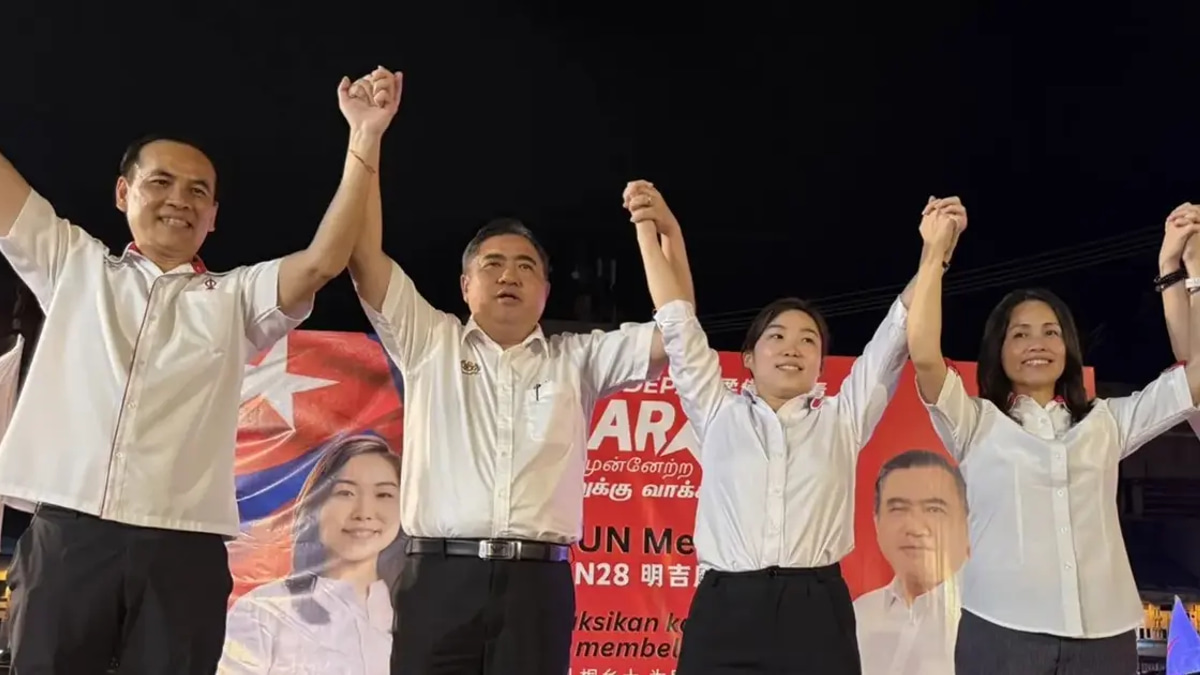
KUALA LUMPUR: Johor's Democratic Action Party leader Teo Nie Ching has publicly accused unnamed political rivals of orchestrating a campaign to distribute manipulated campaign posters, alleging the tactic is designed to systematically undercut support for the Pakatan Harapan coalition as the state heads toward elections.
The allegation, made during remarks today, centres on what Teo characterises as a deliberate misinformation strategy involving the circulation of false or altered candidate materials. According to her account, these fabricated posters misrepresent prospective candidates and carry messaging intended to confuse voters and damage the opposition's credibility. The move, if verified, would constitute a sophisticated attempt at electoral sabotage during a crucial campaign phase.
Teo's assertion underscores growing concerns within opposition circles regarding the information environment surrounding Johor's electoral contest. The deployment of fake campaign literature—whether featuring non-existent candidates, altered photographs, or misleading party affiliations—represents a recognised challenge in modern Malaysian politics. Such tactics exploit the rapid spread of digital content and can sow confusion among voters with limited time to verify claims.
For Pakatan Harapan, which has positioned itself as a reformist alternative capable of governing Johor after years of Barisan Nasional dominance, allegations of coordinated disinformation attacks carry significant implications. The coalition's campaign messaging has centred on restoring institutional integrity and combating corruption, making claims of underhanded tactics from opponents particularly damaging to its narrative authority. Any erosion of voter confidence through manufactured materials directly threatens its mobilisation efforts.
The timing of such allegations is politically sensitive, as they arrive during an intensifying campaign period when candidates conduct final outreach and voters form decisive preferences. Misinformation is most potent when it circulates closest to polling day, leaving limited opportunity for fact-checkers or officials to debunk false claims. In the Malaysian context, where traditional media ownership remains concentrated and alternative news channels compete for attention, unverified campaign materials can penetrate voter consciousness before correction mechanisms engage.
Johor's electoral significance extends beyond the state itself. As Malaysia's second-largest state by population and historically a Barisan stronghold, results there carry symbolic weight for the broader national political trajectory. Pakatan Harapan's performance in Johor will shape perceptions regarding the coalition's viability for federal contests and influence internal dynamics within the government. Conversely, any sign of electoral misconduct or disinformation undermines public confidence in the integrity of the democratic process itself.
Teo's disclosure raises questions regarding election monitoring and verification mechanisms. Malaysian election authorities, including the Election Commission, have responsibility for ensuring campaign conduct adheres to established guidelines. Determining responsibility for producing and distributing false materials requires investigation, yet establishing culpability often proves challenging when digital dissemination obscures the source. Without clear evidence and swift corrective action, accusations of manipulation risk becoming mere claim and counter-claim without resolution.
The strategic logic behind distributing fake candidate posters appears aimed at creating confusion that benefits whoever orchestrates the scheme. By circulating materials featuring non-existent candidates or misrepresenting genuine candidates, actors could dilute the coalition's public messaging, create cynicism about opposition integrity, or drive wedges between Pakatan Harapan partners through false attributions. In a competitive electoral environment, such tactics offer asymmetric advantages to those willing to deploy them.
For Malaysian voters, particularly those in Johor, the allegation highlights the need for heightened scrutiny of campaign materials encountered through social media, neighbourhood channels, or informal networks. The proliferation of false information during election campaigns is not unique to Malaysia; it represents a global challenge as political actors increasingly exploit digital platforms to reach constituencies. However, the localised nature of Johor's contest means that grassroots misinformation can prove particularly effective in swaying community-level sentiment.
Pakatan Harapan's response to these allegations will likely involve both public denunciation of the tactics and quiet efforts to ensure supporters distinguish between authentic and fraudulent materials. The coalition may seek to elevate the issue to authorities, potentially requesting investigations that would demonstrate responsiveness to electoral integrity concerns. Simultaneously, party machinery will work to inoculate voters against confusion by reinforcing official candidate lists and verified messaging through trusted channels.
The broader implications extend to questions about institutional capacity and political culture in Malaysia. Robust democracies develop mechanisms to identify and counteract electoral manipulation, whilst also cultivating norms where parties refrain from underhanded tactics. Each instance of alleged misconduct tests whether Malaysia's political system can respond transparently and whether voters maintain sufficient faith in democratic processes despite evidence of manipulation attempts.
As the Johor election approaches, these allegations will likely feature in opposition messaging as evidence of desperation among political rivals. Whether substantiated through investigation or contested by those accused, the controversy exemplifies the increasingly contentious information environment surrounding Malaysian electoral contests and the premium placed on verified information and institutional credibility.

%22%2F%3E%3C%2Fpattern%3E%3C%2Fdefs%3E%3Crect%20width%3D%22100%25%22%20height%3D%22100%25%22%20fill%3D%22url(%23ph21o2sg)%22%2F%3E%3Crect%20width%3D%22100%25%22%20height%3D%22100%25%22%20fill%3D%22url(%23ph21o2sp)%22%2F%3E%3Ctext%20x%3D%2250%25%22%20y%3D%2250%25%22%20text-anchor%3D%22middle%22%20dominant-baseline%3D%22central%22%20fill%3D%22rgba(255%2C255%2C255%2C0.95)%22%20font-family%3D%22Georgia%2C%20'Times%20New%20Roman'%2C%20serif%22%20font-weight%3D%22700%22%20font-size%3D%22170%22%20letter-spacing%3D%22-0.02em%22%3EGabungan%3C%2Ftext%3E%3C%2Fsvg%3E)