The Paris Vivatech festival has become a showcase for transformative innovations that could reshape multiple sectors, from healthcare and defence to sports performance monitoring. Among the standout technologies on display across the event's extensive stands are developments that address longstanding challenges in medical implants, aerial mobility, voice authentication security, and athletic performance tracking—each representing years of research and significant capital investment aimed at solving real-world problems.
Berlin-based Blueprint Biomed is tackling a widespread surgical challenge by engineering artificial bone grafts to replace the autologous grafts that millions of patients undergo annually for bone healing procedures. Current clinical practice relies heavily on extracting bone from patients' own bodies, a procedure that carries inherent risks. Chief executive Aaron Herrera explained that such grafts frequently fail, necessitating additional surgical interventions to address complications. The company's proprietary solution employs three-dimensional printing technology to create customised scaffold structures from polycaprolactone, a biodegradable polyester that provides structural support while gradually dissolving in the body over approximately two years. Collagen layered atop this scaffold breaks down within three months, allowing the artificial graft to integrate seamlessly with surrounding tissue while avoiding the complications associated with harvesting bone from patients themselves. The firm is seeking US$2.5 million in funding as it advances toward human clinical trials, with projections to begin implanting its products in patients by 2028, potentially transforming orthopaedic surgery for patients across the region.
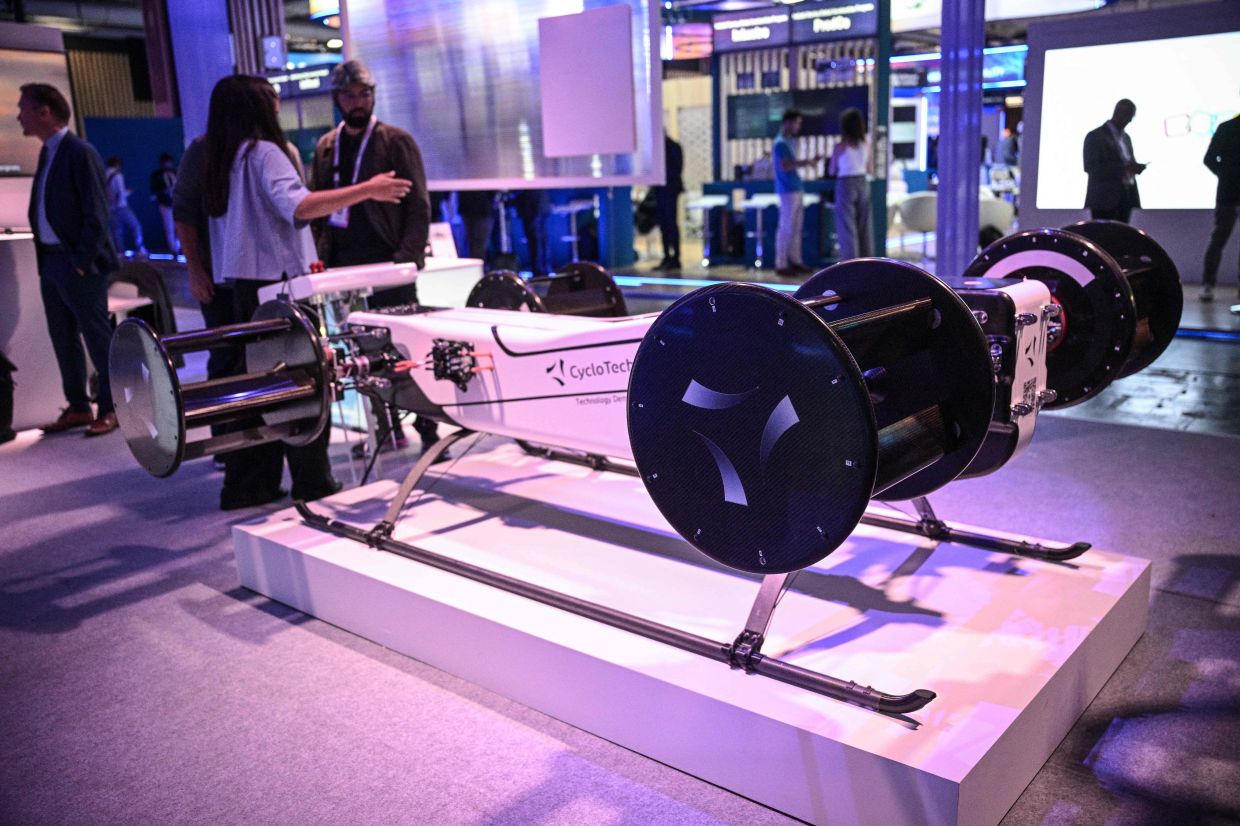
In the aerospace sector, Vienna-based startup CycloTech is redesigning drone propulsion systems with cylindrical motors featuring multiple wing-shaped blades that fundamentally expand aircraft capabilities. Unlike conventional quadcopter designs that excel in specific flight modes, CycloTech's innovation enables machines to hover vertically like helicopters, accelerate horizontally like fixed-wing aircraft, execute mid-air braking, and even reverse direction—delivering unprecedented manoeuvrability in confined urban spaces. Marketing chief Andrea Marchsteiner highlighted how this flexibility opens applications ranging from last-mile delivery in densely populated cities to potential urban air mobility for passenger transport, alongside military applications already demonstrated in conflict zones. The 65-person enterprise, which has already raised €40 million in previous funding rounds, is actively seeking additional capital and strategic partnerships with aircraft manufacturers keen to integrate the technology into their platforms, reflecting growing investor confidence in advanced aviation solutions.
The rapid advancement of generative artificial intelligence has created an urgent security vulnerability that French firm Whispeak is working to address. Voice deepfakes—synthetic audio recordings that convincingly mimic real individuals—have become so accessible that malicious actors require minimal technical expertise to create convincing fraudulent calls impersonating bank customers, family members, or other trusted contacts. Chief executive Florent Van Calster noted that recreating someone's voice now requires less than ten seconds of original audio, often achieved freely through readily available tools. In response, Whispeak has invested three years developing detection systems incorporating its own artificial intelligence capabilities, and the company now claims the most accurate audio deepfake detector available, having achieved first-place finishes in multiple international detection competitions. The firm is partnering with France's major telecommunications operator Bouygues to screen incoming calls for deepfake characteristics and alert users when fraudulent audio is detected, potentially preventing financial fraud and social engineering attacks. While Van Calster acknowledged an error rate of less than one percent on available training datasets, he candidly recognised that detection and deception will remain in perpetual competition as technology continues evolving, requiring continuous system refinement.
Hong Kong-based PointFit represents a paradigm shift in sports performance monitoring by moving beyond traditional pulse-monitoring devices toward comprehensive biomarker analysis through non-invasive wearable sensors. Chief executive Kenny Oktavius began developing the core technology in 2019 while still a university student, and the company has since created adhesive patches embedding tiny sensors capable of reading glucose, cortisol, and other biochemical indicators directly from sweat on the skin. Rather than applying universal performance benchmarks, the platform's artificial intelligence engine constructs individualised baselines that account for demographic characteristics and environmental conditions such as ambient temperature. This personalised approach addresses a critical limitation of conventional heart-rate monitoring, which Oktavius emphasised cannot reveal the complete physiological picture during extreme exertion—even elite marathon runners wearing sophisticated equipment occasionally collapse during competition. The company has partnered with Red Bull's Athlete Performance Centre and Puma's Nitro Labs research division to refine the technology and validate its performance across professional athletes. Oktavius signalled expansion toward mainstream consumer markets, identifying potential distribution partnerships with sporting goods retailers like Decathlon and eyewear conglomerate EssilorLuxottica, suggesting the technology could eventually reach general fitness enthusiasts and health-conscious consumers worldwide.
These four innovations collectively represent the technological trajectory dominating conversations at global innovation conferences and attracting substantial venture capital investment. For Southeast Asian markets, the implications span multiple sectors: biotech companies developing regenerative medical solutions could drive healthcare cost reduction and improve surgical outcomes across the region's aging population; advanced drone capabilities would enhance logistics networks critical to island economies and remote communities; security technology preventing financial fraud addresses a growing concern as digital transactions proliferate; and health monitoring systems could support the region's expanding sports industry and wellness economy. The convergence of these developments illustrates how frontier technologies increasingly cluster around solving specific market failures and addressing demographic shifts that affect developed and developing economies alike. The parade of startups and established firms seeking funding at Vivatech underscores persistent venture capital appetite for deep-technology solutions, even as broader technology sector valuations face headwinds. For Malaysian and Southeast Asian entrepreneurs and investors, these showcased innovations provide a roadmap of technical challenges receiving international validation and funding—suggesting comparable opportunities exist within the region's own emerging sectors.