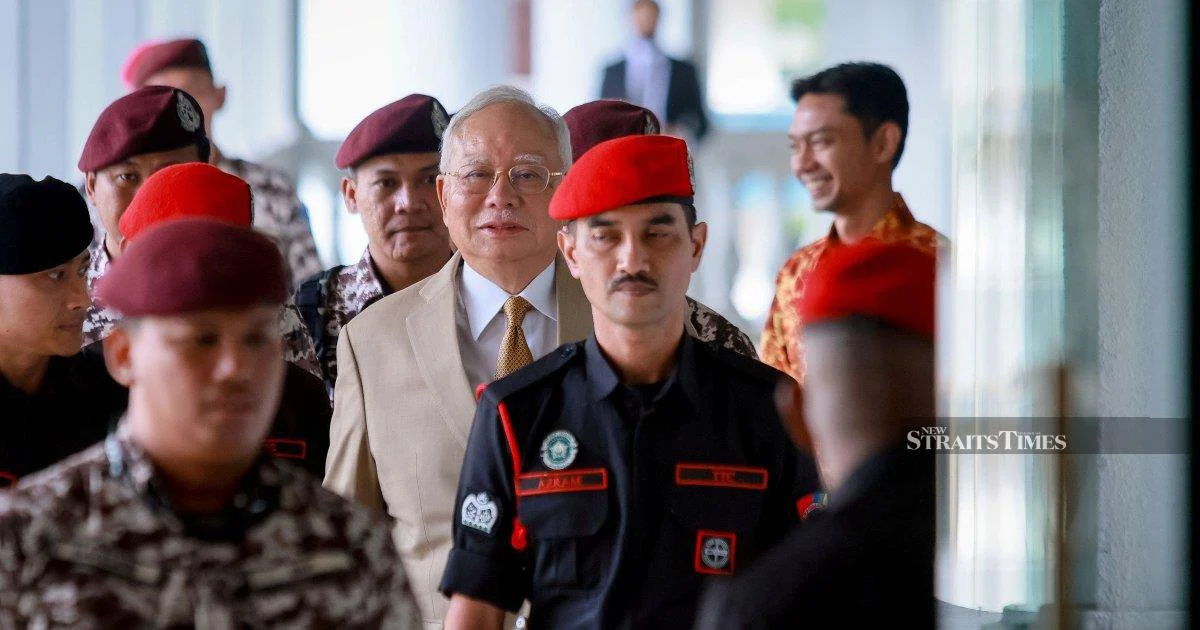
A Malaysian court has determined that Datuk Seri Najib Razak's inaction regarding the transfer of billions of ringgit connected to 1Malaysia Development Bhd (1MDB) into his personal bank accounts amounted to unreasonable conduct, according to a judicial finding in Kuala Lumpur. The court's assessment underscores the seriousness of the former Prime Minister's role in allowing such substantial sums to enter accounts bearing his name without intervention or clarification.
The judicial determination represents a significant moment in Malaysia's ongoing reckoning with the 1MDB scandal, one of the world's most complex financial fraud cases involving the theft of an estimated USD4.5 billion from a state investment fund established during Najib's tenure as Prime Minister. The court's language—particularly the characterisation of the funds as far from trivial—signals judicial skepticism about any claim of ignorance or passivity on the part of Malaysia's former leader. By rejecting the notion that these transfers could be dismissed as minor matters, the bench has reframed the narrative around Najib's accountability.
The 1MDB affair has reverberated across Southeast Asia and globally, implicating international financial institutions, foreign intermediaries, and high-level Malaysian officials in a scheme that allegedly laundered stolen public money through complex offshore structures. The presence of these funds in Najib's personal accounts sits at the heart of multiple criminal proceedings against him, making the court's assessment of his conduct directly relevant to broader questions of presidential responsibility and financial stewardship. For Malaysian citizens, the ruling reinforces that elected leaders occupy a unique position of trust and accountability, particularly when vast public resources are at stake.
The characterisation of the transferred sums as substantially significant carries weight precisely because it rejects minimisation. Malaysian courts have historically grappled with cases involving political figures and public funds, but the scale of 1MDB—representing resources that could have been deployed for infrastructure, education, or healthcare—lends particular gravity to judicial findings about how those resources were handled. The court's framing suggests that even if Najib did not personally orchestrate every transfer, his failure to act upon becoming aware of such movements into his accounts warrants serious judicial scrutiny.
This ruling also illuminates the broader governance question of how political office and personal enrichment intersect within Malaysian institutional structures. The inaction the court identified speaks to a fundamental breakdown in the relationship between a Prime Minister and the national treasury. When billions can flow into a sitting leader's personal accounts without prompt action or formal inquiry, it suggests systemic vulnerabilities in oversight mechanisms, audit procedures, and internal governmental accountability that extend beyond any single individual's culpability. These structural gaps remain relevant as Malaysia continues to strengthen institutional safeguards.
The international dimension cannot be overlooked. Investigations by authorities in the United States, Singapore, Switzerland, and the United Arab Emirates have established that 1MDB funds moved through multiple jurisdictions and financial hubs before landing in Malaysian accounts and being dispersed internationally for high-end acquisitions and speculative investments. The court's assessment of Najib's inaction occurs within this transnational context, where foreign regulators and institutions have already imposed substantial consequences and recoveries. Malaysia's domestic accountability therefore represents a parallel but essential strand of the reckoning.
For Southeast Asian observers, the case underscores the importance of robust anti-corruption institutions and judicial independence. While Malaysia's courts have historically faced questions about their autonomy during Najib's administration, the current proceedings demonstrate that judicial scrutiny of high-level officials remains possible within the Malaysian system. However, the complexity and duration of the cases—now spanning more than a decade from initial discoveries to present-day rulings—also highlight the resource-intensive nature of prosecuting large-scale financial crimes involving sophisticated concealment techniques.
The specific factual foundation for the court's finding warrants attention. The transfer of billions into personal accounts cannot plausibly be characterised as clerical error or misunderstanding about fund origins. The sums involved exceeded any reasonable threshold for coincidental or innocuous explanation. Whether Najib personally authorised each transfer or maintained awareness of their entry into his accounts becomes almost secondary to the fundamental question: what duty of care did he owe as Prime Minister to ensure that public resources were not diverted into private channels?
Looking forward, this judicial determination may influence how Malaysia calibrates expectations for political leaders' conduct regarding state resources. It establishes, at minimum, that passive acceptance of massive fund transfers into personal accounts—even if framed as merely receiving deposits rather than actively stealing—constitutes unreasonable conduct warranting judicial rebuke. For Malaysian governance and public accountability frameworks, the distinction between active theft and negligent permitting of such flows has narrowed considerably.
The ruling also carries implications for ongoing discussions about asset recovery and financial restitution. Malaysia has frozen and sought to recover various assets acquired through 1MDB-connected wealth, but questions persist about the full accounting of diverted funds. The court's findings on Najib's conduct may strengthen arguments for broader recovery efforts and more aggressive pursuit of assets held domestically and internationally. The determination that inaction itself constituted unreasonable conduct elevates the moral and legal case for comprehensive financial restoration to the Malaysian state.

%22%2F%3E%3C%2Fpattern%3E%3C%2Fdefs%3E%3Crect%20width%3D%22100%25%22%20height%3D%22100%25%22%20fill%3D%22url(%23ph21o2sg)%22%2F%3E%3Crect%20width%3D%22100%25%22%20height%3D%22100%25%22%20fill%3D%22url(%23ph21o2sp)%22%2F%3E%3Ctext%20x%3D%2250%25%22%20y%3D%2250%25%22%20text-anchor%3D%22middle%22%20dominant-baseline%3D%22central%22%20fill%3D%22rgba(255%2C255%2C255%2C0.95)%22%20font-family%3D%22Georgia%2C%20'Times%20New%20Roman'%2C%20serif%22%20font-weight%3D%22700%22%20font-size%3D%22170%22%20letter-spacing%3D%22-0.02em%22%3EGabungan%3C%2Ftext%3E%3C%2Fsvg%3E)