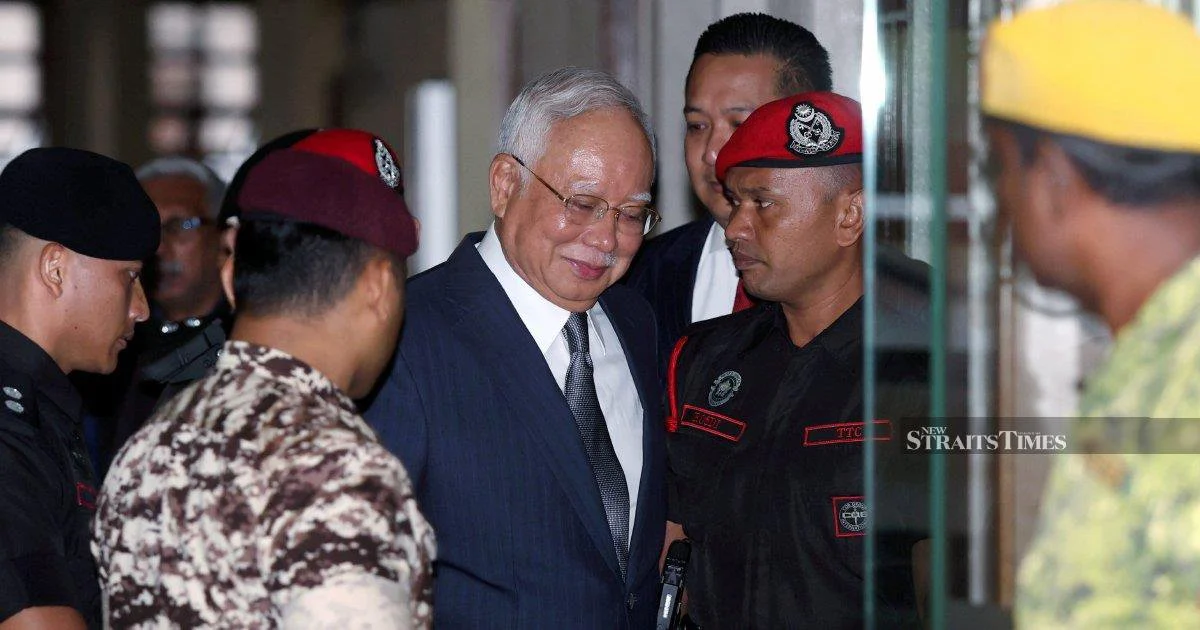
A Malaysian court has delivered a damning assessment of the relationship between former Prime Minister Datuk Seri Najib Razak and fugitive financier Low Taek Jho, ruling that the pair operated as willing partners in a scheme to plunder billions of ringgit from 1Malaysia Development Bhd (1MDB). The judicial finding represents a significant moment in Malaysia's reckoning with one of the world's largest sovereign wealth fund scandals, cementing the narrative that the theft was orchestrated from the highest levels of government rather than occurring through isolated lapses in oversight.
The judge's determination that Najib and Jho Low worked in coordinated fashion fundamentally shapes how Malaysians understand the 1MDB affair. Rather than presenting a scenario where a sovereign wealth fund was victimized by opportunistic fraudsters, the ruling establishes that the nation's leader at the time actively facilitated the embezzlement. This distinction carries profound implications for public accountability and institutional trust, suggesting systemic corruption rather than individual malfeasance. For ordinary Malaysians, many of whom endured austerity measures and reduced public services during the period when billions were being siphoned away, the court's findings validate long-held suspicions about the affair's true origins.
The relationship between Najib and Jho Low formed the fulcrum around which the entire 1MDB theft operated. Jho Low, operating as an informal advisor despite holding no official position, wielded extraordinary influence over the fund's operations and strategic decisions. Documents and witness testimony presented during proceedings revealed that Jho Low maintained direct communication channels with Najib, often bypassing standard governmental processes and institutional checks. This arrangement allowed them to move vast sums across international borders with minimal resistance, using layers of shell companies and obscure financial instruments to obscure the money's true destination.
The billions in question were funneled through a bewildering web of international transactions that deliberately obfuscated their path. Money would leave 1MDB's accounts in Malaysia, travel through intermediary entities in jurisdictions ranging from the United States to Singapore to the Middle East, and ultimately reach accounts controlled by associates of Jho Low or converted into luxury assets purchased in his name. The complexity was not accidental; the court found evidence that both men understood how to construct mechanisms sufficiently convoluted to evade detection by regulators and auditors. Their knowledge of how financial oversight functions in Malaysia and globally made them effective architects of what authorities have estimated to be one of history's largest cross-border theft schemes.
For Southeast Asia more broadly, the verdict illuminates challenges that plague the region's financial systems. Corrupt officials with access to state institutions can exploit weaknesses in banking oversight, regulatory coordination, and international financial transparency. Jho Low's ability to operate from Malaysia and internationally while directing stolen funds with relative impunity underscores how sophisticated financial crimes can flourish when governmental actors provide protective cover. The ruling serves as a sobering reminder that no country's financial institutions are automatically secure against high-level corruption, regardless of nominal regulatory frameworks.
The evidence marshalled to establish the "hand-in-hand" relationship included communications between the two men, testimony from individuals within 1MDB's operational structure, and financial records documenting the sequential flows of money. What emerged from this evidence was not a portrait of passive neglect but rather of active participation and planning. Najib's position as Prime Minister and Finance Minister gave him the authority to approve or block transactions; his approval of 1MDB's operations and his alignment with Jho Low's vision for the fund proved instrumental in enabling the theft. The court determined that this alignment was deliberate and sustained across multiple years, ruling out any suggestion that the former premier was merely duped by a cunning subordinate.
Jho Low's status as a fugitive adds another dimension to the judgment. While Najib faces Malaysian courts, Jho Low remains abroad, having fled before investigations accelerated. The gap between the two men—one facing justice in his home country while the other operates in self-imposed exile—illustrates the asymmetry sometimes inherent in transnational financial crimes. Nevertheless, the court's findings concerning both men establish a joint culpability that transcends geographic boundaries. The international nature of the theft meant that investigations, prosecutions, and asset recovery efforts necessarily involved authorities across multiple nations, a complicated coordination that Malaysia's judicial system managed while pursuing accountability within its own borders.
The ruling carries consequences for Malaysia's broader institutional credibility. 1MDB was established as a strategic development vehicle intended to catalyze economic growth and technological advancement. Instead, its capture by corrupt officials transformed it into a vehicle for personal enrichment. This subversion of public purpose eroded public confidence in state-led initiatives and raised questions about governance standards within Malaysia's institutional ecosystem. The court's articulation of how systematically the fund was plundered serves as a documented record of what occurred, counteracting any revisionist narratives that might emerge in subsequent years.
Moving forward, the judgment provides momentum for asset recovery efforts and further investigations into the global networks that facilitated the theft. Authorities in multiple jurisdictions have pursued civil and criminal cases related to 1MDB, with varying degrees of success in prosecuting officials and recovering stolen assets. The Malaysian court's explicit finding that Najib and Jho Low conspired together strengthens the evidentiary foundation for these parallel proceedings. Prosecutors working in other countries can reference the Malaysian judgment when building their cases, potentially accelerating accountability in jurisdictions where further charges may be warranted.
For Malaysia's political landscape, the verdict arrives at a moment when the country continues processing the 1MDB scandal's ramifications. Public discourse remains shaped by questions of institutional reform, regulatory strengthening, and whether sufficient safeguards have been implemented to prevent similar occurrences. The court's findings underscore that preventing future 1MDB-style frauds requires not merely better auditing mechanisms but also genuine commitment to impartial governance and institutional independence. When heads of government use their positions to facilitate theft, procedural defenses prove inadequate; preventing such abuses demands a political culture that prioritizes accountability over loyalty and institutional integrity over personal advancement.

%22%2F%3E%3C%2Fpattern%3E%3C%2Fdefs%3E%3Crect%20width%3D%22100%25%22%20height%3D%22100%25%22%20fill%3D%22url(%23ph21o2sg)%22%2F%3E%3Crect%20width%3D%22100%25%22%20height%3D%22100%25%22%20fill%3D%22url(%23ph21o2sp)%22%2F%3E%3Ctext%20x%3D%2250%25%22%20y%3D%2250%25%22%20text-anchor%3D%22middle%22%20dominant-baseline%3D%22central%22%20fill%3D%22rgba(255%2C255%2C255%2C0.95)%22%20font-family%3D%22Georgia%2C%20'Times%20New%20Roman'%2C%20serif%22%20font-weight%3D%22700%22%20font-size%3D%22170%22%20letter-spacing%3D%22-0.02em%22%3EGabungan%3C%2Ftext%3E%3C%2Fsvg%3E)