Malaysia's push toward digital governance has yielded tangible financial results, with the civil service reporting cost savings of RM1.99 million following the rollout of its paperless initiative. The programme has eliminated the need for 116,405 reams of paper across government operations, representing a concrete step forward in reducing administrative waste and environmental impact. Chief Secretary to the Government Tan Sri Shamsul Azri Abu Bakar announced the achievement during a meeting of the Digital Economy and Fourth Industrial Revolution Council chaired by Prime Minister Datuk Seri Anwar Ibrahim on June 29.
The paperless initiative represents more than a simple cost-reduction exercise; it signals a broader institutional shift within Malaysian government toward embracing digital-first processes for routine transactions. The implementation, which commenced in February following earlier announcements, has systematized the digitalization of straightforward administrative functions. This methodical approach allows civil service departments to maintain operational continuity whilst establishing new digital workflows, rather than attempting sweeping changes across complex systems simultaneously. The success in the initial rollout provides a foundation for expanding paperless practices into more sophisticated government operations.
Within the broader context of Malaysia's digital ambitions, the paperless initiative sits as one component of an interconnected strategy to modernize the country's administrative infrastructure. The council meeting focused substantially on two flagship programmes—MyDigital ID and MyGov—both of which depend on reducing reliance on paper-based verification and record-keeping. These initiatives aim to create seamless digital interactions between citizens and government agencies, eliminating friction points that characterize traditional bureaucratic processes. The synergies between paperless administration and digital identity systems create compounding efficiency gains that extend beyond simple paper elimination.
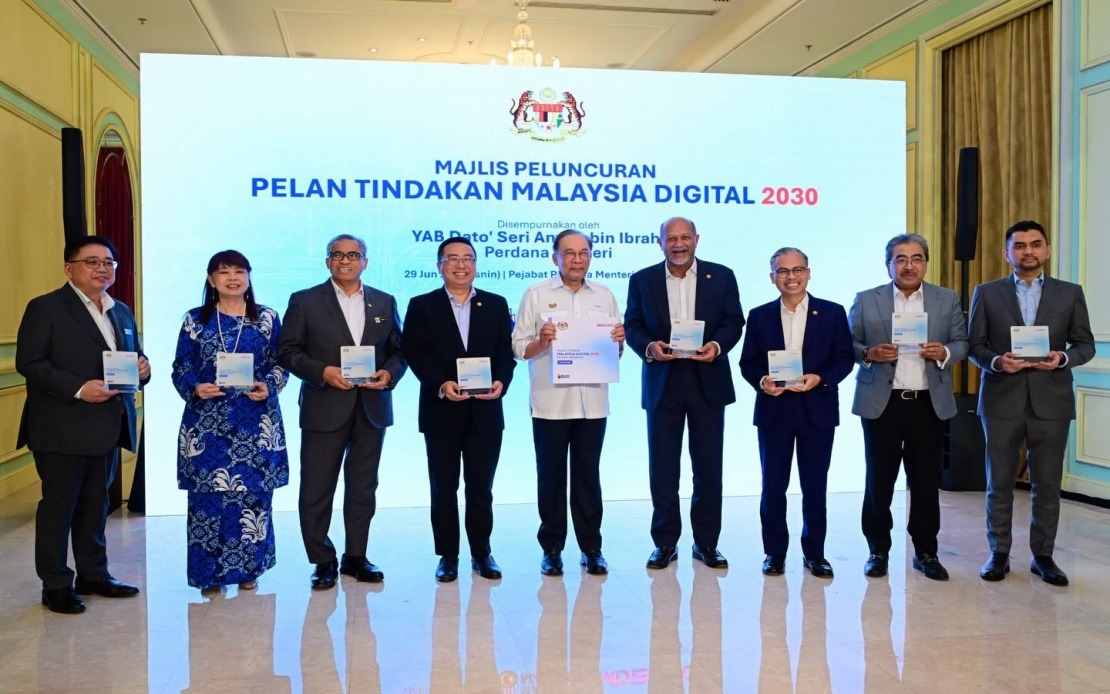
The government's commitment to digital transformation received further emphasis with the launch of Malaysia Digital 2030, unveiled by Prime Minister Anwar Ibrahim at the same council meeting. This comprehensive framework establishes the nation's technological development trajectory for the coming decade, with artificial intelligence playing a central role. The paperless initiative aligns strategically with this long-term vision, as efficient digital document management becomes prerequisite infrastructure for implementing AI-driven government services. By establishing paperless workflows today, the civil service creates the foundational data environments necessary for machine learning applications in government operations tomorrow.
Higher education represents another front in Malaysia's digital advancement strategy, with the council identifying the need to expand digital access across universities and tertiary institutions. This expansion carries implications for administrative efficiency within educational organizations themselves, as universities adopt similar paperless and digital-first practices. The decision to focus on digital talent development through the MyMAHIR National AI Council for Industry suggests recognition that digital transformation requires both technological infrastructure and human capability. Training programmes and talent pipelines must develop in tandem with system implementation to ensure effective utilization of new digital platforms.
The achievement of RM1.99 million in savings carries significance beyond the immediate financial figure. It demonstrates measurable return on investment from digital transformation initiatives, providing empirical support for expanding such programmes throughout the civil service. Government agencies often face skepticism regarding digitalization costs and implementation challenges; concrete savings figures address these concerns and build institutional momentum for further digital adoption. The reported paper reduction also carries environmental value, reducing demand on natural resources and lowering the carbon footprint associated with paper production and transport.
For Malaysian citizens and businesses engaging with government agencies, the paperless transition promises tangible improvements in service delivery timelines. Reduced paper handling accelerates processing of applications, permits, licenses, and other routine transactions. Digital document systems enable faster retrieval of records, simultaneous access by multiple authorized personnel, and automatic audit trails that enhance accountability. These operational improvements translate to shortened waiting periods and reduced frustration for the public interfacing with civil service departments across health, education, licensing, and social services.
The scale of the initiative's reach remains an open question as the government progresses beyond simple transactions toward more complex administrative processes. Medical records, legal documentation, and financial transactions involve heightened confidentiality and verification requirements that complicate digitalization. The civil service must navigate cybersecurity concerns, data protection obligations under the Personal Data Protection Act, and public trust issues surrounding digital systems handling sensitive information. Expansion of paperless initiatives into these domains will require robust security infrastructure and clear regulatory frameworks governing digital document validity and archival.
The MyMAHIR National AI Council's involvement in developing comprehensive digital talent signals anticipation of artificial intelligence's transformative potential across government operations. Beyond simple automation of clerical tasks, AI systems could eventually analyze vast datasets generated by digital government processes, identifying patterns useful for policy formulation and resource allocation. Predictive analytics could optimize delivery of social services, whilst natural language processing might enhance accessibility for citizens with limited digital literacy. However, realizing these advanced applications requires cultivating AI expertise within government and establishing ethical frameworks governing algorithmic decision-making in public administration.
Regional context matters for evaluating Malaysia's paperless progress. Singapore has implemented comprehensive e-government systems over decades, whilst newer initiatives in Thailand and Indonesia demonstrate varying approaches to digital transformation. Malaysia's reported efficiency gains position the country competitively within Southeast Asia's digital economy landscape. International recognition of these achievements strengthens Malaysia's credibility in attracting foreign technology investment and talent. The RM1.99 million saving, whilst modest in absolute terms, illustrates the incremental economic benefits that accumulate across large bureaucratic systems embracing digital practices.
Looking forward, the civil service's paperless trajectory depends significantly on sustained political commitment and adequate resourcing for technology infrastructure. Legacy systems within government remain deeply entrenched, and cultural resistance to digital workflows persists in some departments. Success requires not merely deploying new technology but fundamentally reshaping organizational processes and employee practices. Training programmes must reach frontline civil servants to build confidence and competence in digital systems. Continuous assessment of implementation effectiveness allows identification of bottlenecks and adjustment of deployment strategies to overcome institutional resistance.

