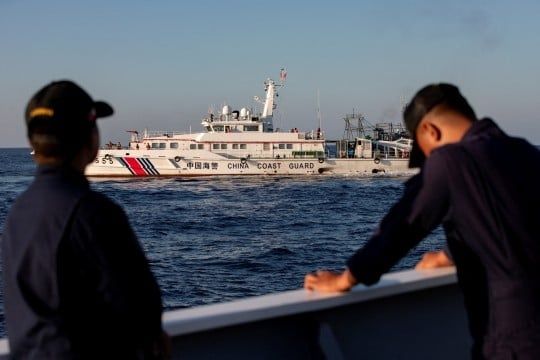
China has publicly recognised Malaysia's instrumental contributions to ongoing negotiations over a Code of Conduct governing activities in the South China Sea, with Beijing's ambassador characterising the talks as approaching a critical juncture. Speaking during a media briefing in Kuala Lumpur, China's Ambassador to Malaysia Ouyang Yujing specifically commended Malaysia's role as co-chair of the implementation mechanism for the Declaration on the Conduct of Parties in the South China Sea, underscoring the country's diplomatic significance in one of Asia's most strategically sensitive maritime disputes.
The ambassador's remarks reflect an intensification of bilateral engagement on maritime governance issues. Ouyang noted that since the previous year, China and Malaysia have sustained continuous high-level communication channels focused on South China Sea management, whilst simultaneously pursuing broader maritime cooperation through dedicated bilateral dialogues. These institutional arrangements suggest both nations are institutionalising their approach to potential maritime friction, creating structured forums for resolving disputes before they escalate into confrontations.
The Code of Conduct initiative represents a fundamental shift in how regional powers address competing territorial claims in the South China Sea. Rather than relying on unilateral actions or military posturing, the negotiating framework seeks to establish mutually agreed rules that would provide legal and diplomatic safeguards for all parties. Ouyang's characterisation of the process as entering a critical stage indicates that negotiators have moved beyond foundational discussions into substantive agreements on specific provisions, suggesting measurable progress toward a finalisable agreement.
Various ASEAN member states have expressed optimism about completing a Code of Conduct within this calendar year, reflecting broader consensus within the regional bloc that institutionalised conflict management mechanisms serve everyone's interests better than the current legal ambiguity. Malaysia's positioning as co-chair of the implementation mechanism places it at the intersection of ASEAN consensus-building and bilateral great power diplomacy, a delicate balancing act that Kuala Lumpur has navigated with apparent success given Beijing's public endorsement.
The Prime Minister Datuk Seri Anwar Ibrahim's recent reaffirmation of Malaysia's commitment to advancing Code of Conduct negotiations prompted the ambassador's formal statement, effectively linking national leadership declarations with China's strategic objectives. This alignment suggests coordinated messaging at multiple governmental levels, with both countries publicly reinforcing each other's commitments to the negotiation process. For Malaysian policymakers, this synchronisation provides valuable diplomatic cover when balancing between China's strategic interests and the broader ASEAN consensus.
China's explicit commitment to eliminating external interference in Code of Conduct discussions carries implicit criticism of non-regional actors, particularly the United States and its regional security partners who view the South China Sea as crucial to freedom of navigation and strategic stability. By framing the negotiation process as exclusively regional, Beijing seeks to exclude external powers from having input into maritime governance arrangements, effectively insulating the process from alternative perspectives on international law and dispute resolution. Malaysia's role as co-chair becomes particularly significant in this context, as it must maintain credibility as an honest broker to both regional and extra-regional stakeholders.
Bilateral relations between China and Malaysia have reached unprecedented strength following President Xi Jinping's state visit to Malaysia during the previous year. Ambassador Ouyang highlighted record-breaking high-level exchanges, citing Premier Li Qiang's two visits to Malaysia and Prime Minister Anwar Ibrahim's fourth visit to Beijing since assuming office. This intensity of diplomatic contact at the highest echelons of government suggests both nations view their bilateral relationship as a cornerstone of regional stability and cooperation, with frequent personal engagement reinforcing political trust and enabling difficult conversations on sensitive maritime issues.
The expanding cooperation across multiple sectors—economic, cultural, technological, and strategic—creates a comprehensive framework within which maritime governance negotiations operate. When countries develop dense networks of mutual dependencies and institutional connections, maritime disputes become compartmentalised rather than allowed to contaminate entire bilateral relationships. This structural resilience explains how China and Malaysia can maintain robust Code of Conduct negotiations despite occasional tensions or disagreements on specific maritime incidents.
For Malaysia specifically, the ambassador's public commendation addresses a significant diplomatic challenge: demonstrating to both China and other ASEAN members that Kuala Lumpur can advocate regional interests whilst maintaining constructive relations with Beijing. By accepting Malaysia's co-chair role and publicly acknowledging its contributions, China signals that it respects institutional frameworks that constrain unilateral action. Conversely, Malaysia's consistent engagement with Code of Conduct negotiations demonstrates to ASEAN partners that Kuala Lumpur remains committed to collective regional positions rather than being coopted by Chinese strategic interests.
The stated objective of providing an institutional guarantee for lasting peace and stability in the South China Sea reflects a pragmatic acknowledgment that the region's prosperity depends on predictable maritime governance. For Southeast Asian nations including Malaysia, economically vibrant in maritime trade and energy resource exploration, institutionalised dispute resolution mechanisms represent essential infrastructure for development. A completed Code of Conduct would establish clear boundaries for acceptable behaviour, reduce uncertainty that discourages investment, and create adjudication mechanisms for inevitable disagreements.
Looking forward, the momentum toward completing negotiations this year carries profound implications for Southeast Asian geopolitics and Malaysia's role within it. Successful finalisation would demonstrate that ASEAN-centred diplomacy can constrain great power competition and generate binding agreements on core security issues. Failure would reinforce arguments that regional multilateralism cannot constrain unilateral action and might accelerate arms race dynamics or strategic hedging behaviour among smaller Southeast Asian states seeking security guarantees from external powers.

%22%2F%3E%3C%2Fpattern%3E%3C%2Fdefs%3E%3Crect%20width%3D%22100%25%22%20height%3D%22100%25%22%20fill%3D%22url(%23ph21o2sg)%22%2F%3E%3Crect%20width%3D%22100%25%22%20height%3D%22100%25%22%20fill%3D%22url(%23ph21o2sp)%22%2F%3E%3Ctext%20x%3D%2250%25%22%20y%3D%2250%25%22%20text-anchor%3D%22middle%22%20dominant-baseline%3D%22central%22%20fill%3D%22rgba(255%2C255%2C255%2C0.95)%22%20font-family%3D%22Georgia%2C%20'Times%20New%20Roman'%2C%20serif%22%20font-weight%3D%22700%22%20font-size%3D%22170%22%20letter-spacing%3D%22-0.02em%22%3EGabungan%3C%2Ftext%3E%3C%2Fsvg%3E)