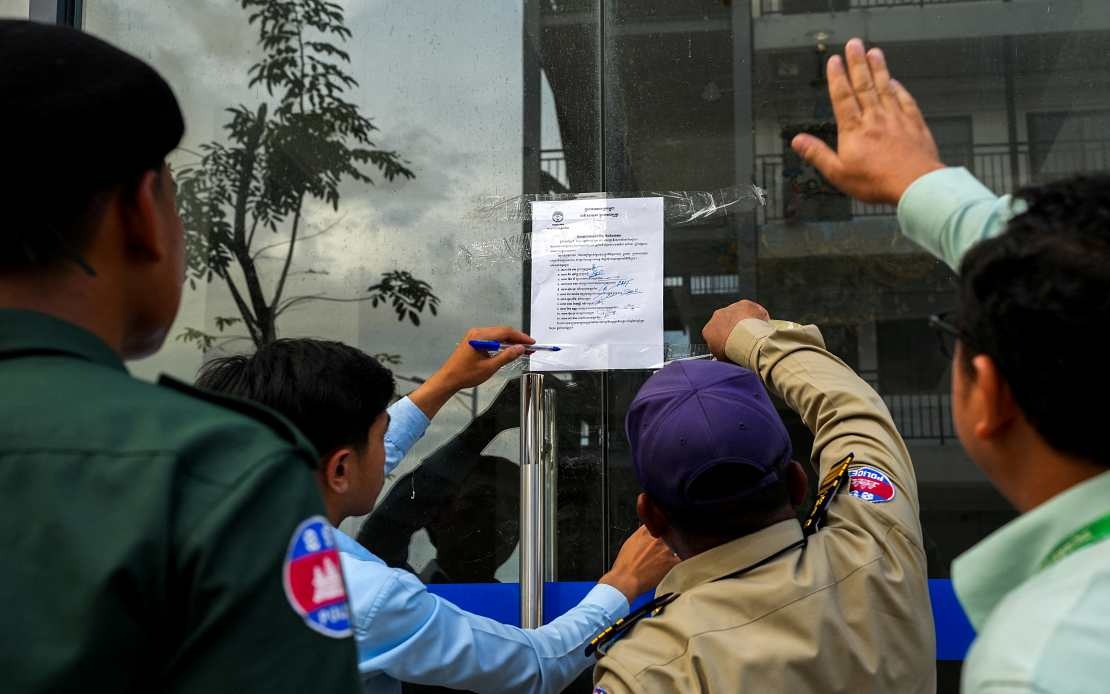
Cambodia has removed more than 16,000 foreign nationals suspected of involvement in online scamming operations during the opening six months of 2026, marking an aggressive escalation in the kingdom's battle against organised cybercrime. Police Lieutenant General Sok Veasna, heading the General Department of Immigration, disclosed that these deportations formed part of a broader expulsion wave that saw Cambodia remove over 45,000 foreign nationals altogether during the same period. Speaking at a mid-year review gathering on Tuesday, Veasna underscored that enforcement action targeting internet-based fraud schemes had intensified markedly since the year began, reflecting governmental commitment to reversing the country's international reputation damage caused by scam networks.
The deportation strategy carries significant long-term consequences for those affected. Veasna confirmed that every individual expelled as a scam suspect receives a permanent prohibition on returning to Cambodian soil, eliminating any possibility of re-entry regardless of circumstances or time elapsed. This hardline approach signals the seriousness with which authorities view the cybercrime crisis and represents a deliberate policy to create maximum deterrent effect. For Malaysia and other neighbouring nations, the measure demonstrates Cambodia's determination to prevent these individuals from relocating their criminal operations to alternative jurisdictions within Southeast Asia, which carries obvious regional security implications.
The Cambodian government's comprehensive legislative response complements its enforcement operations. In April of this year, lawmakers enacted the Law on Combating Online Scams, introducing stringent penalties specifically targeting the organisational hierarchy of criminal networks. The legislation distinguishes between operational levels, with particularly severe punishments reserved for those identified as bosses and ringleaders orchestrating schemes. This legal framework represents a fundamental shift from previous approaches that often focused on street-level operatives rather than command structures, signalling a more sophisticated understanding of how international cybercrime syndicates function and where enforcement should concentrate resources.
Yet observers with expertise in regional security dynamics caution that headline expulsion numbers mask deeper structural problems requiring sustained attention. Thong Mengdavid, a specialist in China-ASEAN relations at the Cambodia University of Technology and Science, characterises the mass deportation initiative as a necessary but insufficient response to Cambodia's cybercrime challenge. While acknowledging the symbolic and practical value of removing thousands of suspected foreign operatives, Mengdavid emphasises that temporary measures addressing visible symptoms will not resolve the underlying criminality that permits these networks to flourish. His analysis points toward the inconvenient truth that sustained cybercriminal operations depend on local corruption and protection at institutional levels.
The expert identifies the missing dimension in Cambodia's current strategy: tackling the human trafficking infrastructure that typically channels vulnerable individuals into scam operations. Many foreign nationals found operating in these networks entered Cambodia through trafficking channels rather than ordinary immigration pathways, suggesting that disrupting the supply of operatives requires addressing organised trafficking that functions alongside organised fraud. Without intervention at this stage, replacement workers can be continuously supplied to criminal enterprises, allowing operations to continue despite periodic mass deportations. This perspective aligns with broader Southeast Asian security analysis recognising that cybercrime, human trafficking, and corruption form an interconnected system rather than discrete problems amenable to isolated solutions.
The political dimension of Cambodia's crackdown reflects mounting international pressure regarding the country's role as a cybercrime haven. Multiple nations have publicly criticised Cambodia for tolerating scam operations targeting their citizens, with particular concern from China regarding elaborate schemes defrauding Chinese nationals. The United States, Australia, and various Southeast Asian governments have similarly protested Cambodia's inadequate response to criminal networks, creating diplomatic consequences for Phnom Penh. The intensified enforcement campaign therefore serves simultaneously as a crime control measure and diplomatic damage mitigation, allowing Cambodian leaders to demonstrate responsiveness to international concerns.
For Malaysia and the broader region, Cambodia's experience illustrates the vulnerability of developing nations to becoming unwilling hosts for transnational cybercrime. The scarcity of resources available to immigration and law enforcement agencies, combined with the lucrative nature of fraud operations, creates conditions where criminal networks can establish themselves and operate with relative impunity. Malaysia has experienced attempted establishment of similar operations, though authorities have generally moved more swiftly than Cambodia to suppress developing networks. Understanding Cambodia's current challenges provides Malaysian policymakers valuable perspective on how quickly cybercrime infrastructure can expand and how challenging recovery becomes once operations become entrenched within institutional systems.
The scale of Cambodia's deportation programme raises practical implementation questions regarding logistics and international cooperation. Managing the expulsion of over 45,000 individuals across multiple nations requires coordination with airlines, destination countries, and diplomatic mechanisms. Nations receiving deportees must confirm identities and process incoming populations, creating reciprocal obligations and potential tensions. Countries like Thailand, Vietnam, and Laos receiving Cambodian deportees bear administrative burdens and may face challenges if expelled individuals include stateless persons or those whose nationality remains disputed. These practical considerations often receive minimal attention in policy announcements but substantially determine whether enforcement campaigns achieve stated objectives.
Looking forward, Cambodia's cybercrime challenge will likely persist despite intensive enforcement efforts unless complementary strategies address corruption enabling operations. Anonymous officials within Cambodian law enforcement have privately acknowledged that some departmental personnel receive payments protecting scam operations, though public acknowledgment of this corruption remains politically difficult. International organisations including UNODC have documented connections between certain Cambodian military officers and cybercriminal enterprises, suggesting that technological and legal measures alone cannot succeed without parallel anti-corruption initiatives. The government's willingness to confront this dimension will ultimately determine whether the current crackdown represents genuine transformation or merely a rotation of personnel within essentially unchanged systems.
Regional security analysts note that sophisticated cybercrime operations increasingly transcend geographic boundaries, with command centres in one country, operatives in another, and victim populations spread globally. Cambodia's situation exemplifies how inadequate governance in one jurisdiction creates security implications across the region. The deportation campaign, however intensive, addresses only the portion of these networks physically located within Cambodia's borders. The organisational hierarchy directing these operations may function from Bangkok, Hong Kong, or Kuala Lumpur, remaining untouched by Cambodian enforcement actions. Effective regional responses require coordinated intelligence sharing and cross-border operations, mechanisms that remain underdeveloped within Southeast Asia despite repeated pledges from governments.

