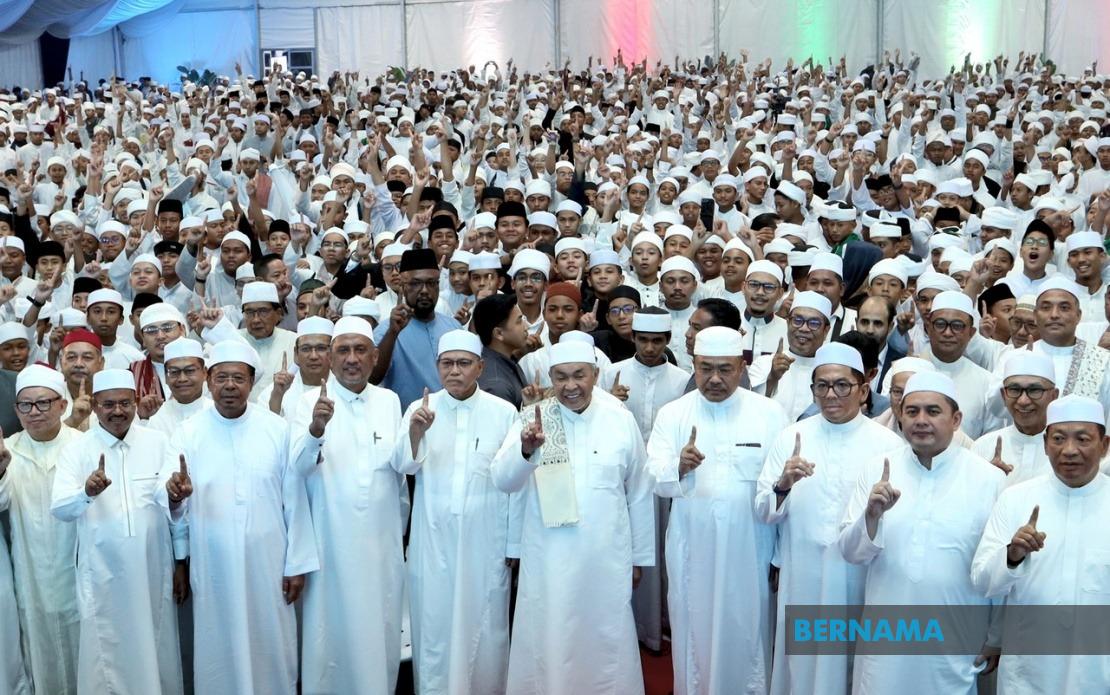
Malaysia's Cabinet has taken a significant step toward integrating Quranic education into the formal education landscape by approving the establishment of the National Tahfiz Council, a move designed to professionalise and standardise tahfiz instruction across the country. Deputy Prime Minister Datuk Seri Dr Ahmad Zahid Hamidi announced the approval at the Pahang State Huffaz Gathering 2026 in Kuantan, revealing that Prime Minister Datuk Seri Anwar Ibrahim has entrusted him with the council's leadership. The initiative addresses long-standing questions about how students who dedicate themselves to memorising the Quran can transition into mainstream education and career pathways without sacrificing their religious commitments.
The establishment of this national body represents a watershed moment for tahfiz education in Southeast Asia's largest Muslim-majority nation. For decades, tahfiz institutions have operated somewhat independently from the formal education system, creating uncertainty for graduates about their credentials and career prospects. By creating an overarching council, the government seeks to eliminate the disconnect between religious education and economic opportunity, a concern that has driven conversations among Islamic educators and parents throughout Malaysia. The council's mandate encompasses standardising the direction of tahfiz curricula, establishing consistent recognition benchmarks, and creating clear academic progression routes that allow students to transition smoothly between educational stages.
Ahmad Zahid articulated an ambitious vision for how tahfiz students should navigate their futures, emphasising that successful completion of Quranic memorisation should not represent an endpoint but rather a foundation for broader academic and professional development. He envisions a continuum where young learners progress from early childhood tahfiz programmes through secondary madrasah education, then onward to tertiary institutions and ultimately into skilled careers. This framework acknowledges that huffaz—those who have memorised the Quran—possess discipline, cognitive abilities, and spiritual maturity that hold considerable value in the modern economy, yet these qualities have rarely been formally recognised or leveraged within Malaysia's conventional education system. The deputy prime minister's vision also respects the integrity of tahfiz education itself, ensuring that the drive toward integration does not dilute the religious and educational standards that define quality Quranic instruction.
Pahang has emerged as a model jurisdiction for tahfiz education development, demonstrating that structured progression is achievable at the state level. The state has implemented early childhood programmes inspired by the Sultan of Pahang, establishing Tadika Tahfiz Negeri Pahang as an entry point for young learners. Building from this foundation, Pahang has constructed a comprehensive pathway extending from preschool through higher education and into international-level programmes. This template provides evidence that tahfiz education can be woven into the broader education ecosystem without compromising quality or religious authenticity. The participation of over 5,000 huffaz at the Kuantan gathering underscores the substantial population of students engaged in Quranic memorisation across the state and nationwide, confirming that establishing clear pathways addresses a genuine and significant educational demand.
The government has already initiated several supporting initiatives under the National Tahfiz Policy 2.0, which Ahmad Zahid indicated would be comprehensively reviewed and refined throughout the current year. These programmes include TVET Tahfiz, which integrates vocational and technical education with Quranic instruction, recognising that many students will eventually seek skilled trades rather than university degrees. The Malaysian Tahfiz Certificate 2.0 establishes a standardised credential for tahfiz completion, while the Graded Hafazan Certification allows for recognition of partial achievement in Quranic memorisation. The Huffaz Financing Scheme addresses economic barriers that prevent some families from allowing children to pursue tahfiz education, removing a significant constraint on access. These mechanisms collectively signal that the government views tahfiz education not as a parallel system but as an integral educational option deserving the same financial and administrative support extended to conventional pathways.
Strategic partnerships have become central to translating policy intentions into institutional reality. The signing of a memorandum of understanding involving Yayasan Pahang, the Community Development Department (KEMAS), and Majlis Amanah Rakyat (MARA) exemplifies how government agencies and semi-autonomous bodies can coordinate to strengthen tahfiz infrastructure and expand skills training opportunities. This collaborative approach recognises that no single institution possesses sufficient expertise and resources to build a comprehensive tahfiz ecosystem alone. KEMAS brings community development capacity, MARA contributes experience in entrepreneurship and skills development for rural and underserved populations, and Yayasan Pahang provides local knowledge and institutional support. Such partnerships, if replicated across other states, could accelerate the creation of coherent tahfiz education pathways nationwide.
The recognition standards initiative addresses a persistent problem hampering tahfiz graduate mobility. Without nationally agreed benchmarks, tahfiz credentials earned in one state or institution may not be accepted elsewhere, fragmenting the ecosystem. The Malaysian Tahfiz Recognition Standard establishes uniform criteria for evaluating student achievement, ensuring that a tahfiz graduate from Kelantan possesses equivalent qualifications to one from Johor. This standardisation is essential for enabling movement between institutions and creating national labour markets for tahfiz graduates. As skills requirements evolve in Malaysia's economy, standardised recognition allows employers to evaluate applicants' credentials with confidence and enables higher education institutions to establish consistent admission requirements for tahfiz-educated students.
The implications of this initiative extend beyond individual student outcomes to broader socioeconomic and social cohesion objectives. By creating legitimate pathways between tahfiz education and professional careers, Malaysia reduces the false choice many families currently face between religious education and economic security. Young people no longer need to view tahfiz memorisation and future prosperity as competing interests. Furthermore, integrating tahfiz education into the formal system may strengthen social bonds by validating an important dimension of Islamic identity within the national education framework. This recognition could ease tensions between secular and religious education advocates, demonstrating that these approaches need not conflict but rather complement one another. Students who complete tahfiz programmes while also acquiring vocational or academic qualifications emerge with enhanced credentials and a stronger sense that their religious commitment enjoys institutional recognition.
Regionally, Malaysia's approach offers instructive lessons for other Southeast Asian Muslim-majority nations grappling with similar questions about Quranic education integration. Indonesia, Brunei, and Singapore all confront decisions about how to position tahfiz education relative to their formal systems. Malaysia's establishment of a national council with standardised recognition criteria provides a tested model that neighbouring countries might adapt to their own contexts. The emphasis on creating progression pathways from early childhood through higher education, rather than treating tahfiz as a terminal credential, represents an especially innovative aspect of Malaysia's strategy. This comprehensive approach acknowledges that Quranic memorisation is valuable not merely as an end in itself but as a foundation for lifelong learning and professional development. As Malaysia implements these policies, other regional nations will likely monitor outcomes with considerable interest.
Looking ahead, the success of the National Tahfiz Council will depend significantly on execution capabilities and resource allocation. While policy approval represents essential progress, translating vision into on-the-ground institutional change requires sustained funding, trained administrators, and coordination across multiple government levels and private actors. The council must establish clear timelines for implementing recognition standards, ensuring quality assurance mechanisms function effectively, and creating awareness among tahfiz institutions and students about available pathways. Challenges will likely emerge around balancing standardisation with institutional autonomy, ensuring that national standards do not inadvertently suppress pedagogical innovation or local adaptation. Additionally, success requires that tertiary institutions and employers genuinely value tahfiz credentials and demonstrate willingness to enrol and hire graduates. These implementation phases will ultimately determine whether Ahmad Zahid's vision of seamless progression from memorisation to professional careers becomes reality for Malaysia's growing cohort of huffaz.

%22%2F%3E%3C%2Fpattern%3E%3C%2Fdefs%3E%3Crect%20width%3D%22100%25%22%20height%3D%22100%25%22%20fill%3D%22url(%23ph21o2sg)%22%2F%3E%3Crect%20width%3D%22100%25%22%20height%3D%22100%25%22%20fill%3D%22url(%23ph21o2sp)%22%2F%3E%3Ctext%20x%3D%2250%25%22%20y%3D%2250%25%22%20text-anchor%3D%22middle%22%20dominant-baseline%3D%22central%22%20fill%3D%22rgba(255%2C255%2C255%2C0.95)%22%20font-family%3D%22Georgia%2C%20'Times%20New%20Roman'%2C%20serif%22%20font-weight%3D%22700%22%20font-size%3D%22170%22%20letter-spacing%3D%22-0.02em%22%3EGabungan%3C%2Ftext%3E%3C%2Fsvg%3E)