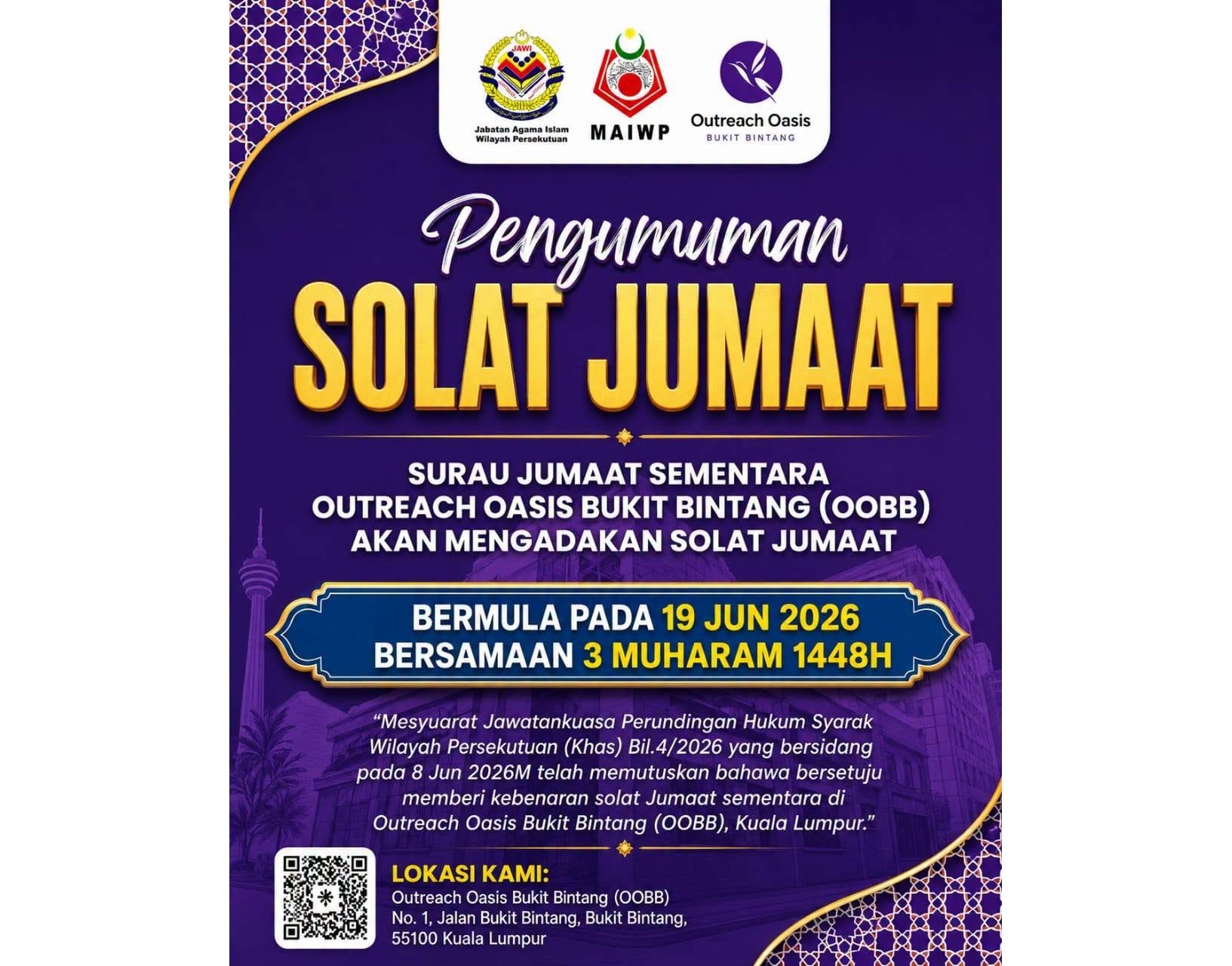
Muslim worshippers in Kuala Lumpur's bustling Bukit Bintang district will have a dedicated venue for Friday prayers starting June 19, marking a significant milestone for the shopping and entertainment precinct. The Bukit Bintang Outreach Oasis has been granted temporary approval to function as a Friday prayer facility, addressing a long-standing need for accessible worship space in this popular commercial hub.
Dr. Zulkifli Hassan, Minister in the Prime Minister's Department (Religious Affairs), announced the development through a social media post, framing the initiative as a historic step for the area. The temporary arrangement will remain in place until a permanent, purpose-built Friday surau is completed at the location, with the minister emphasizing that this solution represents both a practical measure and a symbolic affirmation of religious accommodation in Malaysia's most visited urban spaces.
The provision of prayer facilities in commercial and tourist-heavy areas has become increasingly important as Malaysia's cities evolve and attract both domestic and international foot traffic. Bukit Bintang, home to major shopping centres, hotels, and entertainment venues, draws countless visitors daily, many of whom are Muslim travellers, workers, and residents requiring access to prayer spaces during business hours. The temporary facility at the Outreach Oasis addresses a genuine gap in infrastructure, particularly for Friday prayers, which are a mandatory religious obligation for Muslim men.
Dr. Zulkifli's public comments underscored the government's commitment to facilitating Islamic worship across diverse urban environments. His reference to "special approval" suggests that establishing prayer facilities in commercial zones may require regulatory navigation, balancing religious accommodation with planning and safety considerations. The minister's invitation for community participation signals that the initiative carries symbolic weight beyond its practical function, positioning it as an expression of Malaysia's Islamic values in one of the nation's most cosmopolitan locations.
The construction of a permanent surau at Bukit Bintang represents a longer-term investment in religious infrastructure. Unlike temporary prayer spaces that rely on portable facilities or borrowed venues, a dedicated surau would offer proper ablution facilities, climate control, and architectural dignity. Such permanent structures serve not merely as places of worship but as statements about a city's religious identity and inclusive urban planning. The government's commitment to completing this facility demonstrates recognition that religious needs are integral to comprehensive city development.
For the Muslim population working and residing in the Bukit Bintang vicinity, the new arrangement eliminates the previous necessity to travel significant distances to fulfil Friday prayer obligations. Workers in nearby offices, shoppers, and service sector employees previously faced logistical challenges in coordinating their schedules around available prayer venues. The accessibility provided by an on-site facility reduces time pressures and enables practitioners to integrate religious observance more seamlessly into their daily routines, reflecting a practical understanding of contemporary urban Muslim life.
The provision also addresses potential concerns about crowding at existing prayer facilities in the area. Major mosques and suraus throughout Kuala Lumpur experience significant congestion during peak prayer times, particularly Fridays, when Muslim men are obligated to attend congregational prayers if possible. Distributing worshippers across multiple venues enhances the experience for all attendees and ensures that existing facilities are not overwhelmed during peak hours, improving the quality of prayer for the broader Muslim community.
From an urban planning perspective, the Bukit Bintang initiative reflects a broader global trend of incorporating religious facilities within secular commercial spaces. Cities worldwide are recognizing that accommodating prayer needs in public spaces—shopping centres, airports, business districts—represents both good urban management and cultural respect. For Malaysia, a Muslim-majority nation with significant non-Muslim populations and international visitors, such facilities demonstrate a commitment to religious pluralism and practical inclusivity.
The temporary nature of the current arrangement also offers an opportunity for assessment and refinement. Authorities can monitor usage patterns, facility adequacy, and community satisfaction with the temporary facility before committing to the permanent structure's final design. This approach allows for evidence-based decision-making, ensuring that the permanent surau incorporates design elements and features that genuinely meet the needs of its users rather than relying on assumptions about worship patterns and preferences.
Beyond the immediate benefit to worshippers, the project carries implications for Bukit Bintang's standing as a destination that serves the needs of its diverse visitor base. International and domestic tourists who are Muslim may feel more comfortable exploring the area if they know prayer facilities are readily available. This can translate to extended visits and increased spending, as visitors need not rush to worship elsewhere or plan their itineraries around distant prayer venues. Tourism and commerce thus intersect with religious accommodation in practical ways that benefit the broader economy.
The Bukit Bintang Outreach Oasis decision also reflects evolving perspectives on what religious infrastructure in the 21st century entails. Rather than restricting Islamic facilities to primarily residential areas or dedicated Islamic centres, Malaysian authorities increasingly recognize that worship spaces belong in all functional zones of cities where Muslim populations spend significant time. This reflects maturation in how multicultural societies approach accommodation of religious diversity.
Looking ahead, the success of this temporary arrangement will likely influence decisions about similar facilities in other commercial districts throughout Kuala Lumpur and other Malaysian cities. If the Bukit Bintang initiative proves well-used and operationally sound, it may establish a template for expanding religious infrastructure in shopping centres, business parks, and tourism zones nationwide, fundamentally reshaping how Malaysian cities serve the religious needs of their inhabitants.
%22%2F%3E%3C%2Fpattern%3E%3C%2Fdefs%3E%3Crect%20width%3D%22100%25%22%20height%3D%22100%25%22%20fill%3D%22url(%23phjfo8g)%22%2F%3E%3Crect%20width%3D%22100%25%22%20height%3D%22100%25%22%20fill%3D%22url(%23phjfo8p)%22%2F%3E%3Ctext%20x%3D%2250%25%22%20y%3D%2250%25%22%20text-anchor%3D%22middle%22%20dominant-baseline%3D%22central%22%20fill%3D%22rgba(255%2C255%2C255%2C0.95)%22%20font-family%3D%22Georgia%2C%20'Times%20New%20Roman'%2C%20serif%22%20font-weight%3D%22700%22%20font-size%3D%22320%22%20letter-spacing%3D%22-0.02em%22%3EMiri%3C%2Ftext%3E%3C%2Fsvg%3E)