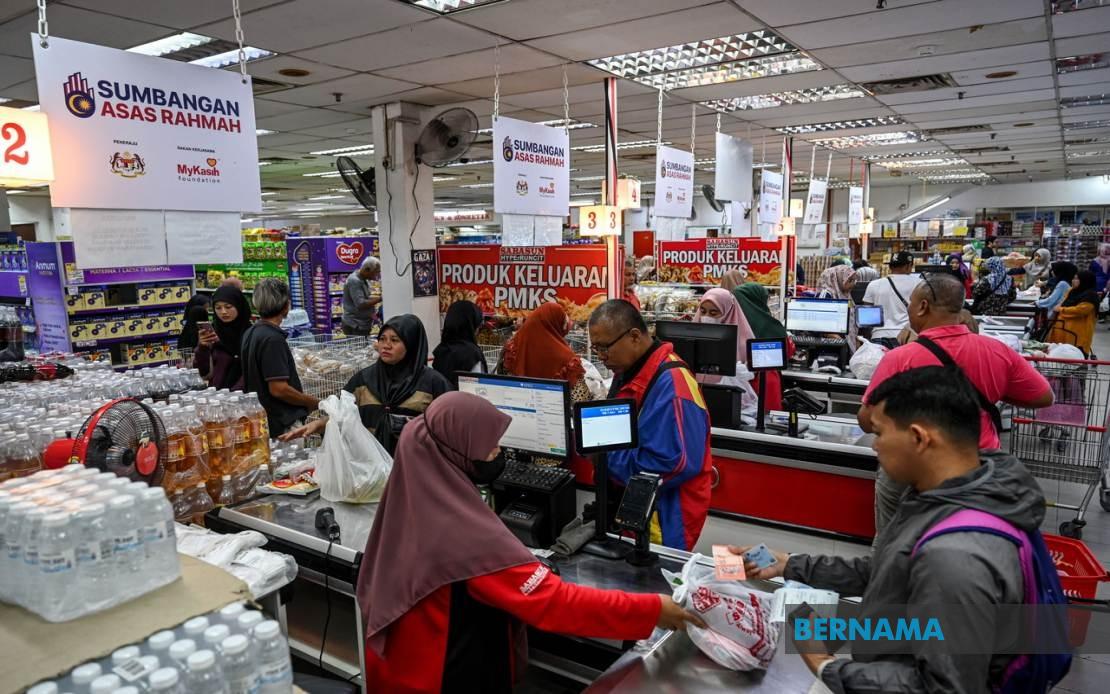
Prime Minister Datuk Seri Anwar Ibrahim has signalled that the MADANI Government may raise the amount distributed through its two main cash assistance programmes—the Sumbangan Tunai Rahmah (STR) and Sumbangan Asas Rahmah (SARA)—if Malaysia's economic situation strengthens sufficiently. Speaking in Ipoh during a community engagement event, Anwar indicated that Treasury officials have begun preliminary discussions about expanding these social safety net schemes, with potential increases to feature in the government's upcoming Budget.
The Prime Minister, who doubles as Finance Minister, explained that discussions with Treasury secretary-general Tan Sri Johan Mahmood Merican focused on whether the fiscal space exists to enhance benefit levels for current recipients. This represents a significant policy signal for millions of Malaysians who depend on these monthly cash transfers, which form a cornerstone of the MADANI administration's approach to tackling cost-of-living pressures. The careful framing around economic conditions reflects the government's balancing act between addressing household financial strain and maintaining fiscal discipline.
STR and SARA have emerged as key pillars of Malaysia's social support architecture under the current administration. These schemes deliver direct cash payments to eligible low-income households and vulnerable groups, designed to cushion the impact of inflation and provide immediate relief during economic uncertainty. The programmes have enjoyed broad political support and public recognition, functioning as both practical welfare tools and visible demonstrations of government commitment to citizen welfare. Any expansion would likely affect hundreds of thousands of families across the country.
Anwar's remarks come amid an ongoing national conversation about affordability and economic resilience. Malaysia has navigated considerable external pressures, including global supply chain disruptions and energy price volatility, which have rippled through domestic markets and household budgets. The government's willingness to revisit assistance levels suggests policymakers recognise persistent economic challenges facing ordinary Malaysians, even as overall macroeconomic indicators show stabilisation in several sectors.
The timing of this announcement, tied to Budget preparation, indicates that Cabinet deliberations on social spending are underway. The integration of Treasury input suggests any decisions will reflect considered analysis of available resources and fiscal sustainability rather than ad-hoc policy moves. This measured approach has characterised Anwar's tenure as Finance Minister, combining targeted support with attention to long-term budget health.
Beyond the welfare schemes, Anwar also used the Ipoh gathering to underscore government recognition of security personnel's contributions to national safety. He announced continued funding for the welfare of RELA—the Malaysian Volunteer Corps Department—with RM3 million allocated for the year. This follows an identical RM3 million allocation in the previous year, though Anwar acknowledged this funding level remains insufficient given RELA's expanded operational demands and membership commitments.
RELA's role has become increasingly visible in Malaysia's security architecture, particularly in the aftermath of major national incidents that required coordinated response from multiple agencies. The volunteer corps assists professional security forces in disaster response, community policing, and public safety operations. By highlighting RELA's dual mandate—both maintaining security and serving communities—Anwar positioned welfare support for volunteers as integral to operational effectiveness.
The MADANI KITA Together with the Tambun Community Programme event, organised by RELA in partnership with government departments, exemplified the administration's strategy of combining policy announcements with direct community engagement. Such events serve multiple functions: they allow senior officials to communicate directly with constituents, gather grassroots feedback on policy effectiveness, and demonstrate visible government presence in constituencies. For residents of Tambun and surrounding areas, the gathering provided opportunity to interface with senior officials including the Home Ministry's deputy secretary-general for security.
From a regional perspective, Malaysia's approach to welfare expansion carries implications for Southeast Asia's broader social policy landscape. As nations across ASEAN grapple with cost-of-living challenges and inflation, the mechanisms Malaysia employs—targeted cash transfers, means-tested assistance, and periodic policy reviews tied to economic conditions—offer potential templates for peer countries. The emphasis on balancing immediate relief with fiscal sustainability reflects sophisticated policy thinking about welfare's long-term viability.
The contingency framing around STR and SARA increases—that enhancement depends on economic conditions permitting—reflects realistic fiscal governance. Unlike universal, unconditional benefit increases that could strain public finances, this approach ties policy expansion to demonstrable economic improvement. Should Malaysia's growth trajectory accelerate or inflation moderate meaningfully, such conditions could materially change during Budget deliberations.
For recipients currently receiving STR and SARA support, Anwar's statements suggest tangible policy improvements may materialise within months rather than years. Given that Budget approval typically occurs by mid-year for implementation in the fiscal year following, increases could take effect relatively soon if fiscal projections remain favourable. This timeline provides concrete hope for households currently managing financial pressures on existing assistance levels.
The announcement also reflects political awareness that cash assistance programmes maintain broad public salience and electoral significance. Across Malaysian society, STR and SARA recipients represent diverse demographic groups—urban lower-income households, rural communities, pensioners, and persons with disabilities. Any expansion generates tangible benefits for constituencies across the political map, making such programmes attractive targets for enhancement when budgetary circumstances allow.
Moving forward, the Treasury will conduct detailed fiscal modelling to determine what enhancement levels are sustainable. This analysis will incorporate revenue projections, spending commitments across other government priorities, and macroeconomic forecasts. The outcome will shape not only immediate household finances for millions of Malaysians but also signal the government's broader commitment to social investment as Malaysia navigates its post-pandemic economic trajectory.

