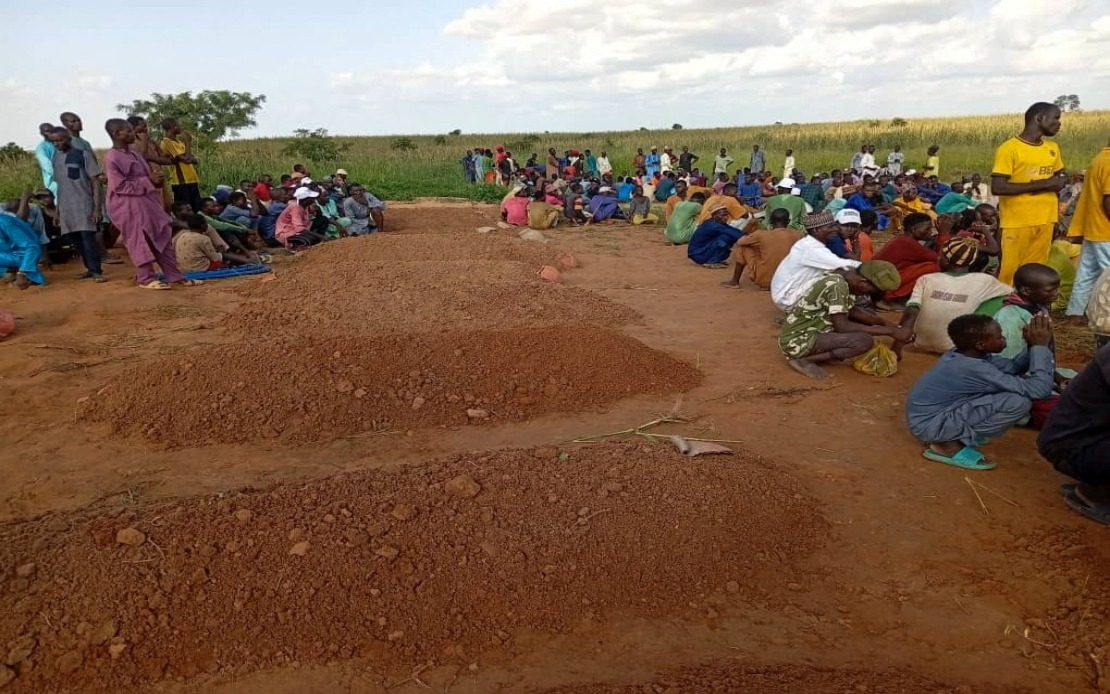
A tragedy unfolded in northwestern Nigeria on Thursday when a boat carrying an estimated 70 passengers capsized in Sokoto state, resulting in the deaths of over 40 people, the majority of them children. The vessel sank near Gorau town in Goronyo Local Government Area as passengers were en route to local rice farms for planting and harvesting activities, according to regional authorities and eyewitness accounts.
Initial estimates of the death toll came from Abdulkadir Yusuf, who manages operations for Nigeria's National Inland Waterways Authority in Sokoto state, placing the figure at 40 fatalities while noting verification efforts remained ongoing. However, witness accounts painted a grimmer picture, with one observer reporting approximately 47 bodies recovered and arranged at a community mosque in Gorau ahead of funeral preparations scheduled for Thursday evening. The discrepancy between official and witnessed figures underscores the chaotic nature of disaster response in remote areas with limited resources.
Nasiru Adamu, a legislator in the Sokoto State House of Assembly representing the affected region, provided critical demographic information about those aboard. According to his assessment, the majority of passengers ranged between 10 and 15 years old, suggesting the boat may have been transporting agricultural workers alongside schoolchildren or young labourers. Adamu confirmed that despite the recovery of over 40 bodies, rescue teams had also successfully extracted 16 survivors, with ongoing search and retrieval operations continuing to locate any remaining passengers in the waterway.
Personal testimonies captured the human toll of the disaster. Samaila Garba, a 55-year-old resident, recounted the loss of his 13-year-old granddaughter, Jamila Usman, among the victims. Garba's own count of fatalities aligned with official figures, noting at least 42 bodies recovered, predominantly women and children, painted a picture of vulnerability among passenger demographics. Such personal narratives illustrate how maritime disasters in developing regions disproportionately affect families and communities already vulnerable to economic hardship.
The immediate response involved local divers conducting systematic searches of the waterway, attempting to locate additional survivors and recover remaining bodies. The ongoing nature of rescue operations suggested initial confusion about total passenger numbers and the possibility that some individuals remained unaccounted for, complicating accurate casualty assessment in the aftermath of the incident.
This catastrophe reflects a persistent crisis affecting Nigeria's inland waterway transportation system. The combination of vessel overcrowding, deferred maintenance of boats, and inadequate enforcement of maritime safety protocols has created conditions conducive to repeated fatal accidents. The problem intensifies during the rainy season when waterway transportation becomes increasingly vital for agricultural communities but simultaneously more hazardous due to swelling rivers and challenging conditions.
The pattern of disasters extends beyond this single incident. In January 2024, northeastern Nigeria experienced another maritime tragedy when a compromised vessel sank in Yobe state, claiming at least 25 lives. The frequency of such incidents—occurring merely months apart—suggests systemic failures rather than isolated accidents. Each disaster highlights the absence of comprehensive safety measures, operator licensing standards, and vessel inspection protocols that might prevent or mitigate such tragedies.
For Malaysian and Southeast Asian observers, this tragedy carries particular relevance given the region's own reliance on inland waterway transport in parts of Indonesia, Thailand, and Laos. The Sokoto incident demonstrates how rapid urbanisation, agricultural expansion, and inadequate infrastructure investment can create dangerous gaps in transportation safety. Communities dependent on water-based logistics face heightened risks when regulatory frameworks lag behind demand for transport services.
The broader implications extend to questions of governance and resource allocation in developing nations. Nigeria's inland waterway system serves essential economic functions for farming communities and rural populations, yet inadequate public investment in safety infrastructure reflects prioritisation challenges faced by governments managing competing developmental demands. The National Inland Waterways Authority's limited capacity to enforce safety standards across dispersed waterways suggests structural constraints rather than mere negligence.
Climate and seasonal factors compound these vulnerabilities. The rainy season, which facilitates agricultural activities requiring transport to distant fields, simultaneously increases water hazards. Farmers and labourers face a precarious calculus: remain economically productive through essential travel despite heightened risks, or forgo income and agricultural participation. The disproportionate casualty rate among children and women suggests these populations bear particular burdens of such economic dependencies.
International maritime safety standards exist and are implemented effectively in developed nations, yet their adaptation to developing-world contexts remains incomplete. The cost of comprehensive safety infrastructure—vessel certification, operator training, rescue equipment, and monitoring systems—presents substantial challenges for resource-constrained governments prioritising immediate poverty alleviation over accident prevention.
Moving forward, meaningful intervention would require coordinated efforts across multiple domains: regulatory strengthening through NIWA capacity enhancement, community education regarding maritime safety, investment in vessel maintenance and replacement, and possibly alternative transport infrastructure development. The recurring nature of such disasters suggests that incremental policy adjustments have proven insufficient, demanding more fundamental reassessment of how inland waterway transport is managed and safeguarded.

