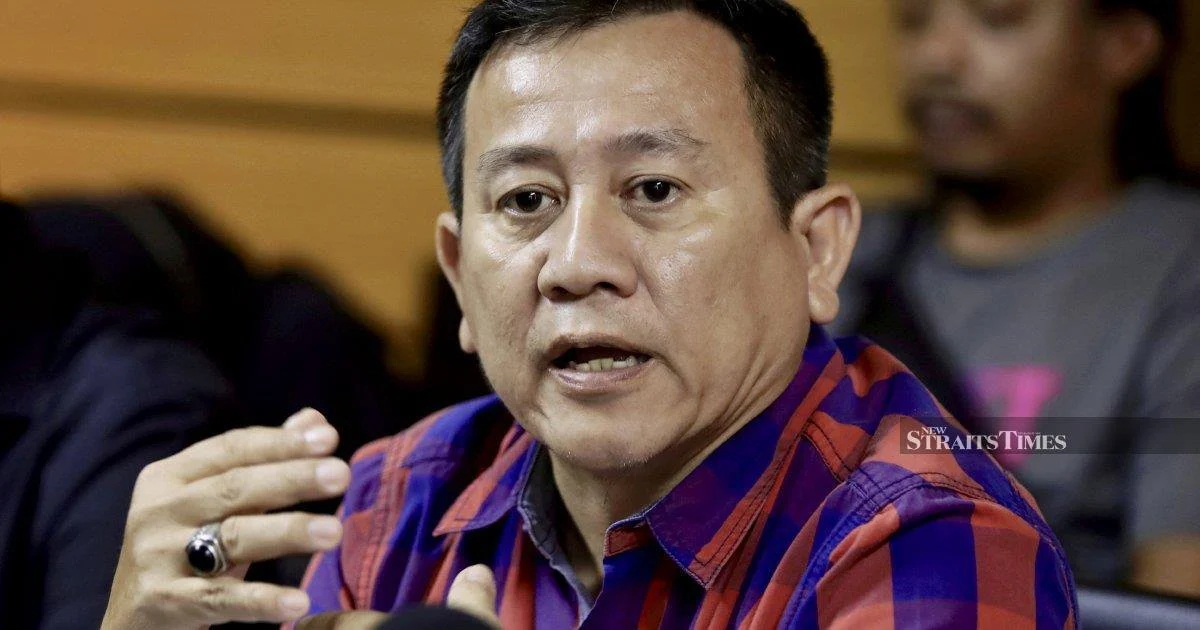
Bersatu has stepped forward to reassert its foundational position within Perikatan Nasional, reminding coalition partner Pas of the historical circumstances that led to the political alliance's creation. The move signals deepening tensions within the three-year-old partnership, with Bersatu insisting that the entire PN framework was constructed on an original concept developed by Tan Sri Muhyiddin Yassin, the party's chairman and a former Prime Minister.
The emphasis on historical claims reflects a broader pattern of consolidation among Malaysia's shifting political coalitions. Perikatan Nasional was formally established following the 2020 political transition, though the ideological and tactical groundwork had been laid over preceding months. Bersatu's intervention suggests that disagreements with Pas—which has itself emerged as increasingly influential within PN's leadership structure—are now prompting member parties to clarify their respective contributions and authority within the alliance.
Understanding the stakes requires recognizing what Perikatan Nasional represents within contemporary Malaysian politics. The coalition brings together Bersatu, Pas, and several smaller component parties under a loosely unified platform. While the partnership has weathered numerous challenges since its inception, including federal government participation, internal cohesion remains contested. Bersatu's decision to publicly reaffirm Muhyiddin Yassin's originating role appears designed to establish historical legitimacy for any future policy directions or leadership claims within the broader alliance structure.
Pas, as Malaysia's largest Islamic political party and the second-largest Malay-majority party after Umno, brings substantial grassroots organizational capacity and a significant parliamentary delegation to PN. This strength has enabled Pas to increasingly shape the coalition's agenda on religious and social policy matters. Bersatu, by contrast, positions itself as a multiethnic and more moderate formation, though it has also struggled with internal instability and declining membership since several MPs defected to rival coalitions in recent years.
The friction between Bersatu and Pas reflects divergent strategic calculations regarding PN's political future. Pas appears intent on leveraging its organizational advantages to elevate its prominence, potentially seeking greater ministerial posts or policy influence. Bersatu's assertion of founding primacy suggests an effort to establish a baseline principle—that PN's structural identity and strategic direction remain rooted in Muhyiddin Yassin's original vision, a vision that encompasses broader political appeal beyond any single party's sectarian interests.
For Malaysian political observers, these disputes carry practical implications for governance and coalition stability. When coalition partners dispute foundational claims and historical legitimacy, it typically signals that deeper disagreements over resource distribution, policy direction, or parliamentary seats remain unresolved. Such tensions can destabilize alliances, particularly in Malaysia's fluid electoral environment where opposition coalitions like Pakatan Harapan continue to present alternative governing arrangements.
Tan Sri Muhyiddin Yassin's role in PN's founding remains significant precisely because he represents a particular political philosophy—one that attempts to bridge Malay-Muslim and broader multiethnic concerns without adhering strictly to any single party's sectarian mandate. By invoking his foundational contribution, Bersatu implicitly argues that PN should maintain this balancing approach rather than tilt distinctly toward Pas's more explicitly Islamic-focused positioning.
The timing of Bersatu's intervention also matters. Malaysian coalitions operate within a context of constant electoral pressure and internal maneuvering. Federal by-elections, state assembly dynamics, and the perpetual possibility of defections mean that coalition partners continually reassess their positions and leverage. Bersatu's public reaffirmation of its founding role likely responds to either recent parliamentary developments, internal PN meetings that proved contentious, or strategic positioning ahead of anticipated electoral contests.
Regionally, Malaysian coalition politics influences broader Southeast Asian political patterns. The structure, tensions, and ultimate durability of PN will be observed by political actors across the region facing similar questions about multiparty alliance-building. How PN manages internal disputes while maintaining sufficient cohesion to govern—or to function effectively as opposition—carries implications for understanding coalition politics in democracies with fragmented party systems.
Moving forward, the fundamental question remains whether Bersatu and Pas can reconcile their competing visions for PN's identity and direction. Historical claims about founding roles, while politically resonant, ultimately matter less than contemporary agreement on governance priorities, resource sharing, and strategic objectives. If disputes over historical legitimacy are actually proxies for unresolved contemporary disagreements, then Bersatu's public assertion may provide only temporary clarity rather than lasting resolution to underlying coalition tensions that will likely resurface as Malaysia's political calendar advances.

%22%2F%3E%3C%2Fpattern%3E%3C%2Fdefs%3E%3Crect%20width%3D%22100%25%22%20height%3D%22100%25%22%20fill%3D%22url(%23phhvlbg)%22%2F%3E%3Crect%20width%3D%22100%25%22%20height%3D%22100%25%22%20fill%3D%22url(%23phhvlbp)%22%2F%3E%3Ctext%20x%3D%2250%25%22%20y%3D%2250%25%22%20text-anchor%3D%22middle%22%20dominant-baseline%3D%22central%22%20fill%3D%22rgba(255%2C255%2C255%2C0.95)%22%20font-family%3D%22Georgia%2C%20'Times%20New%20Roman'%2C%20serif%22%20font-weight%3D%22700%22%20font-size%3D%22320%22%20letter-spacing%3D%22-0.02em%22%3E24%3C%2Ftext%3E%3C%2Fsvg%3E)
%22%2F%3E%3C%2Fpattern%3E%3C%2Fdefs%3E%3Crect%20width%3D%22100%25%22%20height%3D%22100%25%22%20fill%3D%22url(%23ph4m8hug)%22%2F%3E%3Crect%20width%3D%22100%25%22%20height%3D%22100%25%22%20fill%3D%22url(%23ph4m8hup)%22%2F%3E%3Ctext%20x%3D%2250%25%22%20y%3D%2250%25%22%20text-anchor%3D%22middle%22%20dominant-baseline%3D%22central%22%20fill%3D%22rgba(255%2C255%2C255%2C0.95)%22%20font-family%3D%22Georgia%2C%20'Times%20New%20Roman'%2C%20serif%22%20font-weight%3D%22700%22%20font-size%3D%22320%22%20letter-spacing%3D%22-0.02em%22%3EData%3C%2Ftext%3E%3C%2Fsvg%3E)